
Boise’s water comes from two sources at once: groundwater pumped from wells drilled into the Boise aquifer, and surface water drawn from the Boise River and treated at a dedicated plant. Both are delivered by Veolia Water Idaho, the investor-owned utility that holds the city’s water franchise, not by city government itself.
Who actually supplies Boise’s drinking water?
Drinking water in Boise is supplied by Veolia Water Idaho, formerly known as United Water Idaho and, before that, the Boise Water Corporation. It is a privately owned, investor-held utility, not a municipal department, and it is regulated by the Idaho Public Utilities Commission, which reviews its rates and service obligations.
This surprises some new residents. Unlike the city’s trash and recycling contracts, which run through Boise’s own municipal system, water service is a private, regulated monopoly with its own rate structure, its own capital projects, and its own reporting requirements to state regulators.
Where does the groundwater come from?
Most of Boise’s supply has historically come from wells tapping the Boise aquifer system, a series of groundwater layers beneath the Treasure Valley. Wells scattered across the service area pump this water to the surface, where it is treated and pressurized into the distribution network before reaching homes and businesses.
The aquifer itself is recharged over time by snowmelt, canal seepage, and precipitation across the valley, which is one reason the Idaho Department of Water Resources monitors groundwater levels and manages aquifer recharge programs for the wider Treasure Valley, not just Boise proper.
Why does Boise also treat river water?
Wells alone were not enough to meet peak summer demand as the city grew, which is why Veolia also operates a surface water treatment plant that draws directly from the Boise River. This plant supplements the well network during the hottest months, when lawn irrigation and general use spike well beyond winter levels.
Surface water requires a different treatment process than groundwater — filtration and disinfection steps suited to a river source rather than a confined aquifer — which is part of why Veolia maintains two distinct treatment systems rather than one.
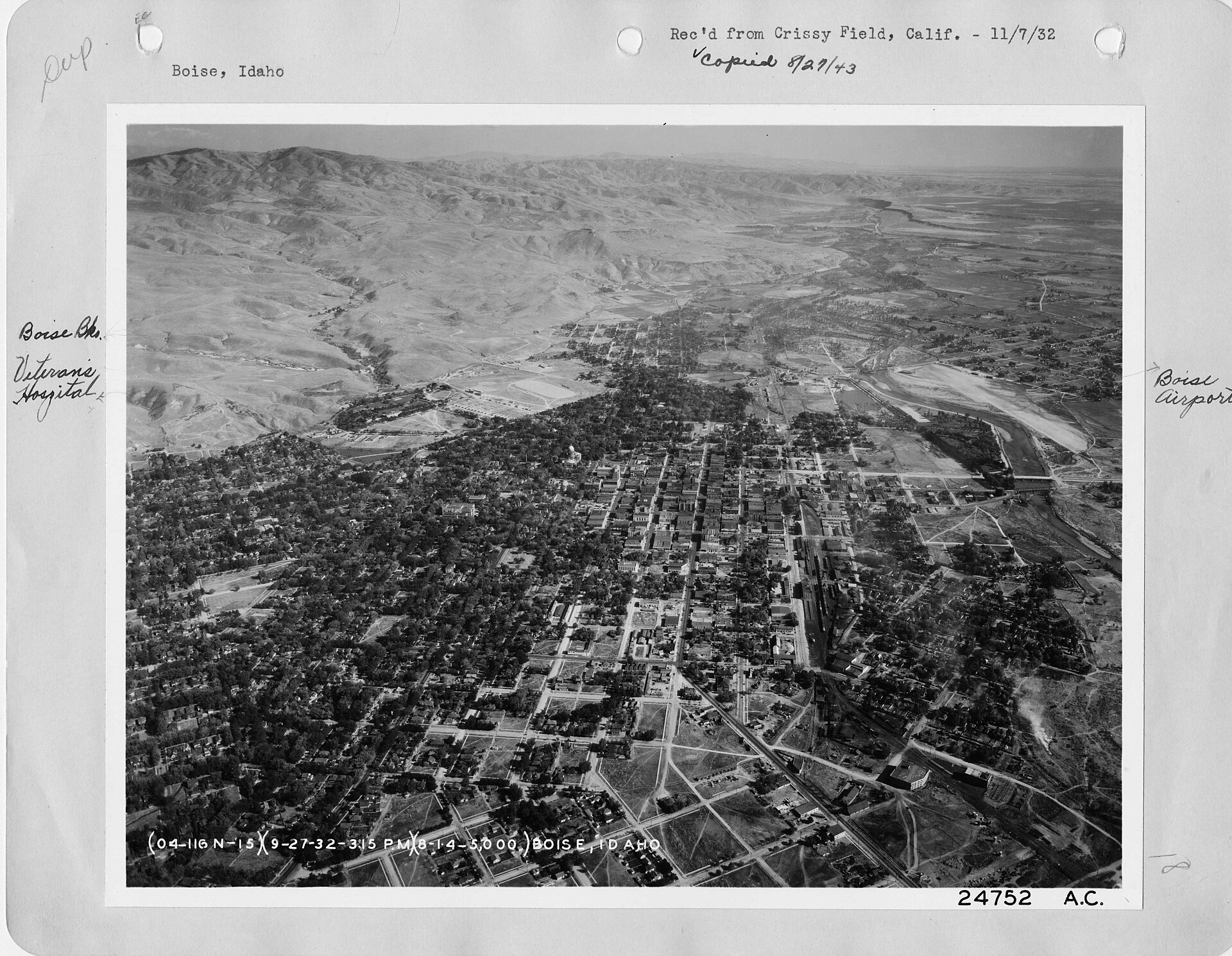
Where does the Boise River’s own water come from?
The Boise River is not a spring rising within the city; it arrives already shaped by the mountains upstream. Its three forks — North, Middle, and South — originate in the Boise Mountains and the western edge of the Sawtooth Mountains, well outside the city, and their combined flow is what eventually reaches the treatment plant and, later, the Greenbelt corridor through downtown.
That flow is not left to run wild. The U.S. Bureau of Reclamation operates three dams upstream on the Boise River system — Anderson Ranch, Arrowrock, and Lucky Peak — built primarily to store irrigation water and manage flood risk for the valley’s farmland, a purpose that predates municipal water treatment by decades. Lucky Peak Reservoir, the lowest and most visible of the three, is also a recreation site in its own right, covered separately in a look at what Lucky Peak is and what there is to do there.
Because the river’s volume depends on mountain snowpack, the amount of surface water available for treatment varies year to year with winter snow totals — a fact residents notice more in low-snow years, when reservoir releases and river flows both run lower into summer.
Why do some Boise houses have two water meters?
A second, separate system runs alongside the drinking water network: pressurized irrigation water for lawns and landscaping, delivered by local irrigation districts and canal companies rather than by Veolia. Many homes across the valley, particularly in newer subdivisions, are plumbed with one meter for potable water and a second for non-potable irrigation water.
This irrigation water is diverted from the Boise River through a network of canals that predate the city’s modern water utility by a century or more, originally built to turn desert sagebrush into irrigated farmland before Boise’s suburbs expanded across that same ground. It is not treated to drinking-water standards and is not meant for consumption — its entire purpose is outdoor watering, delivered at a lower cost than treated municipal water.
This dual system is one of the quieter distinctions of living in the Treasure Valley, and it shapes water bills and yard-watering habits differently depending on which neighborhood a house sits in. It comes up in more detail in coverage of how utilities work in a Boise house, including geothermal, since irrigation water, drinking water, and the city’s geothermal heating loop are three entirely separate systems often confused with one another.
Is geothermal part of Boise’s water supply?
No. Boise operates one of the largest municipal geothermal systems in the country, piping naturally heated water from a deep geothermal aquifer to heat buildings downtown and on the Boise State University campus, among other users. It is a heating system, not a drinking water source, and the two networks do not intersect. Anyone curious about how that loop actually functions should see the dedicated explanation of how utilities work in a Boise house, including geothermal.
Is Boise’s tap water safe to drink?
Veolia Water Idaho publishes an annual water quality report, sometimes called a Consumer Confidence Report, detailing what is tested for and the results, in line with requirements set by state and federal drinking water regulators. Residents and prospective movers wanting current detail should consult Veolia’s own site directly rather than relying on secondhand summaries, since testing results and any notices are updated on the utility’s own schedule.
This is a case where the practical detail is genuinely perishable — the shape of the system (wells plus river treatment, one private regulated utility) is stable, but specific test results, rates, and any service notices belong on the operator’s own site, not repeated here as fixed facts.
What does this mean for someone actually living in Boise?
Water bills in Boise reflect this two-track system directly: a treated-water charge from Veolia, and, for many properties, a separate seasonal charge from an irrigation district if the house has a pressure irrigation hookup. Both show up as distinct costs, and both are worth understanding before budgeting for a house rather than an apartment, a topic covered more broadly in cost of living in Boise versus the rest of Idaho.
Snowpack dependency also matters more to residents than to visitors. A light winter in the mountains upstream can mean lower river flows and tighter reservoir management the following summer, which occasionally shapes watering restrictions or irrigation-district scheduling. It rarely affects treated drinking water directly, since the aquifer wells provide a buffer, but it is part of why water is treated as a managed resource here rather than an assumed one, alongside broader seasonal patterns discussed in what it is like to be outdoors in Boise year round.
Does any of this matter to a visitor?
Not in any way that changes a trip. Tap water across the city is drawn from the same regulated system described above, and the Boise River itself is more visible to visitors as a recreation corridor than as infrastructure — the setting for the Boise River Greenbelt and for floating the river in summer, covered in how floating the Boise River actually works. The water supply system sits quietly behind all of it, doing its job without asking to be noticed.
For anyone weighing a longer stay or a move, the fuller picture of how these systems fit into daily life in the city is laid out in Access Boise’s guide to living in Boise, alongside the related question of what Boise’s neighbourhoods are actually like to live in, since irrigation access and utility setup can differ noticeably between an older downtown lot and a newer subdivision at the city’s edge.
Access Boise is an independent guide written from published, checkable sources. We have not visited the places described here and we do not publish personal recommendations or invented ‘local favourites’ — where something is singled out as notable, we say who says so. Opening times, fares, closures and prices change at short notice, so treat everything here as a starting point and confirm with the museum, operator or venue directly before building a day around it. We give no advice on visas, insurance, health or safety; use your own government’s official guidance for those.
Related reading
How Does the School System Work in Boise, Idaho?, Boise Cost of Living Compared to Portland, Seattle, Denver and Salt Lake