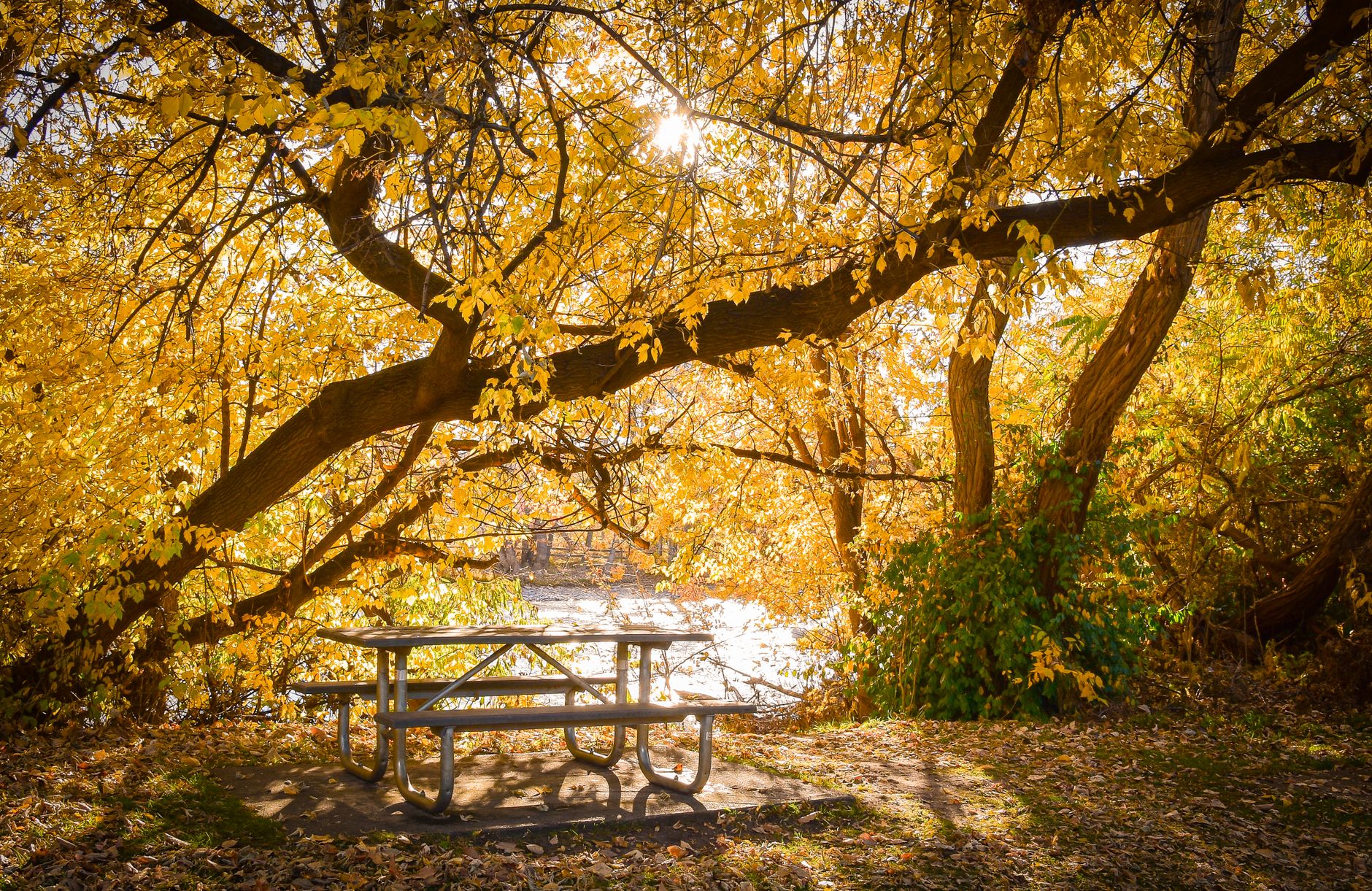
Veterans Memorial State Park is a day-use Idaho state park on the Boise River in northwest Boise, built around a spring-fed pond, an off-leash dog area, picnic grounds and a stretch of the Boise River Greenbelt. It is managed by the Idaho Department of Parks and Recreation (IDPR) and, unlike most Idaho state parks, sits entirely within city limits.
Where is the park, and how do you reach it?
The park sits off Pierce Park Road near Veterans Memorial Parkway, on the north side of the Boise River in northwest Boise, a few miles upstream of Downtown. It is reached by car with on-site parking, and by bicycle or on foot via the Boise River Greenbelt, which runs directly through it. Valley Regional Transit routes serve the general Pierce Park corridor, though a car or bike remains the more direct way in; the specifics of any route are best checked on the transit operator’s own site before a visit, as covered in the wider look at getting around Boise.
What is actually inside the park?
The park’s core feature is a large pond, formed in what was originally a gravel excavation and now maintained as a permanent water feature. Around it, IDPR’s own description of the site lists paved and gravel walking paths, picnic shelters, open lawn, and a fenced off-leash dog exercise area that is one of the largest of its kind in the Boise area. The park also carries scattered memorial markers and monuments, placed over the decades by veterans’ organizations, which are the reason for the park’s name.
It is a flatter, more manicured park than the foothill trail systems above the city — closer in character to Kathryn Albertson Park than to anything on the Ridge to Rivers network. There is no admission gate to a wilderness area here; it functions as a neighborhood-scale open space with a state park designation.
Is there a fee to get in?
Many Idaho state parks charge a day-use fee, but several parks located inside city limits, including this one, have historically been free to enter under IDPR’s own fee schedule. Fee policies and any exceptions for special facilities change from year to year, so anyone planning a visit should confirm current terms directly on the Idaho Department of Parks and Recreation’s own site rather than relying on a fixed figure.
Is this the same place as the Idaho State Veterans Cemetery?
No, and the names are frequently confused. The Idaho State Veterans Cemetery is a separate site on Curtis Road in Boise, operated by the Idaho Division of Veterans Services, and it is an active burial ground with its own visiting protocols. Veterans Memorial State Park, by contrast, is a recreational park on the river with no burial function. The overlap in naming reflects a shared honor of veterans, not a shared site.
How does the pond and fishing work?
The pond is managed as a community fishery. Idaho Fish and Game periodically stocks ponds of this type around the Treasure Valley, and its own stocking reports are the authoritative source on what species and quantities go into any specific water in a given season — a detail that shifts year to year and shouldn’t be assumed from an old visit. A standard Idaho fishing license, available through Idaho Fish and Game, applies to anglers of the required age fishing the pond, as it does anywhere else in the state.
Is it good for dogs and families?
The fenced off-leash area is the park’s most-used feature for local dog owners, and it draws a different, more routine kind of visitor than the tourist-facing parks closer to Downtown. Families with young children tend to use the open lawn, picnic shelters and flat paved paths rather than the pond edges directly. For a broader sense of what works well with kids across the city, the guide to a day in Boise with children covers where this kind of low-intensity park visit fits into a longer plan.
How does it connect to the rest of Boise?
The Boise River Greenbelt runs directly through the park, linking it on foot or by bike to a chain of riverside parks that stretches for miles in both directions — a system covered in full in the guide to the Boise River Greenbelt, end to end. Riding or walking east along the Greenbelt eventually connects toward Julia Davis Park and the museum cluster around it, though the distance involved makes it more of a half-day cycling route than a casual stroll. For residents, this connection is part of what makes the park useful as a commuting and exercise link rather than only a destination in itself, a pattern discussed more generally in the guide to cycling in Boise.
Does the park change with the seasons?
Like most river-level parks in the Treasure Valley, Veterans Memorial State Park sees its heaviest local use in late spring through early autumn, when the pond, lawns and dog area draw steady daily traffic from surrounding neighborhoods. Winter brings the same inversion conditions that affect much of the valley floor, discussed in the broader explanation of Boise’s winter inversion, and the park’s flat, exposed layout means visibility and air quality there track the rest of the valley rather than offering any shelter from it. Wildfire smoke in late summer, covered in the guide to Boise’s wildfire smoke season, can also affect how comfortable the open lawn areas are on a given day.
Where does it fit for a visitor versus a resident?
For a first-time visitor with limited time, Veterans Memorial State Park is unlikely to make it onto a tightly packed itinerary alongside Downtown landmarks and the Basque Block — it is a neighborhood park, not a monument. It is more relevant to residents of northwest Boise as a default nearby green space, and to cyclists using the Greenbelt as one point along a longer route. Visitors planning a broader look at how the city’s park system fits together are better served starting with the overview in Parks & Foothills or the general orientation in Boise Practical, both of which place a park like this one in context rather than treating it as a standalone stop.
Anyone weighing where this park sits relative to daily life in the city, rather than a single day’s sightseeing, will find that context in Living in Boise, which covers how residents actually use green space, transit and neighborhood amenities across the year.
Access Boise is an independent guide written from published, checkable sources. We have not visited the places described here and we do not publish personal recommendations or invented ‘local favourites’ — where something is singled out as notable, we say who says so. Opening times, fares, closures and prices change at short notice, so treat everything here as a starting point and confirm with the museum, operator or venue directly before building a day around it. We give no advice on visas, insurance, health or safety; use your own government’s official guidance for those.