What remains of Boise’s railroad history is concentrated mostly in one building and its grounds: the 1925 Boise Depot, still standing on the bench above downtown, no longer used for trains. The electric interurban network that once linked Boise to the rest of the valley is gone above ground; its record survives in archives rather than in rail.
Why didn’t the first transcontinental railroad reach Boise?
Because the original route bypassed it. When the Oregon Short Line — a Union Pacific subsidiary — built its main line across southern Idaho in the early 1880s, it ran through the area that became Nampa rather than through Boise itself, roughly 20 miles away. The Idaho State Historical Society’s reference materials on the period describe this as a matter of grade and route economics rather than any slight to the capital.
Boise’s response was a branch line. A spur connecting the city to the main line was completed in 1887, terminating in a modest depot downtown. For four decades, Boise’s rail service ran through that link rather than a direct main line.
What is the Boise Depot, and is it still a station?
No — it is a city-owned building and event venue, not an operating station. Union Pacific commissioned the current depot in 1925 to replace the earlier downtown structure, building it in the Spanish Mission Revival style with a campanile-like clock tower, on a bluff south of downtown at the terminus of Capitol Boulevard.
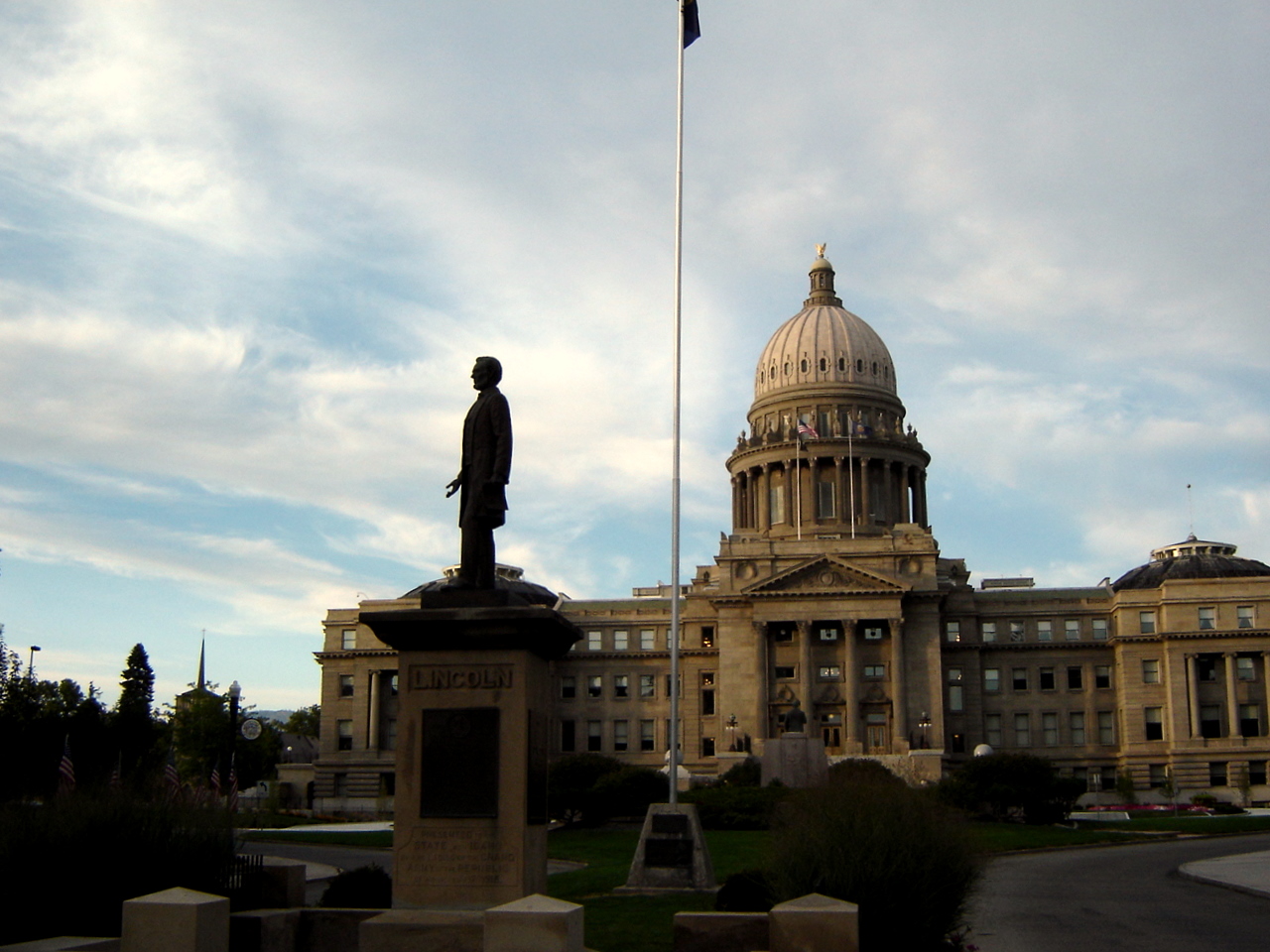
The alignment was deliberate: arriving passengers stepping off the train looked straight up the boulevard toward the Idaho State Capitol dome, a sightline that Capitol Boulevard still preserves today. The building and its history are covered in detail at what the Boise Depot is and why it looks like that, and its surrounding grounds are the subject of the Boise Train Depot and Platt Gardens.
The depot is listed on the National Register of Historic Places, the federal government’s own inventory of significant historic properties, maintained by the National Park Service.

When did passenger trains stop running to Boise?
Scheduled passenger service ended in 1997, when Amtrak discontinued the Pioneer route, which had connected Chicago, Salt Lake City, Boise and Seattle/Portland via the depot. No Amtrak route has served Boise since that discontinuation, and the depot has functioned purely as a municipal building and events space in the years following.
Freight traffic is a separate matter. Union Pacific continues to operate freight lines through the Treasure Valley, and the rail corridor through Nampa remains an active industrial line — it simply carries no scheduled passengers.
What happened to the depot building itself?
The City of Boise acquired the depot from Union Pacific and now manages it as a public building set within Platt Gardens, the formal grounds laid out around the structure. It is used for civic events, weddings and public gatherings rather than for transportation. A retired steam locomotive is displayed on static exhibit on the grounds, one of the few pieces of rolling stock from the era still visible to the public in the city.
The building’s Spanish Mission Revival style — red tile roofline, stucco walls, arched openings — was a deliberate design choice by Union Pacific in the 1920s, part of a broader company practice of building depots meant to signal a destination rather than a purely utilitarian stop.
What survives of Boise’s interurban and streetcar lines?
Almost nothing above ground. Boise once had an electric interurban system — often referenced in local histories as the Boise Valley Electric Railroad, later reorganized under the Idaho Traction Company — connecting the city to Nampa, Caldwell, Meridian and Eagle in the early twentieth century, alongside a separate downtown streetcar network.
Both systems were dismantled as automobile travel expanded, largely by the late 1920s and into the 1930s. The rights-of-way were absorbed into ordinary roads and property lines rather than preserved as trail corridors, which is why no continuous rail-trail marks their former routes today, unlike some other Western cities that converted old interurban lines directly into paths.
Where can the public research this history directly?
The primary sources sit in two state institutions rather than on public display:
- The Idaho State Archives holds public records, historical photographs and documentation touching on rail construction, right-of-way disputes and the depot’s own history, and is open to researchers under its stated access rules.
- The Idaho State Museum covers Idaho’s territorial and statehood-era development, including the transportation networks that shaped where towns grew and which were bypassed.
The Idaho State Historical Society, the state agency responsible for both institutions, is the authority most consistently cited for the details of the Oregon Short Line’s original route and Boise’s branch-line status.
Does the depot connect to anything else worth visiting nearby?
It sits within a stretch of the city covered more broadly by the site’s guide to Boise’s museums, landmarks and neighbourhoods, and its axis with the Capitol makes it a useful reference point alongside other fixed landmarks catalogued in the Landmarks & Sights archive. Readers planning a visit around Boise’s older civic buildings, rather than just its railroad history, may find the practical hub at getting around and planning in Boise more useful for logistics.
For residents, the depot’s shift from working station to public venue is a fairly ordinary story in how the city’s older infrastructure has been repurposed rather than demolished — a pattern also visible in some of the buildings discussed in what it is actually like to live in Boise.
What is the honest summary?
Boise’s railroad history is not a network you can still ride. It is one landmark building, its gardens, a single static locomotive, and an archival record held by the state. The interurban lines that once stitched the valley together left almost no physical trace, and the city’s passenger rail link ended in 1997 with no replacement since. What remains is legible mainly through the depot’s architecture and through the documents kept at the Idaho State Archives, rather than through anything still running on rails.
Access Boise is an independent guide written from published, checkable sources. We have not visited the places described here and we do not publish personal recommendations or invented ‘local favourites’ — where something is singled out as notable, we say who says so. Opening times, fares, closures and prices change at short notice, so treat everything here as a starting point and confirm with the museum, operator or venue directly before building a day around it. We give no advice on visas, insurance, health or safety; use your own government’s official guidance for those.
Featured image: Photo by Chanilim714, source, CC BY-SA 3.0
