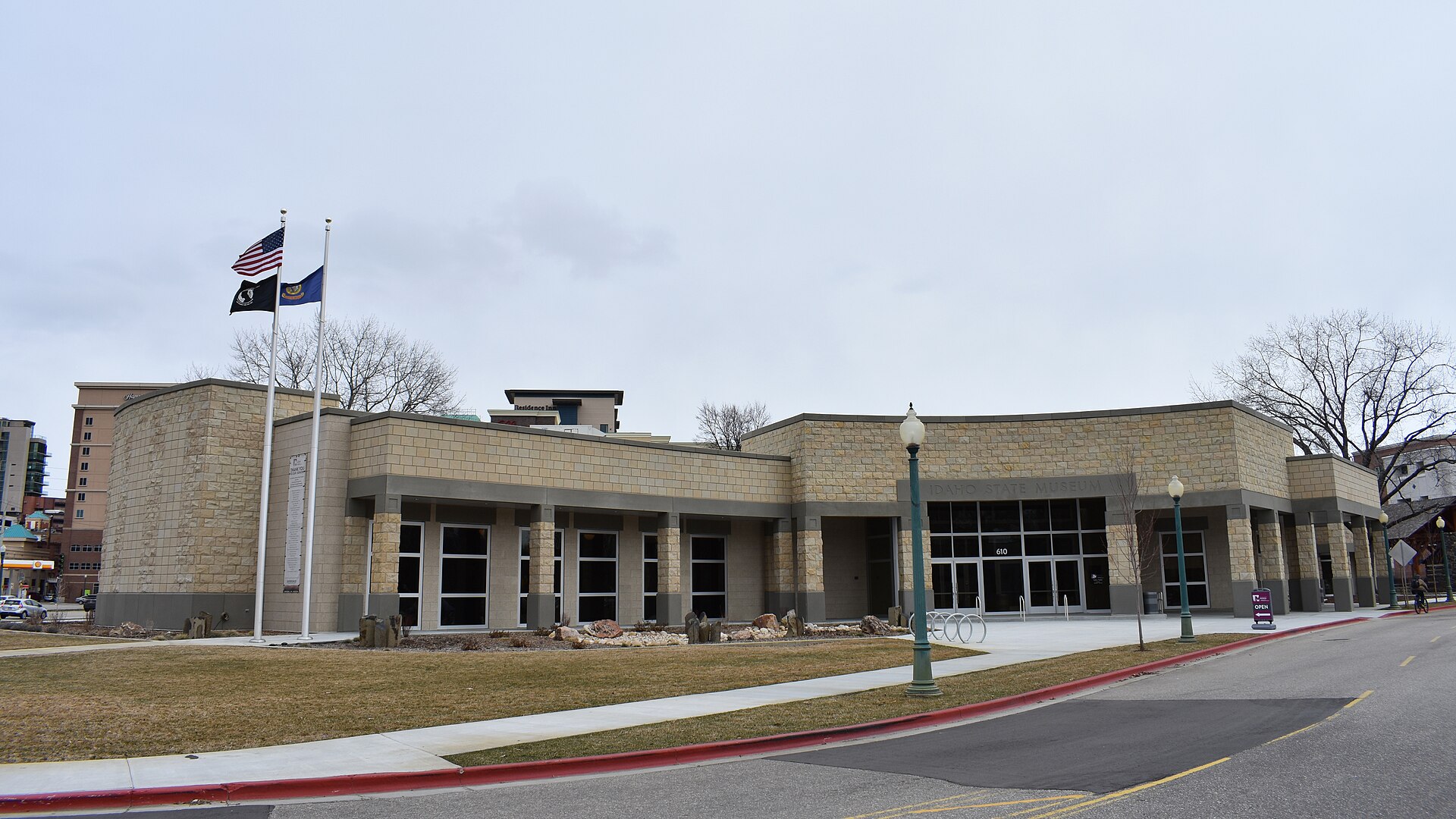
The Idaho State Museum is the state’s primary history museum, operated by the Idaho State Historical Society and located in Julia Davis Park in downtown Boise. It covers Idaho’s human history from Native settlement and the fur trade through mining, statehood and the 20th century, drawing on state-owned collections, artifacts and changing exhibits rather than art or natural science.
Who operates the Idaho State Museum?
The museum is a program of the Idaho State Historical Society, the state agency responsible for preserving Idaho’s historical record. The Society was established by territorial legislation in the 19th century and today runs several historic properties across the state, of which the Idaho State Museum is the flagship public exhibition space. As a state agency rather than a private nonprofit, its collecting priorities and exhibit content are set by statute and by the Society’s own curatorial staff, not by a tourism board or private donor board.
This distinction matters for how the museum is organized: it is built to be a systematic record of the state’s history, not a themed attraction, and its collections policy follows archival and museum-accreditation standards rather than a single donor’s private collection, which is the model behind some of Boise’s other cultural institutions.
Where is the museum located, and what is the building?
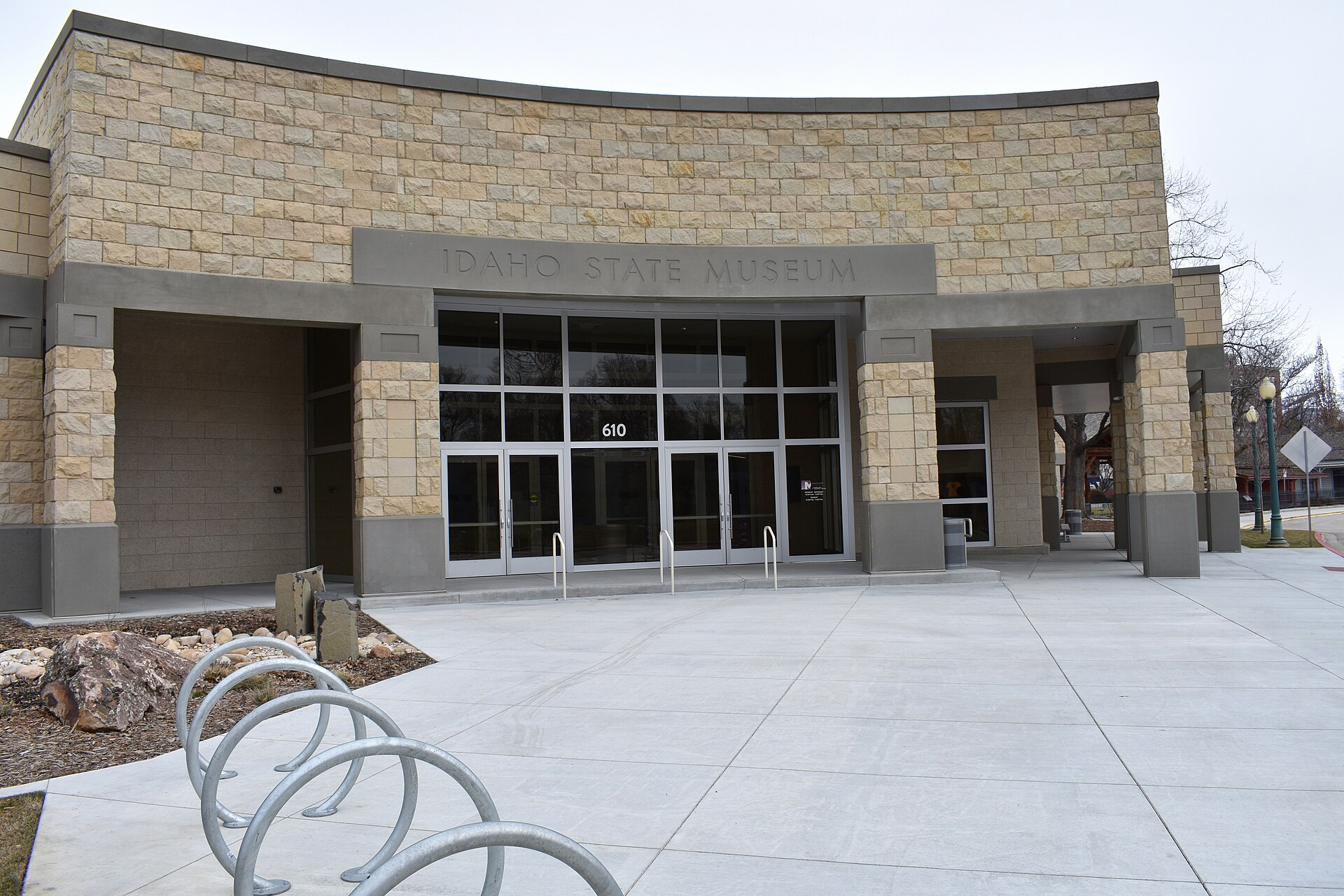
The Idaho State Museum sits inside Julia Davis Park, the downtown Boise park that also holds Zoo Boise, the Boise Public Library’s main branch, and the Boise Art Museum. The museum’s building combines an original mid-20th-century structure with a substantial modern addition completed as part of a renovation project; the Idaho State Historical Society’s own site describes the current building as a purpose-built expansion of the historic structure, designed to hold both permanent galleries and space for temporary exhibitions.
Because it shares the park with several of the city’s other major cultural sites, the museum is typically discussed alongside the broader cluster of institutions covered in Access Boise’s museums and galleries hub, which lists the city’s principal collecting institutions together.
What does the collection cover?
The Idaho State Historical Society describes the museum’s scope as the human history of the region that became Idaho, organized broadly around these periods and themes:
- Indigenous settlement and the histories of Idaho’s federally recognized tribes, including material relating to the Shoshone-Bannock, Nez Perce, Coeur d’Alene, Kootenai, and Shoshone-Paiute peoples
- The fur trade era and early European and American exploration of the Snake River and Rocky Mountain region
- The Oregon Trail and overland migration through Idaho territory
- Gold and silver mining rushes, including the mining camps that shaped early Idaho settlement patterns
- Territorial government and Idaho’s path to statehood in 1890
- Twentieth-century economic and social development, including agriculture, industry and immigration
This is a state history collection in the archival sense: documents, photographs, tools, clothing, domestic objects, and artifacts tied to specific events or communities, rather than fine art. Readers looking specifically for painting and sculpture collections in Boise are better served by the separate Boise Art Museum collection, which sits a short walk away in the same park but operates as an independent nonprofit with an entirely different acquisitions mandate.
How is the museum organized into galleries?
The Idaho State Historical Society organizes the permanent exhibits chronologically and thematically, moving from the region’s earliest human occupation through territorial and statehood-era material into more recent industrial and social history. Alongside the permanent installation, the museum maintains rotating temporary exhibition space, which the Society uses for focused shows on specific communities, industries, or historical episodes that do not fit neatly into the permanent chronology.
Because exhibit content changes on a rotating schedule, any list of what is currently on display is perishable by design; the Idaho State Historical Society’s own site is the authoritative source for what is currently installed in the temporary galleries at any given time.
.jpg)
What changed in the museum’s 2019 reopening?
The museum closed for a multi-year renovation and expansion project before reopening to the public in 2019. The Idaho State Historical Society’s own description of the project frames it as both a physical expansion — adding new gallery and program space to the existing structure — and a curatorial overhaul, updating exhibit design and interpretive approach rather than simply reinstalling the same displays in a larger footprint.
For a resident who last visited the museum before its closure, this is the single most important fact to register: the interior galleries, layout, and exhibit narratives are largely new relative to the pre-2019 building, even though the museum’s subject matter — Idaho’s history — has not changed.
How does it relate to other Idaho State Historical Society sites?
The Idaho State Museum is one of several sites the Idaho State Historical Society manages across the state, each with a distinct focus. The Old Idaho Penitentiary, also in Boise, is a separate historic site run by the same agency, covering the territorial and state prison that operated on a different site south of downtown; it is a distinct visit from the Idaho State Museum and covers a narrower, single-institution history rather than the state’s broader historical arc.
Readers trying to plan a fuller picture of Idaho history across Boise’s institutions should treat the Idaho State Museum as the general survey and other Society-run sites as deeper dives into specific chapters of that same record.
How does the Idaho State Museum fit with Boise’s other museums?
Within Boise, the Idaho State Museum is best understood as the city’s principal history museum, distinct from the art-focused collection at the Boise Art Museum and from smaller specialist museums elsewhere in the city. Access Boise’s museums and galleries archive covers this distinction in more detail, including how the city’s history, art, and specialist collections divide up subject matter across different institutions and buildings.
For a visitor with limited time who wants one museum that explains how Idaho came to exist as a state, the Idaho State Museum is the institution built specifically for that purpose. For a visitor whose interest is specifically in visual art rather than history, the Boise Art Museum’s collection is the more relevant stop, and the two are close enough within Julia Davis Park that both can reasonably be covered on the same visit.
What should visitors and residents know about hours and admission?
Hours, closure days, and admission pricing for the Idaho State Museum are set and periodically revised by the Idaho State Historical Society, and change more often than a guide like this one can track reliably. As with most museums of its kind, the museum publishes its current hours, any weekly closure day, and its ticket pricing — including any discounted or free-admission arrangements — on its own site, and that is the source to check before a visit rather than any third-party listing.
Residents planning a repeat visit, or anyone bringing a group, should treat the Idaho State Historical Society’s own published hours and pricing page as the only reliable source, since a program run by a state agency can also be affected by state holiday closures that differ from a typical retail or private-museum calendar.
For groups combining a visit with the rest of Julia Davis Park — Zoo Boise, the central library branch, and the Boise Art Museum are all within the same park grounds — it is worth checking each institution’s own hours separately, since they are independently operated and do not share a single closure schedule.
Access Boise is an independent guide written from published, checkable sources. We have not visited the places described here and we do not publish personal recommendations or invented ‘local favourites’ — where something is singled out as notable, we say who says so. Opening times, fares, closures and prices change at short notice, so treat everything here as a starting point and confirm with the museum, operator or venue directly before building a day around it. We give no advice on visas, insurance, health or safety; use your own government’s official guidance for those.
Featured image: Photo by Tamanoeconomico, source, CC BY-SA 4.0
.jpg)
Related reading
Living in Boise, Boise, Practically, What Is the Boise WaterShed, and What Does It Explain?, What Is the World Center for Birds of Prey in Boise?.