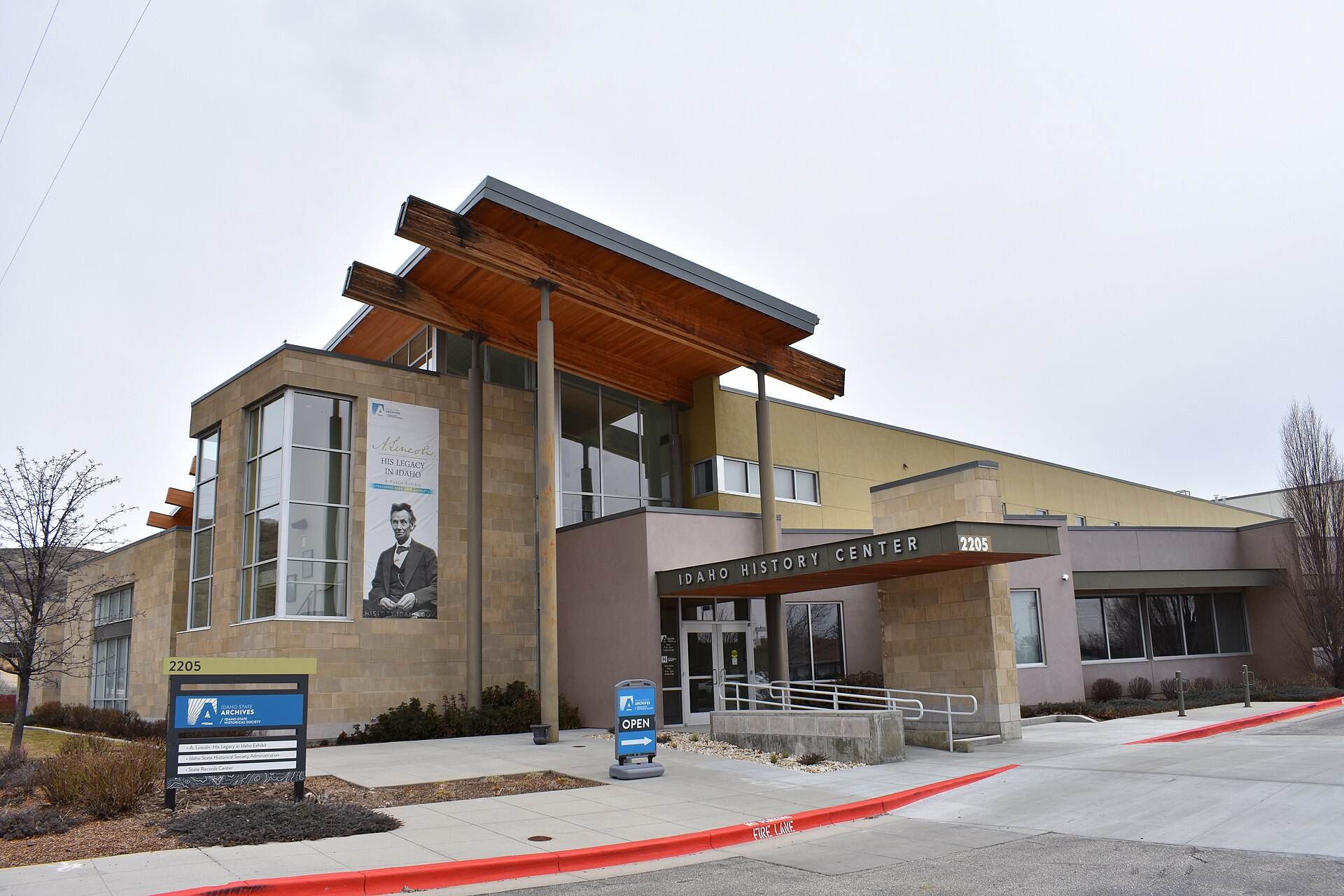
What is the Idaho State Archives?
The Idaho State Archives is the official repository for Idaho’s government records — territorial papers, state agency files, gubernatorial records, legislative documents, historical photographs, and newspapers on microfilm. It operates as a division of the Idaho State Historical Society, and its research room is open to the public at no charge.
What does the Idaho State Archives actually hold?
According to the Idaho State Historical Society’s own description of the collection, the Archives is built around the paper trail of Idaho government itself: territorial and state legislative records, executive papers going back to Idaho’s territorial governors, court and land records, and the working files of state agencies once those files are no longer active. Alongside that administrative core sits a large photograph collection, historic maps, manuscript collections donated by individuals and organizations, and a long run of Idaho newspapers preserved on microfilm.
This is a different kind of collection from a display museum. Nothing here is arranged for a walk-through visit. It exists to be requested, pulled, and read at a table — which is precisely what makes it useful to a narrower but more specific set of readers: genealogists, historians, journalists, land-title researchers, and anyone tracing a specific person, property, or state decision through the paper record.
Where is the Idaho State Archives located?
The Archives sits on the Idaho State Historical Society’s campus off Old Penitentiary Road in Boise, in the same cluster of institutions as the Old Idaho Penitentiary and the Idaho Botanical Garden, on the grounds built up around the former territorial prison. The Idaho State Museum, also run by the Idaho State Historical Society, is part of the same institutional family, though it occupies a separate building closer to Julia Davis Park and is organized as a public exhibition space rather than a research facility.
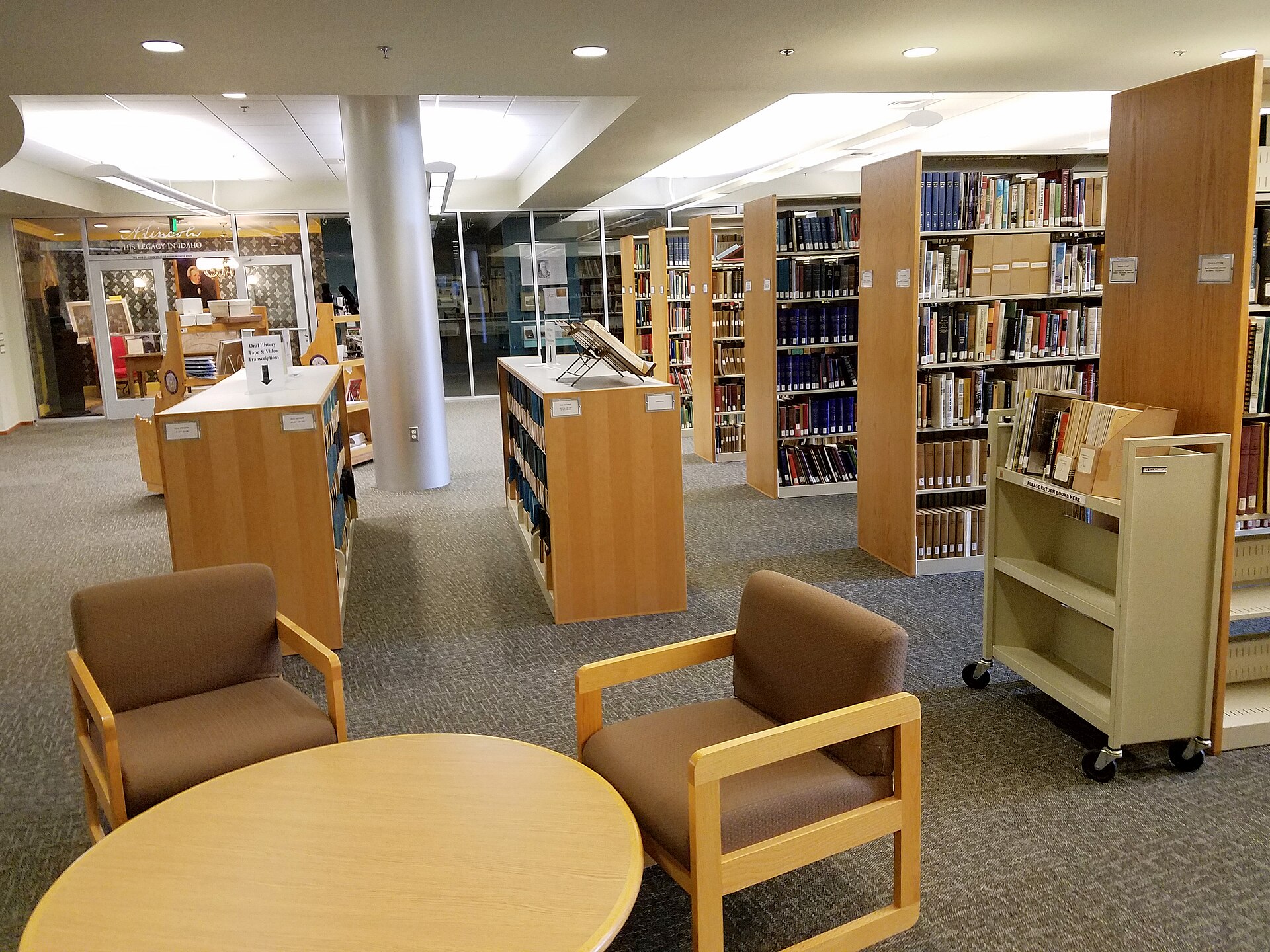
The Archives building itself was purpose-built for records storage, with climate-controlled stacks behind a public research room — a layout common to state and national archives, where the bulk of the collection is never on view and comes out only on request.
Can the public use the Idaho State Archives?
Yes. The Idaho State Historical Society states that the Archives’ research room is open to the public and free to use. No institutional affiliation, university card, or research credential is required — the room is set up for anyone with a genealogical, historical, or legal question to work through original or microfilmed records under staff supervision.
That openness comes with the ordinary conditions of any archive rather than a museum: bags and food are typically restricted near the reading room, materials must be requested and handled under staff guidance, and some records are paged from closed stacks rather than browsed on open shelves. None of this is unusual — it is how every serious public archive, state or federal, protects records that in many cases exist in only one copy.

Do you need an appointment, or can you just show up?
Policies on walk-in access, research hours, and appointment requirements are set by the Idaho State Historical Society and are subject to change, so this is exactly the kind of detail the Society’s own site should be checked for before a visit. Government archives commonly restrict their public hours to fewer days per week than a museum would, and may ask researchers requesting specific record series — court files, adoption records, certain agency papers — to give advance notice so material can be pulled from storage.
Anyone planning a research trip, rather than a casual look, is better served contacting the Archives directly or consulting its hours online first, since a wasted trip on a closed day is the most common complaint made against any records office of this kind.
What can researchers find for genealogy?
Idaho’s historical vital records, census-adjacent state records, probate and land documents, and old newspapers are the backbone of most genealogical inquiries made to the Archives. The Idaho State Historical Society’s own materials note that many historical vital records — birth, marriage, and death records outside a defined recent window — are held or made searchable through the Archives once they pass out of the custody of Idaho’s current vital records office, which handles only recent certificates.
Newspapers on microfilm are another heavily used resource: obituaries, legal notices, and local reporting going back to territorial-era Idaho survive in newspaper runs long after the physical papers themselves have not. For anyone tracing a family that passed through Idaho during the mining, homestead, or early statehood periods, the newspaper collection is often more productive than any single record series.
Is anything available online?
Some of the collection has been digitized and made searchable, and the Idaho State Historical Society maintains an online catalog and digital collections presence for exactly this reason — to let a researcher confirm a record exists, or view a digitized photograph or document, before making the trip to Boise. The scale of digitization is partial, as it is for essentially every state archive in the country; the underlying volume of paper and microfilm in the stacks far exceeds what has been scanned. The Society’s own site is the accurate place to check what is available remotely versus what requires an in-person request.
How does the Archives relate to other Idaho State Historical Society sites?
The Idaho State Historical Society runs several distinct sites around Boise, each with a different function, and the Archives is easy to conflate with its sister institutions if the distinction isn’t made explicit:
- The Idaho State Museum is the Society’s public exhibition space, built around Idaho’s broader material and cultural history, and organized for a museum visit rather than a research request.
- The Old Idaho Penitentiary is a historic site — the former territorial and state prison — that the Society also administers, with its own visiting hours and grounds.
- The Idaho State Archives is neither of these. It is the records office behind the story both other sites tell, holding the government paperwork, photographs, and press coverage that historians and museum curators draw on when building exhibits.
Readers researching a specific building, family, or state decision — as opposed to visiting a museum for an afternoon — are the Archives’ actual audience. It sits alongside institutions covered in Access Boise’s Museums & Galleries archive, though its own function is closer to a public records office than a gallery.
How does this compare with Boise’s other specialist collections?
Boise has several institutions that, like the Archives, exist to document a specific slice of the historical record rather than to entertain a general visitor. The Idaho Black History Museum and the Basque Museum and Cultural Center both hold community-specific archival material — oral histories, photographs, documents — alongside their exhibition spaces, and researchers working on Idaho’s Black history or Basque immigration often move between those collections and the State Archives itself. The Idaho Military History Museum similarly holds unit and service records that complement, rather than duplicate, what the state’s central Archives keeps.
None of these institutions substitute for one another. A genealogist chasing a family’s full Idaho paper trail may need the State Archives for land and probate records, a community museum for photographs and oral history, and a local library for supplementary newspaper indexing — the Archives is one node in that research network, not the whole of it.
Practical notes for visitors and residents
Anyone driving out for the first time should treat the Archives as a working government records office, not a tourist stop: bring identification, expect to fill out a request form for specific material, and expect staff to explain handling rules for original documents. Parking, hours, and any current restrictions are set by the Idaho State Historical Society and should be confirmed on its own site before a visit, since public-sector hours are the first thing cut in a budget year and the least reliably reported secondhand.
For Boise residents doing long-term genealogical or property research, the Archives is a resource worth returning to repeatedly rather than exhausting in one visit — record series are large, staff assistance is limited, and most serious research projects there unfold across several trips rather than one afternoon.
Readers assembling a broader day around Boise’s historical sites can pair an Archives visit with the Boise Depot, another Boise landmark documented in the Society’s own records, or browse Access Boise’s Landmarks & Sights archive for the wider context these records support.
Access Boise is an independent guide written from published, checkable sources. We have not visited the places described here and we do not publish personal recommendations or invented ‘local favourites’ — where something is singled out as notable, we say who says so. Opening times, fares, closures and prices change at short notice, so treat everything here as a starting point and confirm with the museum, operator or venue directly before building a day around it. We give no advice on visas, insurance, health or safety; use your own government’s official guidance for those.
Featured image: Photo by Tamanoeconomico, source, CC BY-SA 4.0
