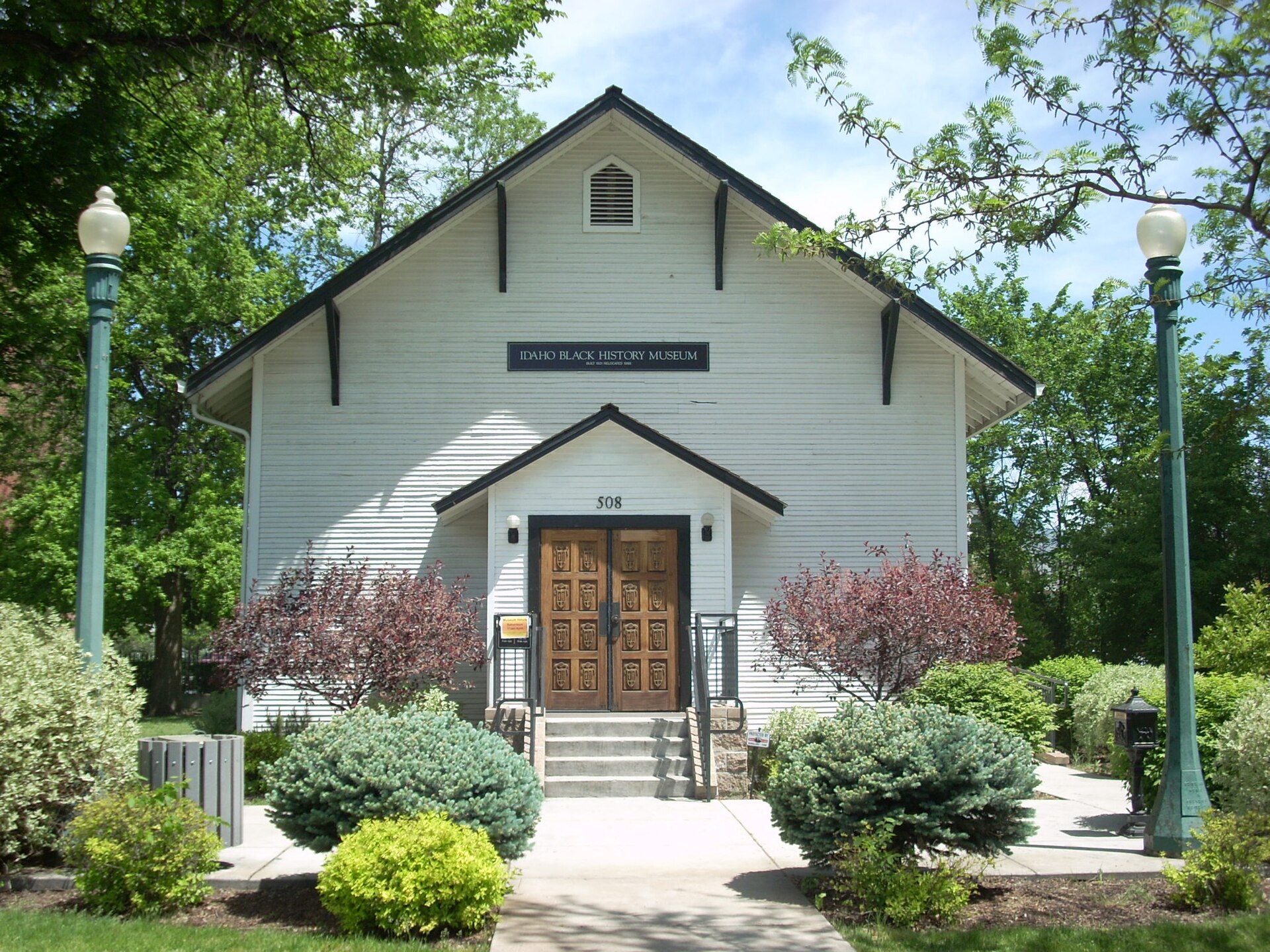
The Idaho Black History Museum is a small nonprofit museum in Boise’s Julia Davis Park dedicated to collecting, preserving, and interpreting the history of African Americans in Idaho. It occupies a relocated early-20th-century Black Baptist church building and covers pioneer settlement, military service, labor, and civil rights history specific to the state.
What is the Idaho Black History Museum, exactly?
It is a single-site museum run by a nonprofit organization, focused narrowly on Idaho rather than on African American history nationally. Its stated purpose, according to the museum’s own materials, is to document a history that is easy to overlook in a state whose Black population has always been small in absolute numbers but present since territorial days — miners, homesteaders, soldiers, railroad workers, and later civil rights organizers.
The museum is not part of a state agency. It functions independently of the Idaho State Historical Society and the city’s parks system, even though it sits on parkland and its subject overlaps with material the state museum also covers. Readers looking for the broader state historical narrative alongside it can compare it with what the Idaho State Museum’s own collection covers.
Where is the museum located?
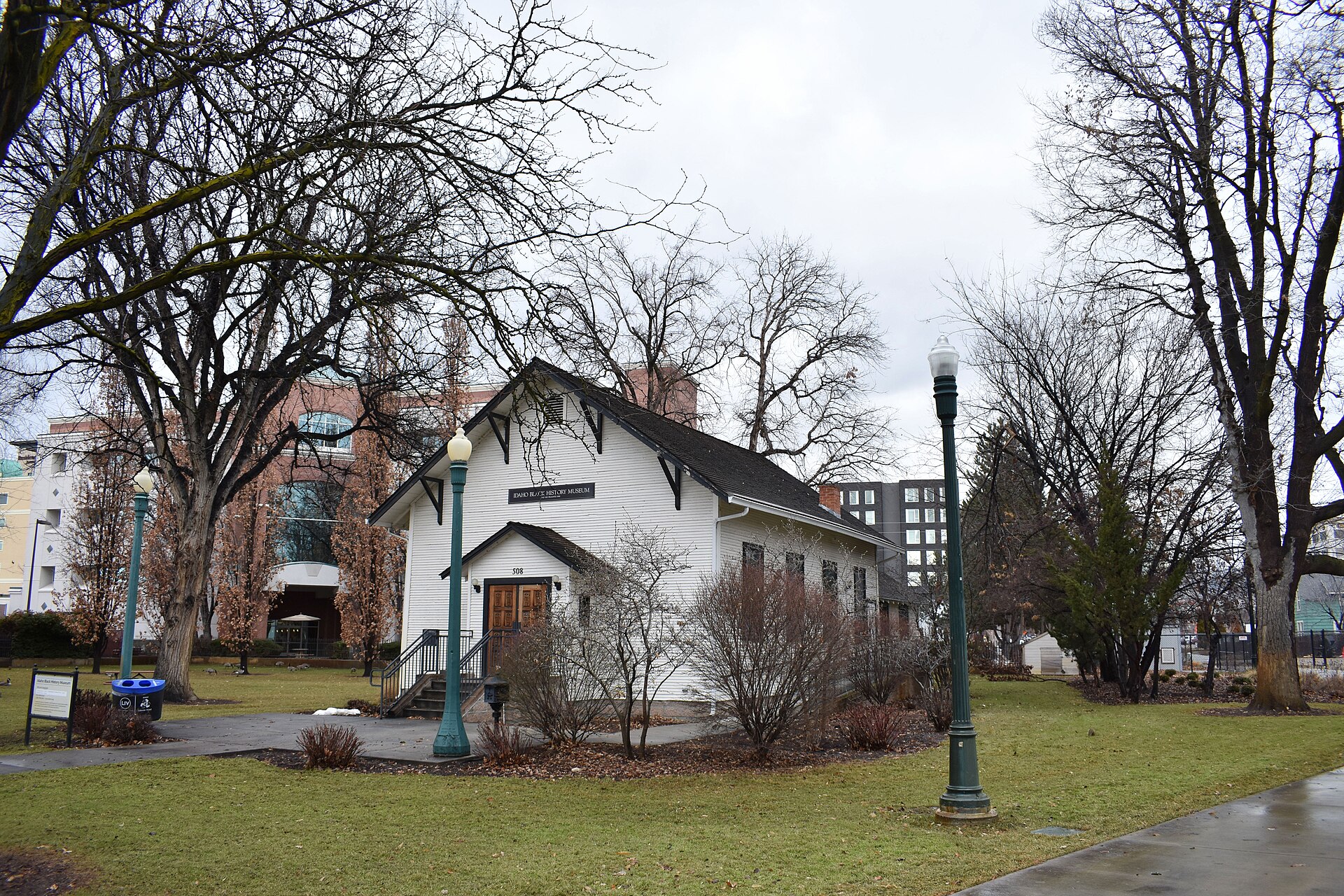
The museum stands in Julia Davis Park, Boise’s central riverside park near downtown, in the same cluster of institutions that includes Zoo Boise, the Boise Art Museum, and the Discovery Center of Idaho. This concentration is sometimes referred to informally as Boise’s museum district, though it has no official boundary or name of its own.
Being inside the park rather than on a commercial street changes how it’s approached: there’s no standalone storefront, and visitors typically arrive on foot from a shared park entrance or parking area serving several institutions at once. Readers assembling a day around the park’s cluster of attractions may find it useful to browse the Museums & Galleries archive for how these venues sit relative to one another.
What building does the museum occupy?
The museum is housed inside a wood-frame church building originally constructed in the early 1900s by Boise’s small Black congregation as St. Paul Baptist Church. It was built by and for a community that, at the time, had few other institutions of its own in the city.
The building was later moved from its original downtown site to Julia Davis Park to prevent its demolition, and it now serves a second purpose as the museum’s home. This relocation-and-reuse pattern is common among historic structures in Boise that would otherwise have been lost to redevelopment; the building’s own history — as a congregation’s meeting place before it became a museum — is treated by the institution as part of the exhibit itself, not just a container for it.
Readers wanting the National Register of Historic Places’ own listing details for buildings of this kind should consult the National Register of Historic Places database directly, since listing status and documentation for individual structures should be confirmed at the source rather than assumed.
What does the museum’s collection actually cover?
The collection and exhibits, per the museum’s own descriptions, center on Idaho-specific chapters of African American history rather than a general national timeline. Recurring subjects include:
- Black pioneers and homesteaders who settled in Idaho Territory and the early state.
- African American soldiers, including Buffalo Soldiers regiments stationed at western forts.
- Labor history tied to mining, the railroad, and domestic and service work in Boise and other Idaho towns.
- Twentieth-century community life, including the congregation that built the church building itself.
- Civil rights-era organizing and desegregation efforts within Idaho specifically.
Because the museum is small, its exhibits function more like a focused case study than a comprehensive gallery — a point worth setting expectations by, since it differs in scale from a state or city history museum with broader curatorial resources.
.jpg)
Is the museum open year-round?
The museum operates on a set schedule that, like most small nonprofit museums, is subject to change by season and by staffing. Rather than state specific days or hours here — details that shift and go stale quickly — readers should confirm current opening days, hours, and any admission charge directly on the museum’s own website before planning a visit.
As with several of Boise’s smaller cultural institutions, opening patterns can narrow during winter months and expand around programming tied to Black History Month in February, when public interest and scheduled events typically increase. Any specific event dates should likewise be checked against the museum’s own calendar rather than assumed to recur on a fixed date each year.
How does it compare to other Boise history museums?
Boise’s cluster of museums divides roughly by scope rather than by era. The Idaho State Museum covers the state’s history broadly, from geology through statehood to the present. The Basque Museum and Cultural Center documents a specific immigrant community’s history and language in the Boise area, comparable in scale and approach to the Idaho Black History Museum’s focus on one community’s story within the state. The Old Idaho Penitentiary covers the territorial and state prison system as a distinct institutional history.
Seen together, these museums form a set of narrower, community- or institution-specific accounts rather than one master narrative, which is arguably a more accurate reflection of how a state with a genuinely varied settlement history is documented at the local level. The Boise Art Museum, by contrast, is organized around visual art rather than historical documentation, though it sits in the same park.
Who runs the museum, and how is it funded?
The Idaho Black History Museum operates as an independent nonprofit organization. Nonprofit museums of this size typically depend on a mix of admission donations, membership, grants, and volunteer labor rather than guaranteed public funding, and the museum’s own site is the appropriate place to check its current governance, board, and support structure — this is not something a third party can state reliably from the outside.
This funding model also explains why its hours and programming can shift more than those of a city- or university-affiliated institution: staffing and open days often track available volunteer and donor support directly.
What should a visit be planned around?
Because the museum sits inside Julia Davis Park, a visit is easiest to plan alongside the park’s other attractions rather than as a standalone trip. The park also holds Zoo Boise, whose conservation fee structure is worth understanding before arrival, and the Discovery Center of Idaho, a hands-on science museum aimed largely at families.
For readers mapping out a broader circuit of Boise’s historic sites and public landmarks beyond the park, the Landmarks & Sights archive is the wider reference point for how these individual places connect across the city.
None of the practical detail above — hours, admission, parking arrangements within the park — should be treated as fixed. Readers should verify current information directly with the museum before visiting, since small nonprofit institutions are the most likely of any Boise venue to change their schedule with little public notice.
Access Boise is an independent guide written from published, checkable sources. We have not visited the places described here and we do not publish personal recommendations or invented ‘local favourites’ — where something is singled out as notable, we say who says so. Opening times, fares, closures and prices change at short notice, so treat everything here as a starting point and confirm with the museum, operator or venue directly before building a day around it. We give no advice on visas, insurance, health or safety; use your own government’s official guidance for those.