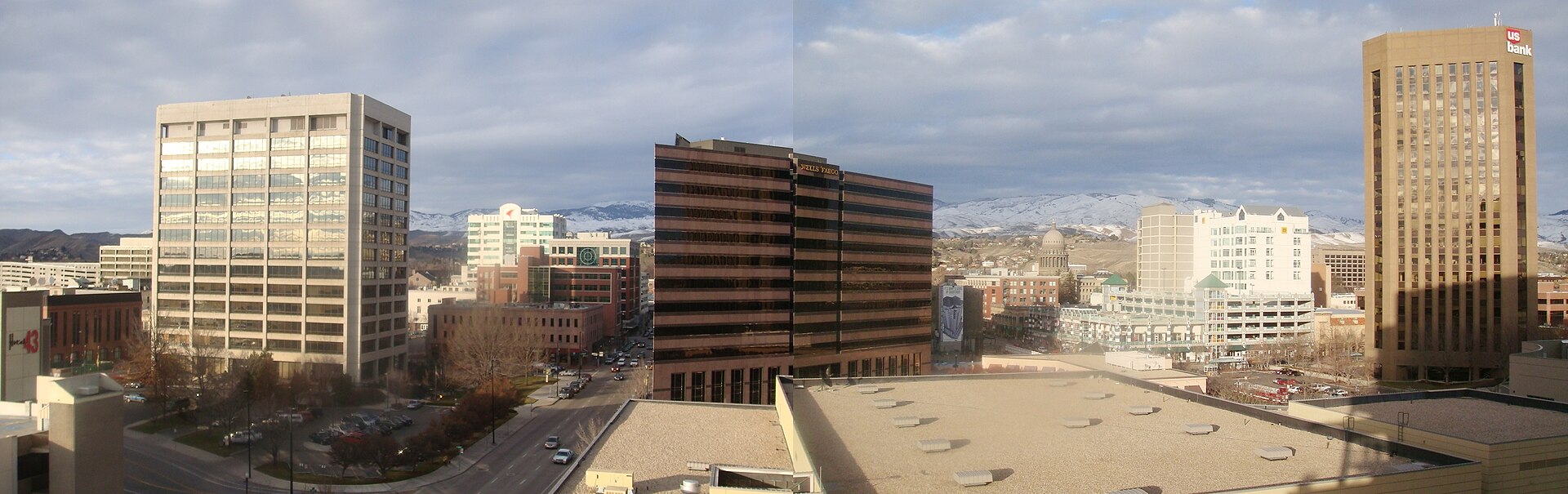
Plan a hundred-degree Boise day around the clock, not around a checklist: outdoor time goes before roughly 10 a.m. or after 7 p.m., the middle of the day moves indoors or onto the river, and every plan assumes dry air that makes the number on the thermometer feel different from a hundred degrees somewhere humid. Shade, water, and air conditioning become the actual itinerary.
How hot does a Boise summer day actually get?
Triple-digit afternoons are a normal, recurring feature of a Boise summer, not an anomaly. The National Weather Service’s Boise forecast office tracks these highs and issues heat advisories when a stretch of them coincides with limited overnight cooling. What a Boise summer is actually like lays out how many of these days typically occur and how the season is structured, and Boise’s elevation and dry air explains why triple digits here register differently than the same number somewhere with higher humidity.
What time of day should outdoor plans happen?
Mornings, roughly before 10 a.m., and evenings after the sun drops behind the foothills are the workable outdoor windows on a hundred-degree day. Idaho’s high desert climate means overnight lows drop faster than in humid regions, so early starts and late finishes both feel genuinely cooler, not just marginally so.
That shapes the whole day: front-load anything that requires walking, and treat the early afternoon — roughly noon to 6 p.m. — as the period to be somewhere shaded, air conditioned, or in the water.
Which parts of Boise actually offer shade without a car?
Downtown Boise and the North End have the city’s oldest tree canopy, a legacy of decades of street-tree planting, and both are walkable in a way that newer suburban districts are not. Which Boise neighborhoods work on foot covers where sidewalks, shade, and density actually align. Downtown Boise’s own boundaries mark out the core grid where most shaded plazas and arcades sit.
Grove Plaza, the paved public square at the center of downtown, includes a fountain that the city has long allowed as informal water play in warm weather; what Grove Plaza is used for covers its role as a public gathering space through the seasons.
Is the Boise River usable on a day like this?
Floating the Boise River is a documented, city-supported summer activity, not an improvised one. Barber Park, on the river’s upper stretch, functions as the established put-in point, and the float ends downstream near Ann Morrison Park; the current runs a low, manageable stretch through the city rather than whitewater. Water levels, seasonal closures, and any equipment rules are set by the operating agencies each year, so specifics should be confirmed on the city’s own parks pages rather than assumed to repeat exactly from year to year.
The Boise Greenbelt guide covers the paved path that follows the river and connects most of the parks a hot-day plan would use, including where shade cover is thickest along the route.

Which museums and indoor attractions make sense on a hundred-degree day?
Boise’s museum cluster sits largely around Julia Davis Park, within walking distance of each other, and all operate as conventional air-conditioned indoor institutions — a straightforward answer to a hundred-degree afternoon. The Museums & Galleries archive covers the collections in detail; the Boise Art Museum’s collection and the Idaho State Museum’s collection are two anchors of that cluster, and which Boise museums are free is worth checking before building a multi-stop indoor day, since free days and free general admission vary by institution and are set on each museum’s own site.
The Discovery Center of Idaho, also within that park cluster, is built around hands-on science exhibits and functions the same way on a heat day: a fully indoor stop that does not depend on weather at all.
Does the heat change how people get around the city?
Asphalt, parking lots, and long unshaded blocks make a hundred-degree afternoon a poor time to rely on walking between distant points, even in a city as compact as Boise. Whether a car is actually necessary in Boise and how far apart things really are both explain why a plan that works on foot in spring can require a car, a bus, or an e-scooter in July and August. Boise’s e-scooter and bike-share options covers the on-demand alternative for short hops between shaded stops without committing to parking downtown, and how downtown parking works is worth reading before driving in, since shaded street parking downtown is limited and structured garages are the more reliable heat-day option.
Does wildfire smoke overlap with the hottest days?
Idaho’s wildfire season runs largely the same months as the hottest weather, and smoke can arrive from fires well outside the Boise valley, affecting air quality on days that are otherwise clear and dry. What Boise’s smoke season is, and when it happens and what to know about wildfire season near Boise both cover how that overlap works and where official air-quality readings are published, which is the only reliable way to check conditions on a given day rather than assuming a hot day is automatically a clear one.
What should someone who actually lives in Boise do differently?
Residents tend to shift their whole daily rhythm for a hot stretch rather than treat it as a single unusual day: errands and exercise move to early morning, air conditioning use is planned around the utility’s peak-hours pricing where it applies, and outdoor evening plans — patio dinners, Greenbelt rides, park time — simply start later in the evening than they would in May or September. The Living in Boise hub and its Living in Boise archive cover how residents adjust across a full year, not just a single heat spell, including how the city’s geothermal heating system and seasonal utility patterns fit into that picture.
For a resident, the practical planning tool is less “what to see” and more “which two hours of the day are unusable outdoors,” and building errands, meetings, and exercise around that window becomes routine by mid-July.
How does this fit into a broader Boise visit?
A hundred-degree day does not have to derail a short trip; it mainly reorders it. The one-day Boise plan, the two-day itinerary, and what a third day makes room for can all absorb a heat day by swapping an outdoor block for a museum block and moving park or river time to the morning or evening. The Boise Practical hub and the Itineraries & Day Plans archive cover how to restructure a set plan around whatever the week’s weather actually does, since Boise’s summer heat is reliable in pattern but not identical from one visit to the next.
Checking the National Weather Service’s Boise forecast office directly before finalizing a day’s schedule is the most durable single step, since advisories and daily highs are the only figures that change often enough to need confirming in real time.
Access Boise is an independent guide written from published, checkable sources. We have not visited the places described here and we do not publish personal recommendations or invented ‘local favourites’ — where something is singled out as notable, we say who says so. Opening times, fares, closures and prices change at short notice, so treat everything here as a starting point and confirm with the museum, operator or venue directly before building a day around it. We give no advice on visas, insurance, health or safety; use your own government’s official guidance for those.
Featured image: Photo by Prod0016, source, CC BY 3.0
