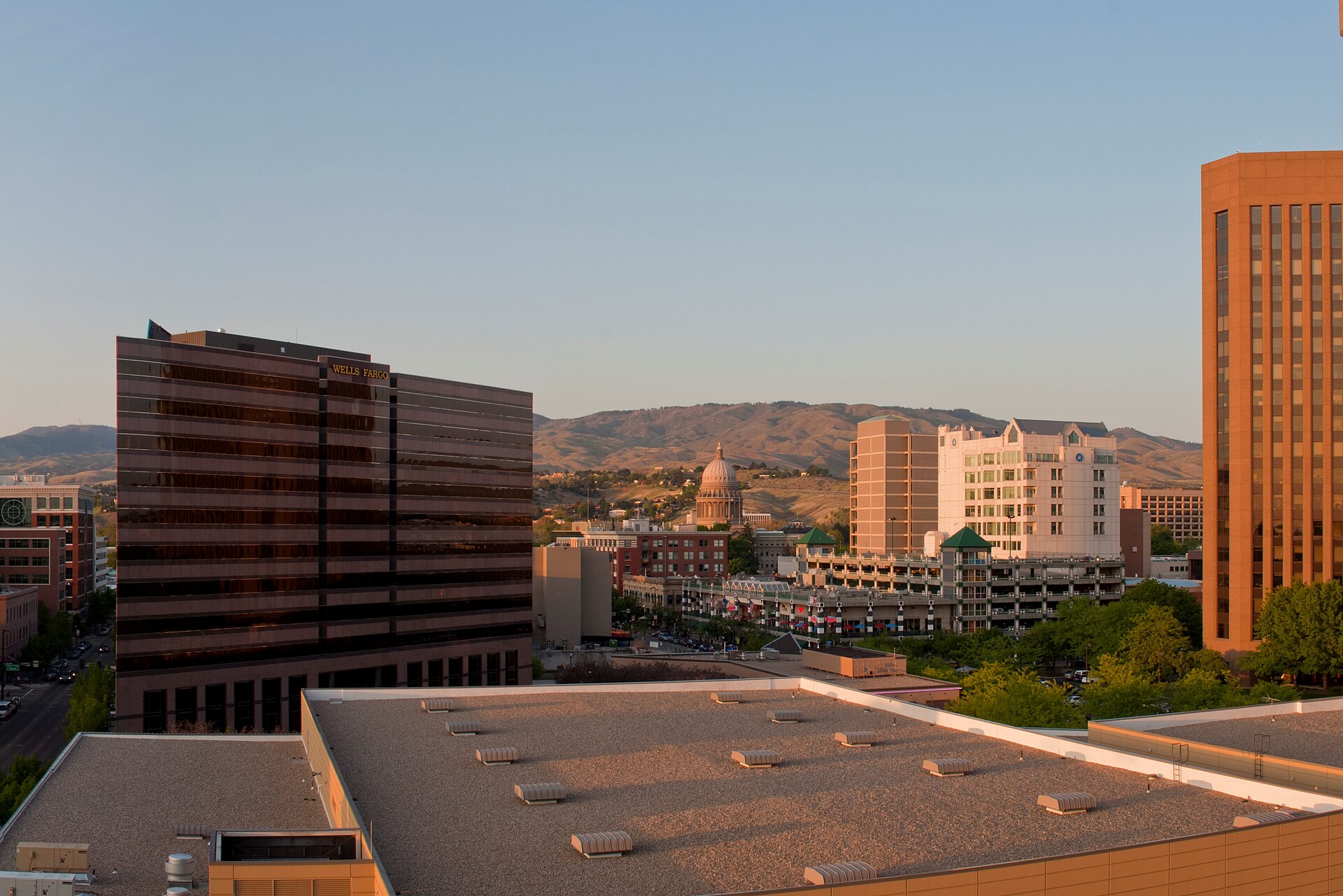
A single day in Boise realistically covers the downtown core — the Idaho State Capitol, the Basque Block, and the museum cluster in Julia Davis Park — plus one further stop, because the city’s most-cited attractions sit in two separate pockets roughly two miles apart. Adding the foothills or the Old Idaho Penitentiary on the same day usually means cutting something else.
What can realistically fit into one day in Boise?
One day supports a walkable downtown loop and a short drive or bus ride to a second cluster, not both a foothills excursion and a full museum circuit. The city’s own geography does the deciding: downtown Boise, the Basque Block and the State Capitol sit within a few walkable blocks of each other, while the Old Idaho Penitentiary, Idaho Botanical Garden and the foothills trailheads sit two to three miles southeast, and Bogus Basin sits well outside the valley entirely. A realistic day picks one anchor cluster and adds a second stop nearby, rather than trying to string together everything the city offers. The guide to how far apart everything actually is in Boise lays out the distances in more detail; the short version is that the compact core is genuinely compact, and everything past it takes deliberate travel time.
How should the day be structured geographically?
Most one-day visits work best moving from the State Capitol through downtown to the Basque Block on foot, then covering Julia Davis Park and its museums as a second, connected leg before adding one further stop by car or bus. This keeps walking distances short in the morning and reserves any driving for later in the day, when a single additional destination — the Old Idaho Penitentiary, the foothills, or the Greenbelt — can be reached without doubling back. The Boise guide hub breaks the city into these same clusters for anyone planning beyond a single day, and the practical planning hub covers the logistics of moving between them.
What does the downtown core actually contain?
Downtown Boise centers on the Idaho State Capitol, a domed sandstone building completed in stages through the early twentieth century. The Capitol’s own visitor information describes it as the only state capitol in the country heated by geothermal water drawn from wells beneath the city, part of a district heating system that also serves other downtown buildings. A short walk south leads to Grove Plaza, a public square used for markets and events, and to Capitol Boulevard, the axis connecting the Capitol steps to the Boise Depot to the south.
From there, the Basque Block runs along a short stretch of Grove Street and holds the highest concentration of Basque cultural institutions in the city, according to the Basque Museum & Cultural Center’s own site, which documents the block’s boarding houses and community buildings dating to the early twentieth century. The exact article for this stretch of downtown is worth reading before visiting, since the boundaries of the district are narrower than the name suggests: see what counts as downtown Boise, and where it actually ends. The Basque Museum & Cultural Center’s collection is the anchor institution for the block and typically the fastest way to understand what the neighborhood represents.

Downtown also holds Freak Alley Gallery, a mural-covered alley behind the Eighth Street corridor that its own organizers describe as one of the largest outdoor collections of murals in the Pacific Northwest. It requires no entry and no advance planning — it is simply an alley, open to the street on both ends — which makes it an easy addition between other stops rather than a destination in its own right.
Is there time for a museum, and which one fits a single day?
Julia Davis Park, just south of downtown across the river, holds several of the city’s museums within a few hundred feet of each other, which makes it efficient for a single visit even if there is time for only one building. The Idaho State Museum, run by the Idaho State Historical Society, covers the state’s territorial and natural history. The Boise Art Museum, a separate institution in the same park, holds a permanent collection alongside changing exhibitions. Zoo Boise and the Discovery Center of Idaho sit in the same cluster and are aimed more squarely at younger visitors. None of these require a full day individually, which is precisely why the park works as a single stop rather than several separate trips.
Should the day include the Old Penitentiary or the foothills instead?
The Old Idaho Penitentiary and the foothills are both worth the added stop, but they pull in different directions and rarely fit into the same day as the downtown core. The Old Idaho Penitentiary operated as the territorial and state prison from 1872 to 1973 and is listed on the National Register of Historic Places; it now sits on grounds shared with the Idaho Botanical Garden, southeast of downtown near the base of the foothills. Details on the site’s cellblocks, yard and current operating pattern are covered in the guide to what the Old Idaho Penitentiary actually holds, and what to expect visiting it.
The alternative is the foothills themselves, reached via trailheads managed under the city’s Ridge to Rivers program, or the paved Boise River Greenbelt, which runs along the river through much of the city and connects several of its parks. Either option trades museum time for open space, and neither is compatible with also reaching Bogus Basin, which sits well outside the valley and effectively requires its own half day.
Do you need a car to cover this in a day?
A car is not strictly necessary for the downtown-and-Julia-Davis-Park core, which is walkable end to end, but it becomes useful for anyone adding the Old Penitentiary, the foothills, or Bogus Basin, none of which sit within comfortable walking distance of downtown. Valley Regional Transit’s bus network and the city’s e-scooter and bike-share options can substitute for a car on some of these legs, though schedules and coverage should be checked directly rather than assumed. The guide to whether you actually need a car in Boise covers this trade-off for longer stays as well as single-day visits, and is worth reading before deciding how to structure the day.
How does the season change what fits into a day?
Boise’s calendar affects both daylight and comfort more than it affects which sites are open. Winter shortens the practical window for outdoor stops like the foothills or the Greenbelt, and summer heat makes early starts more useful for the same reason. Wildfire smoke season, typically a late-summer concern, can also reduce visibility and comfort for anything outdoors, which is worth checking before building a foothills stop into the plan. Further detail on both patterns sits in the Planning & Practicalities archive, alongside guidance on dressing for the day’s actual conditions rather than the season’s reputation.
What does a resident get out of a “one day in Boise” itinerary?
For someone who already lives in the city, this same downtown-to-Julia-Davis-Park route is less a checklist than a way of showing a visiting relative or a weekend guest the parts of Boise that explain how the rest of it works — the Capitol that also heats the district around it, the Basque Block that reflects a specific immigrant history rather than a themed district, and a park that concentrates several institutions instead of scattering them across the valley. The Itineraries & Day Plans archive and the Living in Boise hub both cover how these same places function on an ordinary week, once the one-day version has been done.
Access Boise is an independent guide written from published, checkable sources. We have not visited the places described here and we do not publish personal recommendations or invented ‘local favourites’ — where something is singled out as notable, we say who says so. Opening times, fares, closures and prices change at short notice, so treat everything here as a starting point and confirm with the museum, operator or venue directly before building a day around it. We give no advice on visas, insurance, health or safety; use your own government’s official guidance for those.
Featured image: Photo by Patrick R., source, CC BY 3.0
