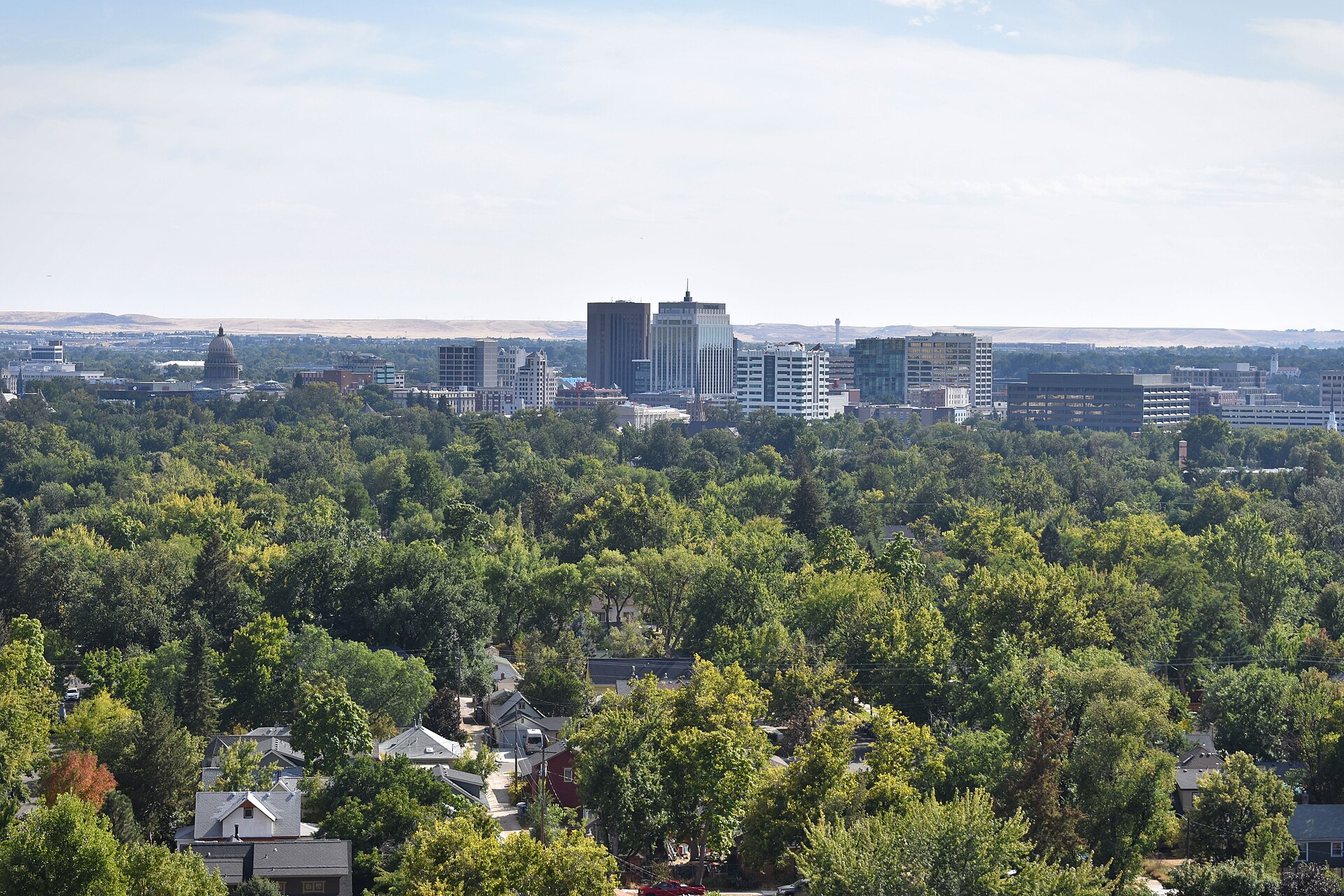
A Boise summer is hot, dry, and sunny for weeks at a stretch, with afternoon highs regularly reaching the mid-90s Fahrenheit and pushing past 100°F (38°C) several times a year. Humidity stays low, nights cool off sharply, and by late July or August, wildfire smoke drifting in from regional fires is a real possibility, not a rare exception.
How hot does it actually get in Boise?
The National Weather Service office covering Boise records afternoon highs in the 90s°F (32–37°C) as routine from mid-June through August, with multiple days each summer crossing 100°F (38°C). The city’s official climate record, kept by the same office, shows July as the hottest month on average, with August close behind.
Triple-digit stretches typically arrive in short runs of several consecutive days rather than a single unbroken heat wave lasting the entire season. Between those runs, highs commonly settle back into the 90s°F, which is still hot but a noticeable step down. Anyone checking specific forecasts or historical averages should go directly to the National Weather Service’s Boise office rather than rely on a fixed number here, since any single figure is only a snapshot of a variable record.
Is the heat humid, or is it a dry heat?
Boise sits in a high desert basin, and its summer humidity is low by national standards. That dryness is the single biggest difference between a Boise summer and a summer in a humid part of the country: the same air temperature feels less oppressive when moisture is low, and it also means the desert loses heat quickly after sunset.
Low humidity has a practical side too. It is part of why Idaho’s wildfire season overlaps so directly with Boise’s summer — dry vegetation across the surrounding foothills and rangeland ignites and spreads more easily in these conditions, which is discussed in more detail below.
Does Boise get wildfire smoke in summer?
Yes, in most years, for at least part of the season. Idaho’s Department of Environmental Quality monitors air quality across the state and issues advisories when smoke from fires — sometimes burning within Idaho, sometimes drifting in from Oregon, Washington, Nevada or California — pushes particulate levels into unhealthy ranges for parts of the population.
Smoke events are not constant through the summer; they tend to cluster in late July, August and into September, and their severity varies year to year depending on regional fire activity. Anyone with respiratory sensitivities, or anyone planning outdoor time during this window, should check the Idaho DEQ’s current air quality index directly rather than assume a given week will be clear.
How do Boise’s evenings compare to its afternoons?
The gap between daytime highs and nighttime lows in a Boise summer is wide. It is common for a 98°F (37°C) afternoon to drop into the 60s°F (high teens Celsius) by early morning. That swing is a direct result of the region’s dry air and desert climate, and it shapes daily life more than the peak temperature does.
Locally, this means outdoor activity tends to shift toward early morning and evening in the hottest stretch of summer, with the middle of the day treated as the part to plan around rather than the part to be outside for. Homes and buildings across the city are built and cooled with that daily swing in mind.
What does summer look like across Boise’s neighborhoods and foothills?
Boise’s summer character changes somewhat by elevation and setting. The foothills above the city, managed in part through the city’s own Ridge to Rivers trail system, run hotter and drier at midday than the shaded, tree-lined streets of older neighborhoods near the river.
The North End and other mature, tree-canopied districts hold shade through the day in a way that newer, more exposed subdivisions on the valley floor do not. That difference is worth knowing for anyone deciding where to walk or spend time outdoors during the hottest hours, and it is one of many practical distinctions covered across the site’s neighborhood guides.

How does the Boise River fit into a Boise summer?
The Boise River running through the city is a defining summer feature, both as a cooling presence and as a recreational corridor. The paved Greenbelt path that follows it is used heavily for walking, running and cycling in the cooler parts of the day, and the river itself becomes a public draw for floating and wading once water levels and releases from upstream reservoirs allow it.
The Greenbelt is not only a recreational path; it is also used as an actual commuting corridor by residents, a use explained in the site’s guide to commuting on the Boise Greenbelt. In summer, expect it to be busiest in early morning and again in the evening, once the day’s peak heat has passed.
Does summer heat affect getting around the city?
Heat changes the timing of activity more than it changes the mechanics of getting around. Pavement and parked cars heat up fast under direct sun, which is part of why walking routes that stay shaded matter more in summer; the site’s breakdown of which parts of Boise actually work on foot is useful for judging that in advance.
Cycling follows the same logic — mornings and evenings are more comfortable than midday, a point covered in the guide to how good cycling actually is in Boise. Distances between downtown, the Bench, and outlying areas like Eagle or Meridian don’t change with the season, but how comfortable it is to cover them without air conditioning does; the site’s guide to how far apart everything in Boise really is lays out those distances plainly.
What should someone visiting in summer actually plan around?
Summer is Boise’s peak season for outdoor tourism, and that shapes both crowding and cost at anything tied to the outdoors — river floating, the foothills trail network, and events downtown. It is also the season furthest from the city’s winter weather patterns discussed in the site’s explanation of what a Boise winter is actually like, which makes the two extremes worth comparing before choosing when to come.
- Expect long daylight hours, since Boise sits far enough north that summer evenings stay light late.
- Expect at least some days over 100°F (38°C), typically clustered rather than spread evenly through the season.
- Expect the possibility of smoke-affected air quality in late summer, worth checking on Idaho DEQ’s site before firm outdoor plans.
- Expect a large gap between afternoon heat and cool mornings and evenings.
For a broader comparison across all four seasons — including how summer stacks up against Boise’s spring and fall shoulder periods — the site’s answer to when the best time of year to visit Boise actually is lays out the tradeoffs directly. And for anyone weighing a longer stay rather than a visit, the guide to living in Boise covers how residents actually structure a summer around the heat, from air conditioning to shifted daily schedules.
None of this is a substitute for checking current conditions before travel. The National Weather Service’s Boise forecast office and Idaho’s Department of Environmental Quality both publish real-time data, and either is a more reliable source on any given week than a general description of the season.
Access Boise is an independent guide written from published, checkable sources. We have not visited the places described here and we do not publish personal recommendations or invented ‘local favourites’ — where something is singled out as notable, we say who says so. Opening times, fares, closures and prices change at short notice, so treat everything here as a starting point and confirm with the museum, operator or venue directly before building a day around it. We give no advice on visas, insurance, health or safety; use your own government’s official guidance for those.
Featured image: Photo by Tamanoeconomico, source, CC BY-SA 4.0
