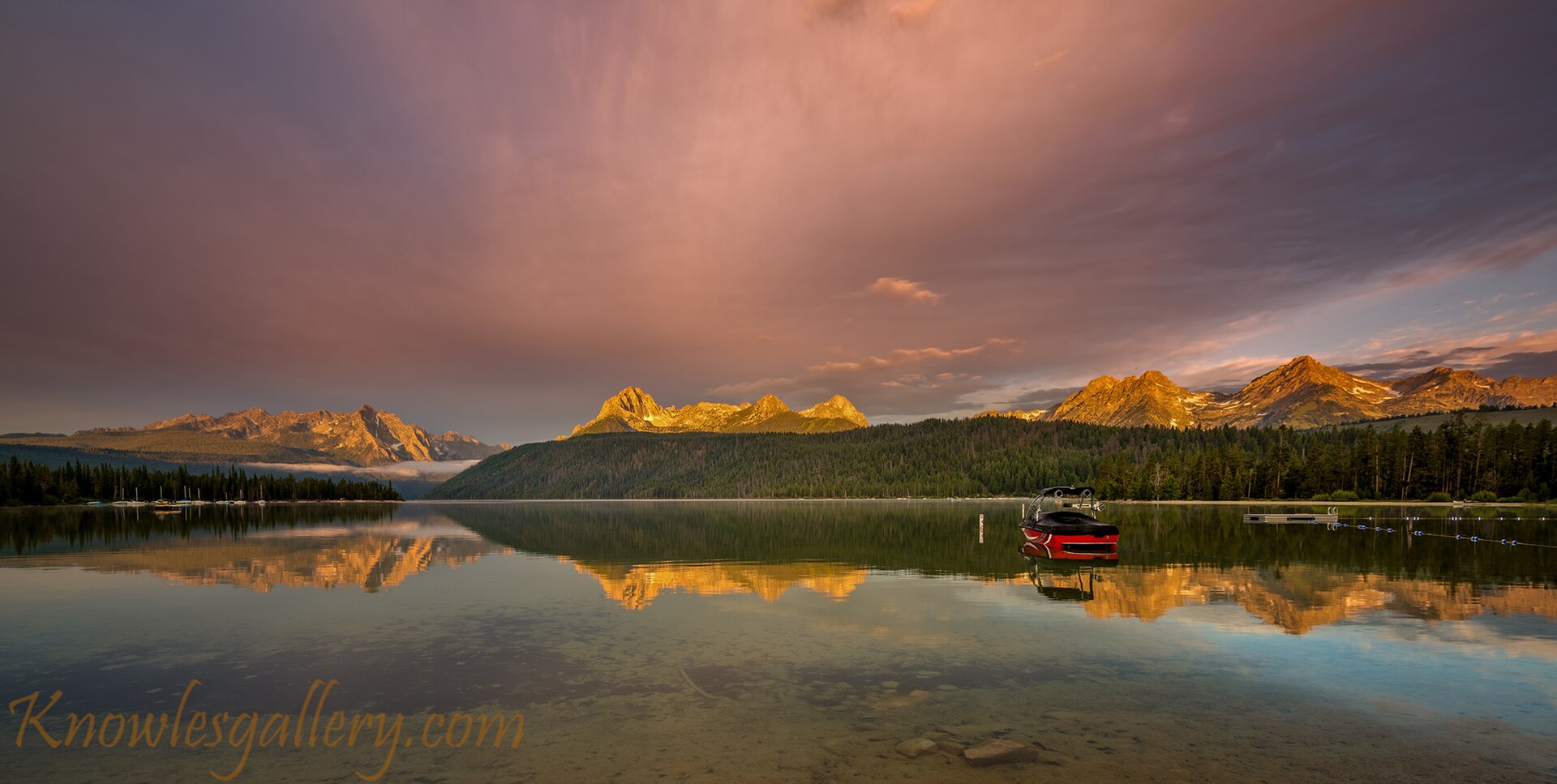
Redfish Lake is a glacially carved lake at the base of the Sawtooth Mountains, about four miles south of the town of Stanley, Idaho. It sits inside the Sawtooth National Recreation Area, a unit of the U.S. Forest Service, and is the largest of several alpine lakes strung along the Sawtooth Valley. It is roughly 150 miles from Boise by road.
Where exactly is Redfish Lake?
Redfish Lake lies in the Sawtooth Valley, along Idaho State Highway 75, a few miles south of Stanley. It sits at an elevation of roughly 6,500 feet, at the foot of granite peaks that give the surrounding range its name — the Sawtooths, jagged enough to have been noted by early surveyors as looking like the teeth of a saw. The lake itself is fed by mountain snowmelt and drains north into the Salmon River.
The article on what the Sawtooth Mountains are and where to start covers the range as a whole; Redfish Lake is one specific point within it, and arguably the most visited one, since it has road access, a lodge, and the recreation area’s main visitor center.
How far is it from Boise, and how do you get there?
The most common route from Boise runs north on Idaho State Highway 21 through Idaho City and over Banner Summit, then joins State Highway 75 into Stanley — a drive the Idaho Transportation Department maintains as a paved, year-round highway, though it is a mountain road with real elevation change. An alternative route runs via State Highway 55 through McCall and then east, which is longer but avoids some of the steeper summit driving. Either way, plan on roughly three to three and a half hours each way without stops, and confirm winter road conditions on the Idaho Transportation Department’s own site before travelling between November and April.
There is no scheduled public transit to Redfish Lake. It is a drive-yourself destination, which is worth knowing before treating it as a casual afternoon trip from the city; the practicalities of a longer Idaho day out are covered on the site’s Boise practical hub.
Why is it called Redfish Lake?
The name comes from sockeye salmon, which historically returned to the lake in large numbers each summer to spawn, turning shallow water visibly red with their breeding coloration. The Snake River sockeye run that reaches Redfish Lake is one of the longest salmon migrations in North America — roughly 900 miles inland from the Pacific Ocean and over 6,500 feet of elevation gain, a fact NOAA Fisheries documents on its own Snake River sockeye salmon pages, since the run is listed under the Endangered Species Act.
Numbers collapsed through the 20th century as dams were built along the Columbia and Snake rivers, to the point that in some years only a handful of fish returned. Idaho Fish and Game and federal partners now run a captive broodstock and hatchery program intended to keep the run from disappearing entirely, and the agency publishes annual return counts on its own site. The lake’s name, in other words, describes a fish run that is now actively managed rather than a spectacle a visitor can expect to see.
Who manages the land and the lake?
Redfish Lake sits within the Sawtooth National Recreation Area, established by Congress in 1972 and administered by the U.S. Forest Service as part of the Sawtooth National Forest. The Forest Service runs a visitor center near the lake seasonally, issues wilderness permits for the adjoining Sawtooth Wilderness, and manages the campgrounds, boat ramps and trailheads around the shoreline. The lodge and marina at the lake operate under a concession permit from the Forest Service rather than as private land — a common arrangement in national forests, where a private operator runs guest services on public land under federal oversight.

What is there actually to do at Redfish Lake?
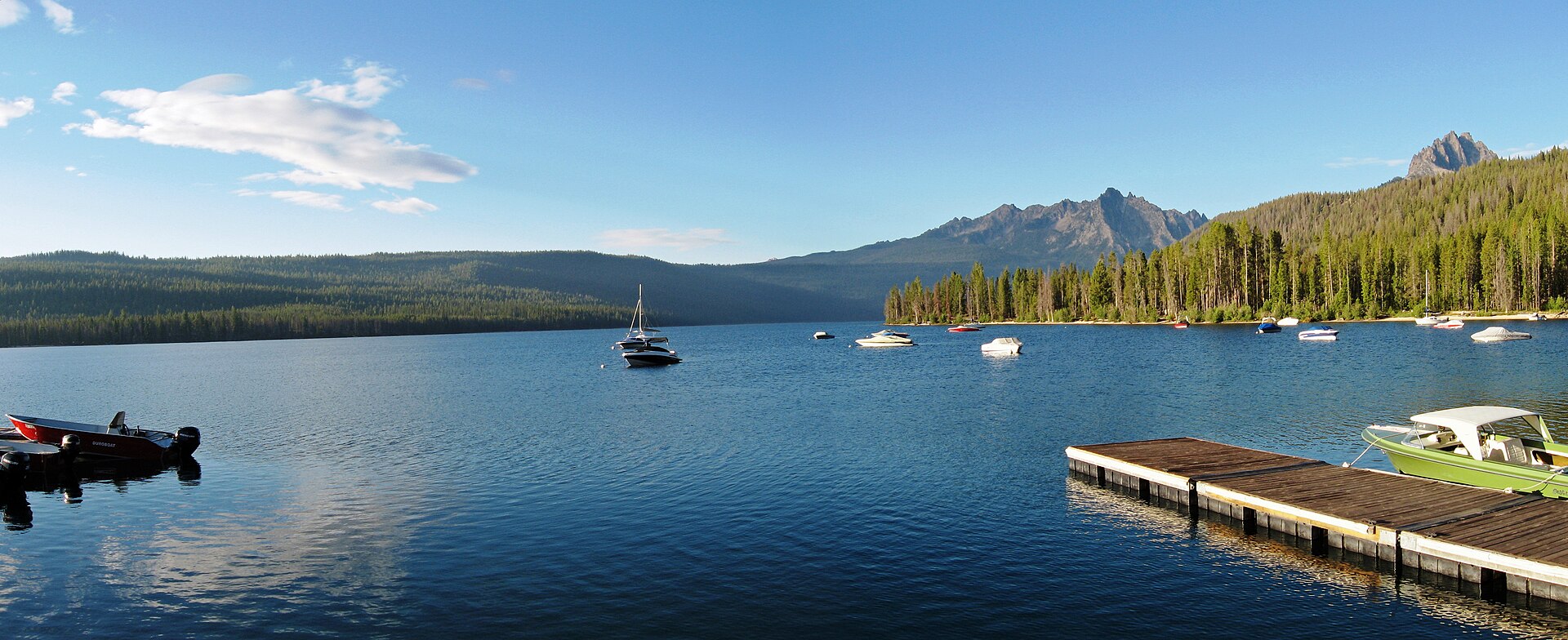
The lake itself supports swimming, kayaking, canoeing and motorized boating in season, with a marina renting equipment and running a passenger boat shuttle across the lake to trailheads on the far shore — a shortcut that saves several miles of walking for hikers heading into the Sawtooth Wilderness toward destinations like Alpine Lake or the Saddleback Lakes chain. Several Forest Service campgrounds ring the lake, and multiple trailheads start from the shoreline area itself, making it a hub point for backcountry access as much as a lake to sit beside.
- Boating and beach access along developed sections of the shore
- Forest Service campgrounds with tent and RV sites near the lake
- Trailheads into the Sawtooth Wilderness, some reachable faster via the lodge’s boat shuttle
- A seasonal Forest Service visitor center with maps, permit information and interpretive material
None of this is unique in character to Redfish Lake within the Sawtooth Valley — Stanley Lake, Pettit Lake and Alturas Lake sit nearby and offer similar access — but Redfish is the largest, the most developed, and the one with a full-service lodge and marina, which is why it functions as the valley’s main visitor point.
Is there lodging at the lake itself?
Redfish Lake Lodge operates on the shoreline under a Forest Service concession permit, offering rooms, cabins and a marina. As a privately operated business inside a federally managed recreation area, its rates, season dates and reservation system are set by the operator, not the Forest Service, and change year to year — confirm current details on the lodge’s own site rather than relying on any figure printed elsewhere. The surrounding Forest Service campgrounds are separately reservable through the federal recreation booking system.
The lodge and campgrounds typically operate late spring through early autumn; winter access to the lake area is far more limited, and services largely close. This mirrors a pattern common across Idaho’s mountain recreation areas, discussed in general terms on the site’s day trips archive.
How does Redfish Lake fit into a wider Idaho trip?
Stanley and the Sawtooth Valley sit roughly equidistant between Boise and Sun Valley by different routes, which means Redfish Lake is sometimes treated as a stop on a loop rather than an isolated destination. The article on what Sun Valley is and whether it’s a day trip from Boise covers that resort town to the south; what McCall is and how far it sits from Boise covers the alternative approach through the Payette Lakes region to the west. Redfish Lake is not a substitute for either — it is a specific alpine lake inside a national recreation area, reached by its own mountain highway, and best treated as a full-day or overnight destination rather than an add-on to a Boise afternoon.
For travelers building a longer Idaho itinerary that includes gold-rush history along the same Highway 21 corridor, the site’s piece on what is left of Idaho City after the gold rush covers the halfway point on the drive north from Boise.
What should a Boise-based visitor actually expect?
Redfish Lake is not a Boise attraction in any meaningful sense — it is roughly a three-hour drive into a different part of Idaho, inside a federally managed wilderness gateway with its own weather, elevation and seasonal rules. It rewards a full day at minimum, and an overnight if the goal is a trailhead start into the Sawtooth Wilderness the next morning. Anyone planning the drive should check current road conditions with the Idaho Transportation Department, confirm lodge or campground availability directly with the operators, and treat wilderness permit rules — published by the Sawtooth National Recreation Area itself — as the governing authority for anything beyond the developed shoreline.
For groundwork on getting oriented in Boise before a trip like this, the Living in Boise hub and Planning & Practicalities archive cover the basics of the city itself, separate from the mountains beyond it.
Access Boise is an independent guide written from published, checkable sources. We have not visited the places described here and we do not publish personal recommendations or invented ‘local favourites’ — where something is singled out as notable, we say who says so. Opening times, fares, closures and prices change at short notice, so treat everything here as a starting point and confirm with the museum, operator or venue directly before building a day around it. We give no advice on visas, insurance, health or safety; use your own government’s official guidance for those.
Featured image: Photo by Charles Knowles from Meridian Idaho, USA, source, CC BY 2.0
