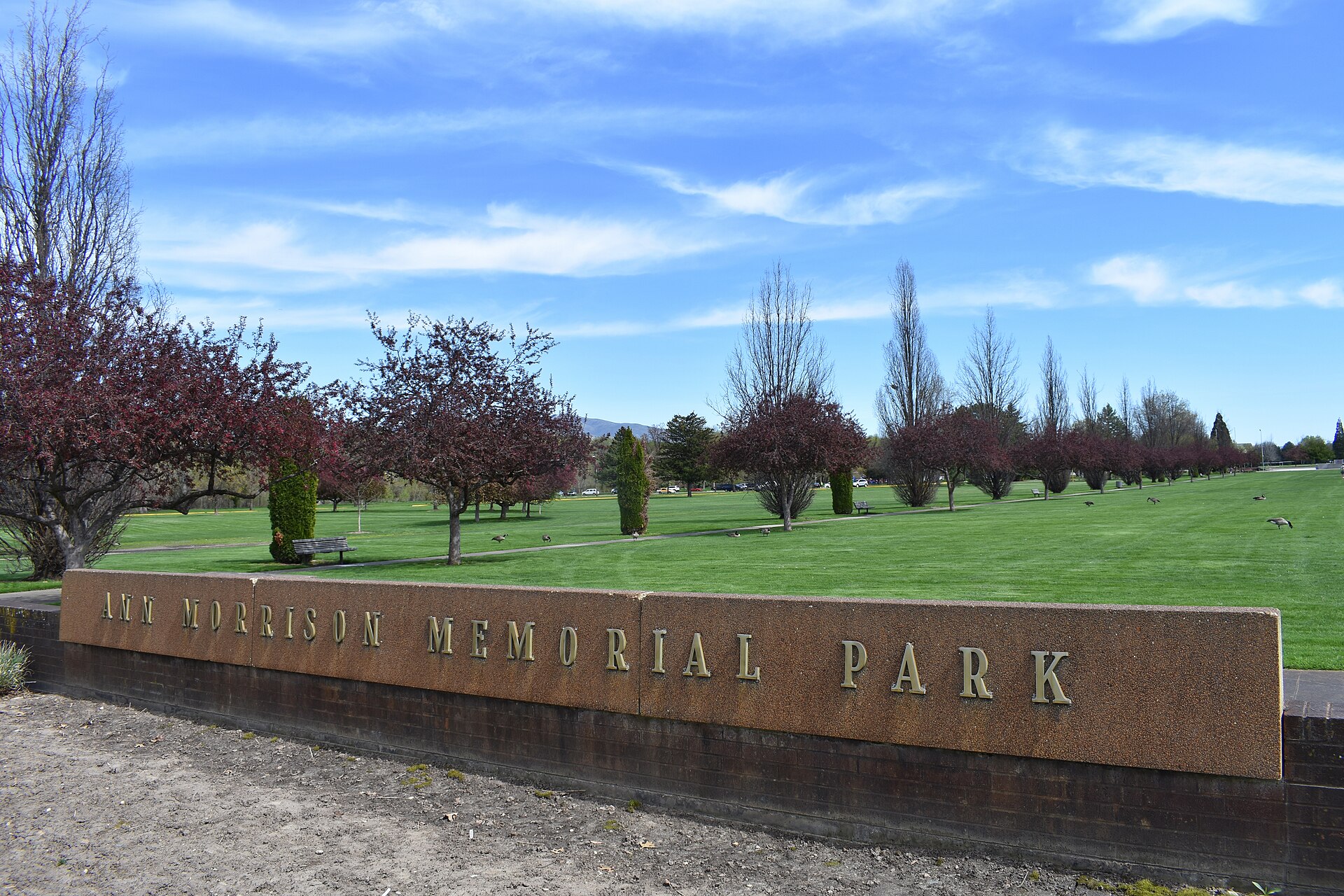
Ann Morrison Park is a large city park along the Boise River, just west of downtown Boise, built on land donated to the city in the 1950s. It is run by Boise Parks & Recreation and holds sports fields, a rose garden, a disc golf course, and a stretch of the Boise River Greenbelt, the paved path that threads the whole river corridor.
Where Is Ann Morrison Park?
The park sits along the south bank of the Boise River between downtown and the Boise State University campus, reached from Americana Boulevard and from the Greenbelt itself. It is close enough to downtown to be walkable from many hotels and residential blocks, and it forms one end of a chain of riverside parks that continues east into Julia Davis Park, home to the city’s museums and the Boise zoo.
Across the river, a pedestrian bridge connects toward Boise State’s campus, and Kathryn Albertson Park, a smaller, quieter nature park with ponds and boardwalks, sits adjacent on the west side. Ann Morrison Park itself is the more open, actively used of the two — playing fields and lawns rather than wetland trails.
Who Was Ann Morrison, and Why Does the Park Carry Her Name?
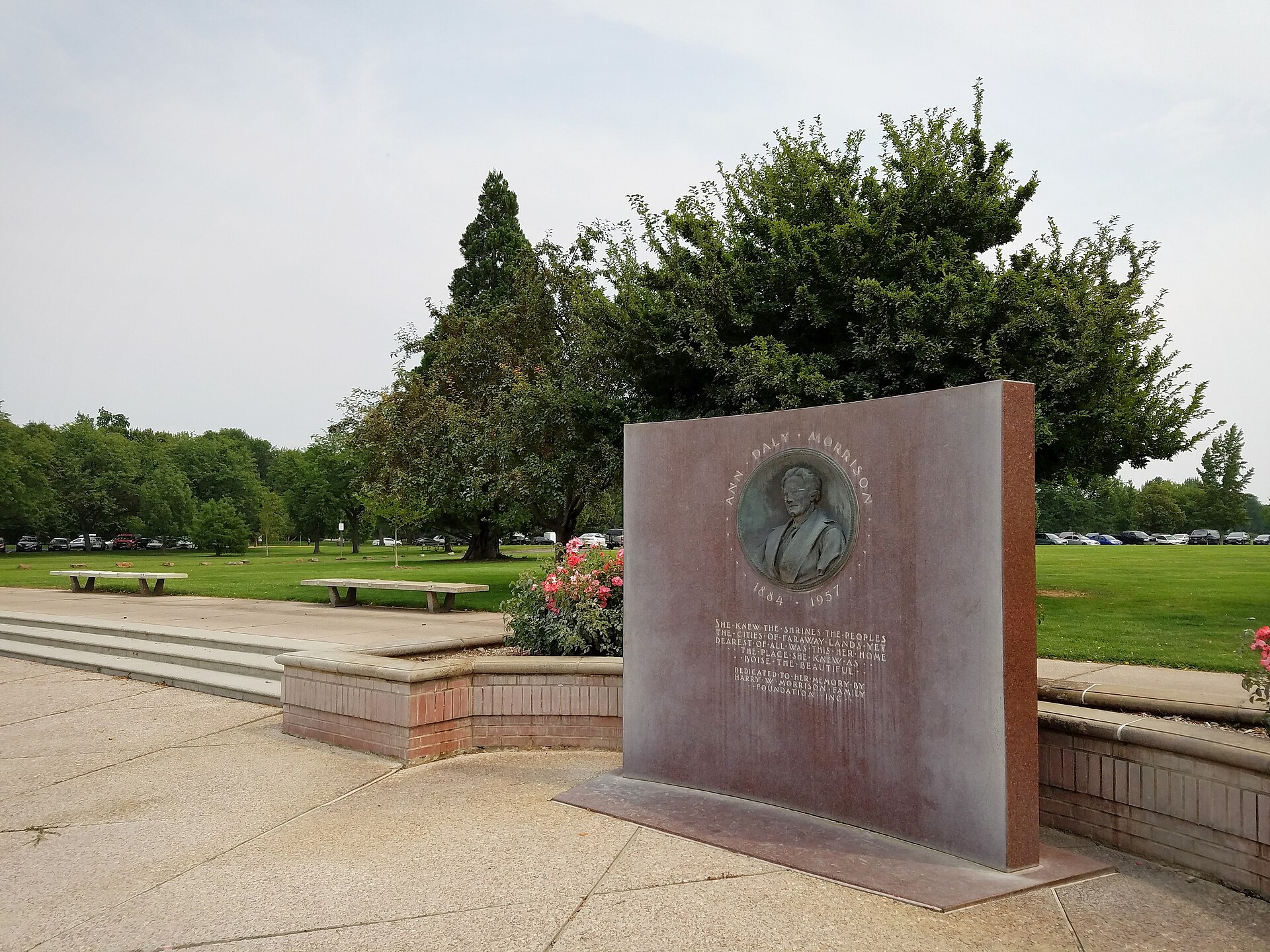
The park is named for Ann Morrison, the first wife of Harry W. Morrison, co-founder of the Morrison-Knudsen Company, the Boise-based engineering and construction firm that worked on projects including the Hoover Dam. Harry Morrison donated the land to the city of Boise in her memory, and the park opened in the late 1950s.
The Morrison name recurs elsewhere in the city for a related reason. Harry Morrison’s second wife, Velma Morrison, later funded the construction of the Morrison Center for the Performing Arts at Boise State University, according to the university’s own account of the building’s history. The park and the concert hall are named after two different women connected to the same family, which is a detail worth knowing before assuming they share an origin.
What Is Actually in Ann Morrison Park?
Boise Parks & Recreation lists the park among the largest developed parks in its system, covering roughly 150 acres of river-bottom land. Its features include:
- A formal rose garden, maintained as a public display garden
- Sports fields used for soccer, softball, and organized league play
- A disc golf course, one of several the city maintains in its park system
- Picnic shelters and open lawn available for reservation through the city
- Playgrounds and paved paths connecting to the river Greenbelt
- A veterans memorial plaza recognizing Idaho’s military history
Because so much of the park is open turf and reservable field space, it functions differently from a landscaped destination park. Reserving a shelter or a field goes through Boise Parks & Recreation’s own booking system, and specific fees and availability should be confirmed there rather than assumed from older listings.
.jpg)
How Does the Park Connect to the Greenbelt?
Ann Morrison Park is one of the anchor points along the Boise River Greenbelt, the roughly 25-mile paved path system that follows the river through the city. Entering the Greenbelt at the park gives direct, flat access east toward Julia Davis Park and downtown, or west toward quieter residential stretches and Boise State’s western edge.
Because the path is shared by walkers, runners, and cyclists and has no motor traffic, it is one of the more straightforward ways to move through this part of the city without a car — a detail covered more broadly in how a day in Boise works without a car.
When Is the Park Busiest?
Use follows the calendar rather than any fixed schedule. Spring and early summer bring organized soccer and softball leagues to the fields, which the city’s own recreation programming schedules seasonally. Summer weekends draw picnicking groups and reserved shelter use, while the rose garden is at its most active display period in the warmer months, consistent with how rose gardens are generally maintained. Winter use drops off sharply, in line with the pattern described in what a Boise winter is actually like, though the Greenbelt path through the park remains open and used by regular walkers and commuters year-round.
Readers planning a visit around a specific event, league schedule, or shelter reservation should confirm current dates and availability directly with Boise Parks & Recreation, since none of that detail holds steady year to year.
Is Ann Morrison Park Worth Visiting on a Short Trip?
For a visitor with limited time, the park’s value is less about a single attraction and more about what it connects to. It is a practical stretch of open ground between downtown’s museums and the university district, useful as a walking or cycling link rather than a destination in its own right. Someone planning a single day in the city is generally better served starting with the denser landmark cluster covered in what can be seen in Boise in one day, and treating Ann Morrison Park as the corridor that gets them there on foot or by bike.
For residents, the park functions more as neighborhood infrastructure — a place for league sports, weekend shelter reservations, and a reliable flat stretch of the Greenbelt for daily exercise. That distinction between visitor use and resident use runs through most of Boise’s larger parks, a pattern discussed more generally in the site’s guide to living in Boise and in the broader Parks & Foothills archive.
How Does It Compare to Julia Davis Park?
The two parks sit along the same river corridor but serve different purposes. Julia Davis Park concentrates the city’s museums, gardens, and the zoo in a compact, visitor-oriented space, detailed in what is in Julia Davis Park. Ann Morrison Park is larger, more open, and built around active recreation — fields, a disc golf course, reservable lawn space — rather than fixed attractions.
A walker moving between the two along the Greenbelt passes from an institutional, museum-dense stretch of river into a working recreational park, which is a useful way to understand how Boise’s river parks divide labor rather than duplicate each other.
Access Boise is an independent guide written from published, checkable sources. We have not visited the places described here and we do not publish personal recommendations or invented ‘local favourites’ — where something is singled out as notable, we say who says so. Opening times, fares, closures and prices change at short notice, so treat everything here as a starting point and confirm with the museum, operator or venue directly before building a day around it. We give no advice on visas, insurance, health or safety; use your own government’s official guidance for those.
Featured image: Photo by Tamanoeconomico, source, CC BY-SA 4.0
