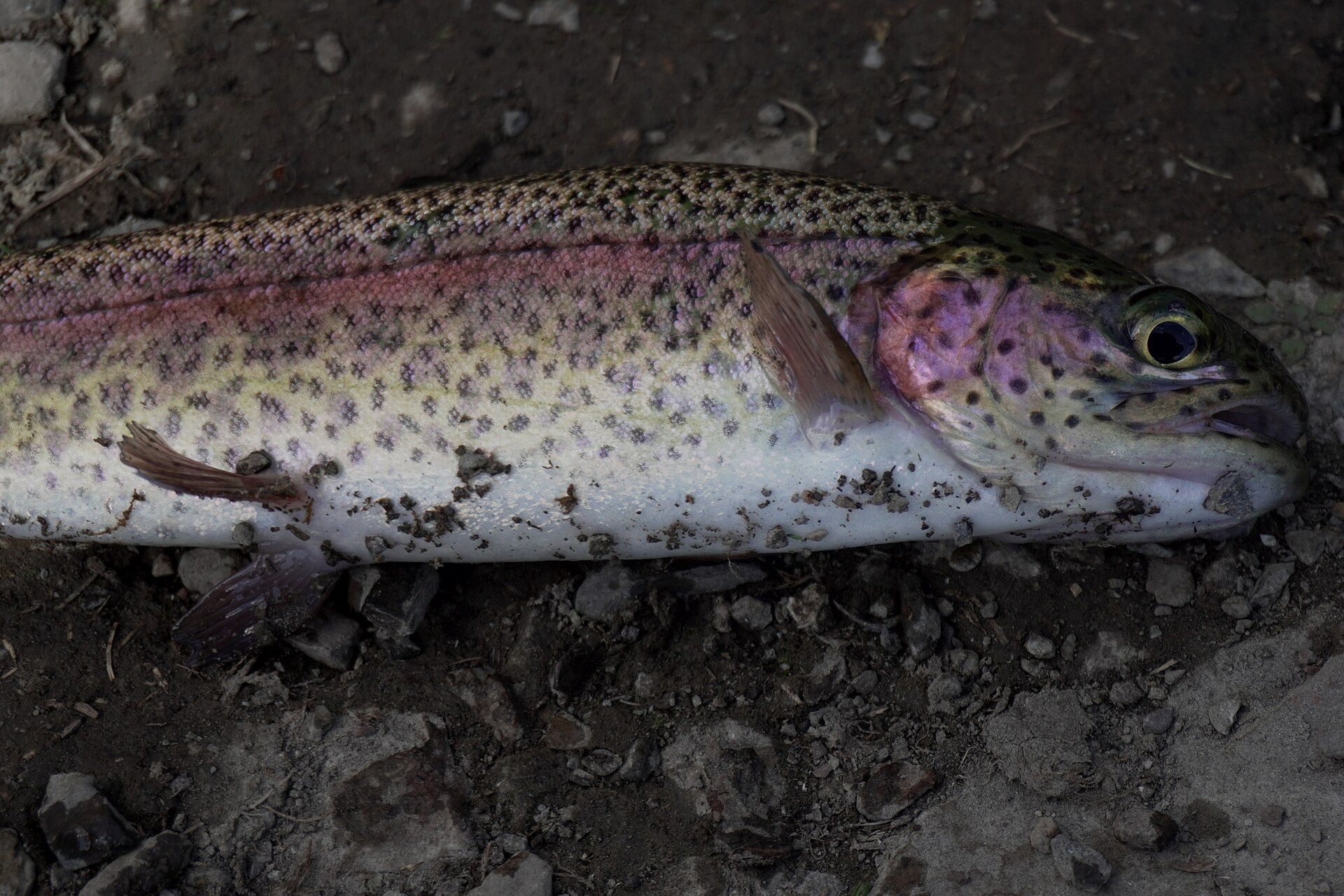
“Idaho trout” on a menu almost always means farm-raised rainbow trout, grown in spring-fed raceways in the Hagerman Valley of south-central Idaho, roughly two and a half hours southeast of Boise. It is a distinct thing from the wild cutthroat trout that live in Boise-area rivers and streams, which are managed separately by Idaho Fish and Game.
The two fish share a name in casual conversation but come from entirely different systems: one is aquaculture built on a specific geological feature, the other is a native, cold-water species tied to the region’s mountain drainages. Understanding the difference explains a fair amount about how Idaho’s food identity and its outdoor identity fit together.
Why is trout farming concentrated in one part of Idaho?
Idaho’s trout farms cluster around the Hagerman Valley and nearby Thousand Springs area because of a specific hydrological feature: groundwater from the Snake River Plain Aquifer emerges there as natural springs, at a steady temperature and volume, year-round. That consistency — cold enough, constant enough, clean enough — is what large-scale trout aquaculture needs.
The U.S. Department of Agriculture’s National Agricultural Statistics Service has long tracked Idaho as the leading U.S. state for farm-raised rainbow trout production, a position tied directly to this aquifer geography rather than to any broader claim about Idaho water in general. The Thousand Springs area, where dozens of individual springs discharge from canyon walls above the Snake River, is documented by state and federal land agencies as one of the largest groundwater discharge zones in the country.
How does the farming actually work?
Trout farms in the Hagerman Valley typically draw spring water through a series of raceways — long, shallow concrete channels — rather than closed ponds, because the water itself is already the right temperature and needs no heating or extensive filtration on the way in. The water flows through continuously and is discharged downstream, regulated under state and federal water quality permitting.
This is a production system, not a scenic one, and Access Boise has not visited any individual operation. What can be stated is the structural fact: the region’s aquaculture industry exists because of the aquifer, and Idaho’s state agriculture reporting consistently identifies the Magic Valley — the broader region that includes Hagerman, Buhl, and the Twin Falls area — as the center of that industry.
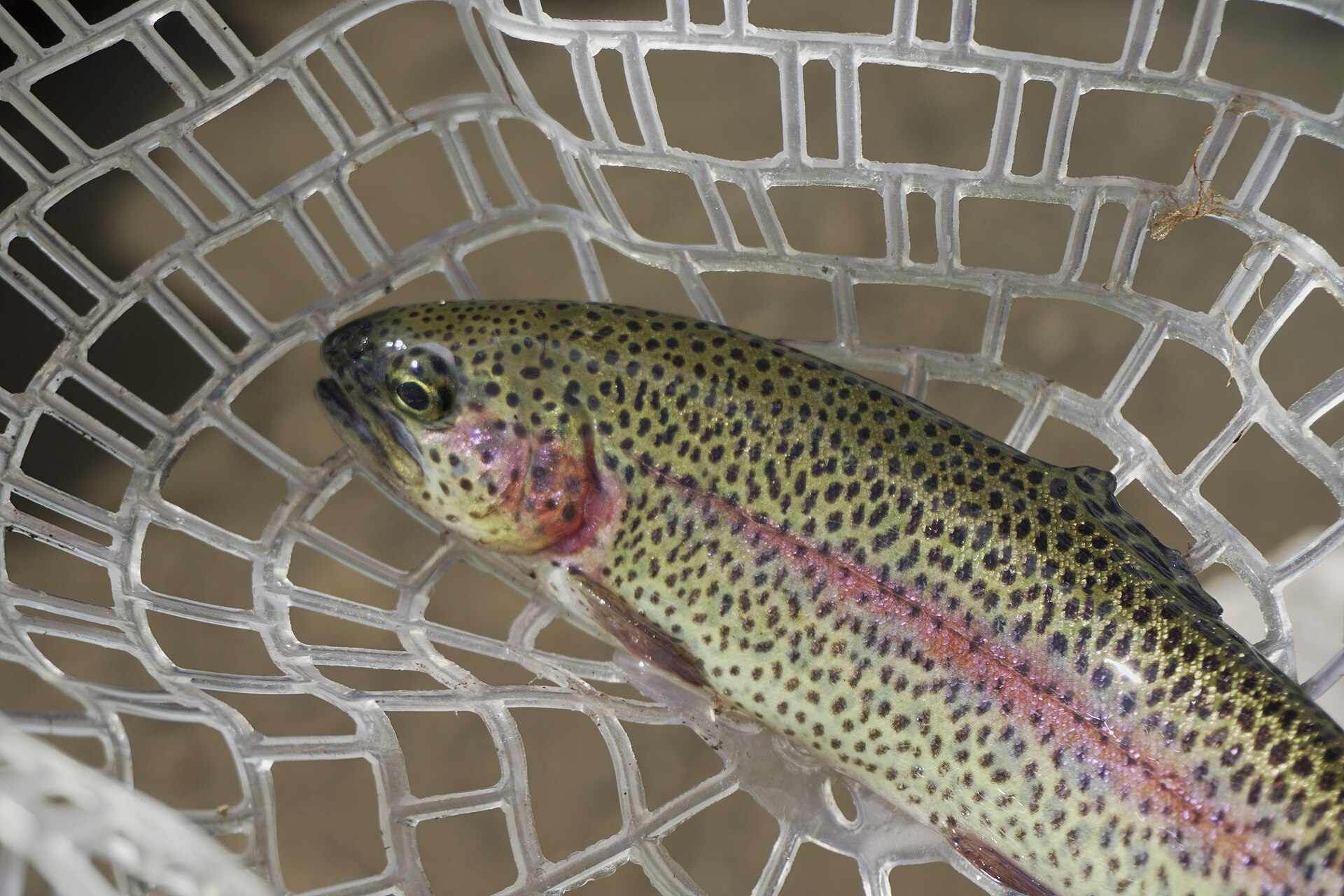
_Caught_in_Idaho_by_Fly_Fishing,_1_August_2025.jpg)
Is “Idaho trout” a protected or regulated term?
No formal appellation controls the phrase the way, say, an EU-protected food name would. “Idaho trout” functions in the market as a regional descriptor, similar to how “Idaho potatoes” carries weight because of where and how the crop is actually grown — a comparison covered in more detail in Access Boise’s piece on Idaho potatoes beyond the joke. Restaurants using the phrase are typically pointing to rainbow trout sourced from the state’s aquaculture region, but a diner who wants a specific supplier’s name should ask the kitchen directly rather than assume.
What is the difference between farmed trout and Idaho’s wild trout?
Idaho’s wild and native trout populations are a separate subject from the aquaculture industry, managed for fishing and conservation rather than food production. Idaho Fish and Game oversees stocking, habitat, and harvest rules for species including rainbow trout, brook trout, bull trout, and the westslope cutthroat trout — which the Idaho Legislature designated the official state fish in 1990.
The Boise River itself carries a stocked and wild trout population within city limits, managed under Idaho Fish and Game’s regional program, and mountain streams in the foothills and further into the Sawtooth and Boise National Forests hold native cutthroat populations. These fish are not raised for sale; they are part of a fisheries management system with its own seasons, limits, and license requirements, published on Idaho Fish and Game’s own site.
Why does Boise, specifically, serve so much trout?
Boise’s proximity to the Hagerman Valley — a half-day’s drive rather than a cross-country shipment — is the practical reason regional trout shows up reliably on menus around the city, alongside other Idaho-identified ingredients like potatoes and Sunnyslope wine. The pattern is covered more broadly in Access Boise’s guide to the 8th Street food corridor, where trout appears alongside other dishes built on regional sourcing, and in the wider context of the Sunnyslope wine region, which sits in the same general stretch of the Snake River Plain.
Trout also turns up at Boise’s markets in season. The Capital City Public Market and the Boise Farmers Market both operate on seasonal schedules that vary by vendor and year, and any specific claim about which stall sells fresh trout in a given week should be confirmed on the market’s own current vendor list rather than taken from an outside guide.
Does Idaho trout compare to Idaho’s other food symbols, like the finger steak?
Both trout and the finger steak function as regionally identified foods, but they arrived by different routes — one from a natural aquifer feature exploited by industry, the other from a specific Boise-area restaurant history. The finger steak’s documented origin is covered separately in Access Boise’s piece on the finger steak. The common thread is that both are treated locally as identifiably “Idaho” in a way that has some traceable basis, rather than being marketing shorthand alone.
Where does trout fit into a visit or a life in Boise?
For a visitor, trout is most likely to appear as a menu item downtown or along the food corridors, tied loosely to the Hagerman Valley supply chain rather than to anything caught locally. For a resident, the more relevant trout story is the Boise River itself — its stocked and wild population, its Idaho Fish and Game regulations, and its role as a working fishery running through the middle of the city, distinct from the Greenbelt’s recreational identity covered in Access Boise’s guide to a Greenbelt morning.
Anyone planning to fish the Boise River or Idaho’s wider network of trout streams needs a current license and should check Idaho Fish and Game’s own site for season dates, limits, and water-specific rules, none of which are stable enough to repeat reliably in a general guide.
Where can a reader learn more about how Boise’s food identity fits together?
Trout is one piece of a broader pattern in which Boise’s food scene draws on specific, checkable regional production — potatoes, Sunnyslope wine, Basque dishes with documented histories — rather than generic “local” branding. That pattern is laid out more fully in Access Boise’s Food & Drink archive and in the site’s wider practical hub covering how the city’s food, transit, and planning questions connect. For context on how food fits into daily life in the city rather than a single visit, Access Boise’s Living in Boise hub covers the broader picture of how residents actually eat, shop, and get around.
Access Boise is an independent guide written from published, checkable sources. We have not visited the places described here and we do not publish personal recommendations or invented ‘local favourites’ — where something is singled out as notable, we say who says so. Opening times, fares, closures and prices change at short notice, so treat everything here as a starting point and confirm with the museum, operator or venue directly before building a day around it. We give no advice on visas, insurance, health or safety; use your own government’s official guidance for those.
Featured image: Photo by JYEXP, source, CC BY 4.0
_Caught_in_Idaho_by_Fishing,_1_August_2025.jpg)