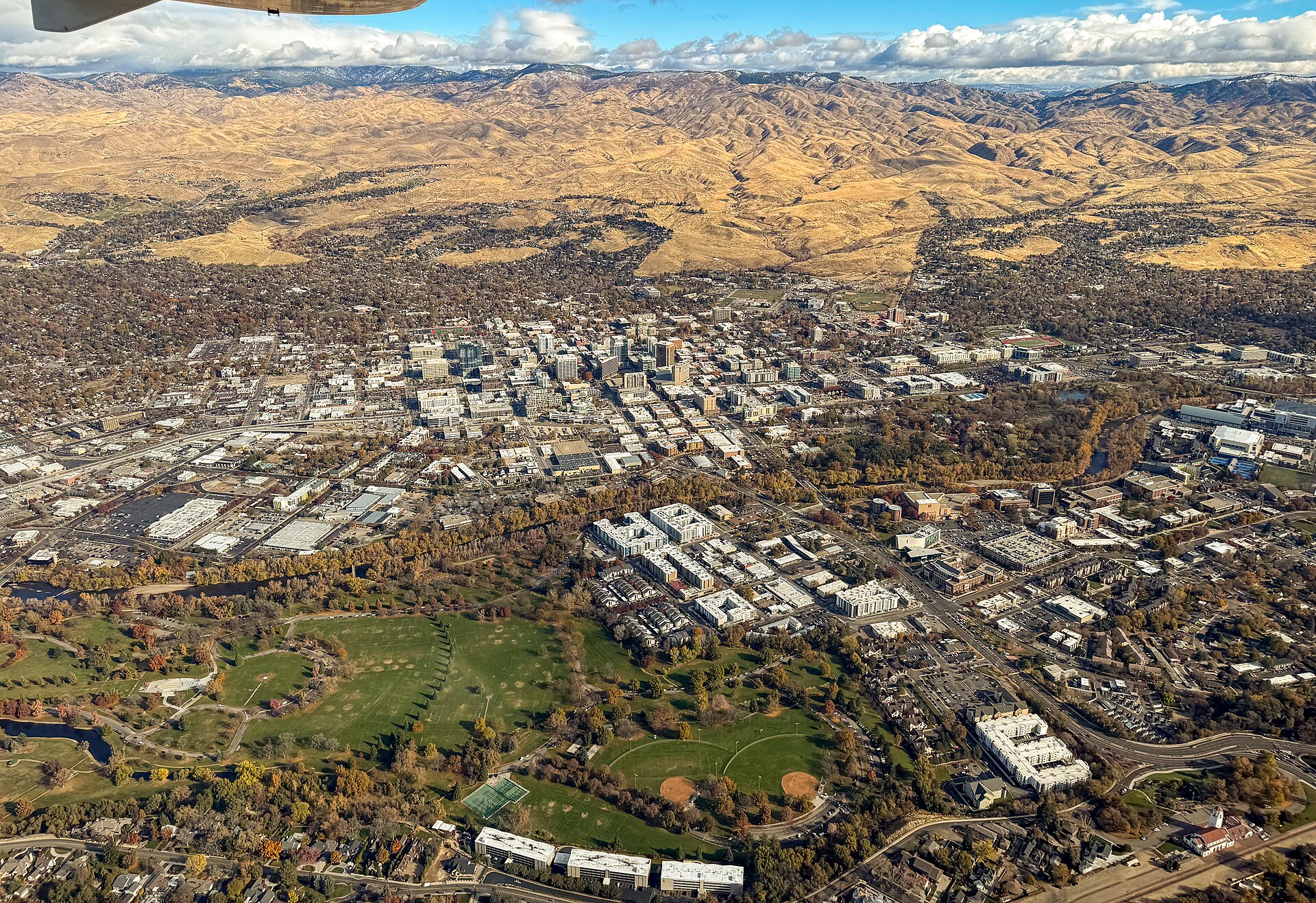
Boise is not an expensive city to visit by the standards of major American destinations. Hotel rates, restaurant checks and museum admission generally run below those in Seattle, Denver or Salt Lake City, though prices rise sharply during Treefort Music Fest, the Western Idaho Fair and the university football season. A car-free, budget-conscious visit is possible; a comfortable one is easy.
How much does a hotel room cost in Boise?
Downtown Boise hotel rates track closer to a mid-sized regional city than a major tourist destination — cheaper than Seattle or Denver on most nights, but not cheap in the way a small town would be. Rates rise for events at Albertsons Stadium during Boise State football season, for graduation weekends at Boise State University, and sharply during Treefort Music Fest in spring, when downtown lodging fills well in advance.
Because specific nightly rates change constantly and vary by season and event calendar, this site does not quote figures. Readers should check current rates directly with hotels or with a booking platform closer to travel dates, and cross-reference against the event patterns described on what happens to Boise during Treefort Music Fest and what the Western Idaho Fair actually is, both of which move room rates independently of the broader season.
Is Boise’s food and drink expensive?
Boise’s restaurant prices sit below coastal-city norms. A sit-down dinner downtown or in the Basque Block typically costs less than the equivalent meal in Seattle, Portland or the Bay Area, reflecting Idaho’s lower overall cost of doing business rather than any shortage of quality.
Two practical details shape the bill in ways visitors from other states sometimes miss:
- Idaho’s alcohol rules affect where and how drinks are sold, which in turn affects menu structure and pricing — covered in detail at Idaho’s alcohol laws in practice.
- Tipping conventions in Boise follow standard American service-industry norms, but the specifics — for counter service, bars and delivery — are worth knowing before the check arrives, as explained at how tipping works in Boise.
Grocery and coffee prices are close to the national average, and self-catering — realistic given how many downtown accommodations sit within walking distance of grocery stores — can cut a visit’s food cost substantially for longer stays.
How much does getting around cost?
Transport is one of the areas where Boise is genuinely inexpensive compared with larger cities, largely because it has no rail transit system to fund and a compact downtown core.
Valley Regional Transit operates the city’s bus network; fares are modest by national transit standards, and details on routes and payment are published on the operator’s own site and summarized at what Valley Regional Transit covers and where the bus goes. Boise also has e-scooter and bike-share operators active downtown and along the Greenbelt, described at Boise’s e-scooter and bike-share options.
Whether a car is worth renting at all is a separate question, and the honest answer depends on which parts of the trip involve the foothills or day trips outside the city — addressed directly at whether you actually need a car in Boise. Downtown parking itself is metered and structured around specific zones and time limits, covered at how downtown Boise parking works.
Getting from Boise Airport into town adds a fixed cost regardless of trip length — taxi, rideshare or occasional shuttle service, since there is no rail link. Boise Airport’s own site is the source for current ground-transport options, and the route itself is explained at what Boise Airport is and how to get to town.

Are Boise’s museums and attractions expensive?
Several of Boise’s principal museums charge admission comparable to mid-sized American cities, and a number are free entirely or free on specific days. The city’s own guidance on which institutions charge nothing, and when, is laid out at which Boise museums are free — a genuinely useful page for keeping a museum-heavy day at zero cost.
Outdoor and civic attractions add little to a budget: the Idaho State Capitol is free to enter, the Greenbelt along the Boise River costs nothing to walk or cycle, and many of downtown’s landmarks — Grove Plaza, the Basque Block, the Boise Depot grounds — are public space with no admission at all. The categories to browse for a fuller sense of what’s paid versus free are the site’s own Museums & Galleries archive and Landmarks & Sights archive.
Bogus Basin, the ski area above the city, has its own separate fee structure for lift tickets, rentals and parking, published on the resort’s own site; getting there without a car has its own cost implications, detailed at getting from Boise to Bogus Basin without a car.
Does the time of year change the cost?
Substantially. Boise’s cost of visiting is not flat across the calendar — it moves with events, weather and university scheduling.
- Treefort Music Fest in spring and the Western Idaho Fair in late summer both raise lodging demand and prices for their duration.
- Boise State home football weekends in autumn fill hotels and push rates up around game days.
- Winter brings the lowest hotel rates outside ski season at Bogus Basin, but also the city’s temperature inversion, described at what Boise’s winter inversion is, which shapes visibility and air quality rather than cost.
- Summer heat and wildfire smoke season, covered at what a Boise summer is actually like and Boise’s smoke season explained, don’t move prices directly but affect what a visitor gets for the money — outdoor plans can be disrupted by smoke in late summer.
A broader look at which months balance cost, weather and crowding is at when the best time of year to visit Boise actually is.
Is Boise expensive to live in, versus visit?
This is a different question with a different answer, and one worth separating cleanly. Boise’s cost of living has risen substantially over the past decade as the metro area grew, driven mainly by housing prices rather than day-to-day costs like groceries or dining. A resident’s monthly budget and a visitor’s weeklong budget draw on entirely different cost structures — one is dominated by rent or mortgage, the other by lodging and activities.
Readers trying to understand the city as a place to live, rather than a place to spend a few days, are better served by the Access Boise guide to living in Boise and the Living in Boise archive, which cover housing, neighbourhoods and the practical rhythms of the city rather than tourist spend.
How does Boise compare to other Western cities?
Against Seattle, Denver, Salt Lake City and Portland, Boise runs consistently cheaper on lodging, dining and transport, reflecting its smaller size, lower regional wage base and lack of a major public transit system requiring fare subsidy. Against smaller regional towns in Idaho or Montana, it runs somewhat higher, simply because it is the state’s largest city and its downtown core carries city-level pricing.
The practical upshot for a visitor is that Boise sits in a middle tier: not a bargain destination, but not one where costs approach those of larger coastal metros. Where money goes furthest is in the free or near-free categories — the Greenbelt, the Capitol grounds, several museums, and the compact downtown layout that keeps transport costs low. A fuller sense of how the city fits together geographically, useful for planning how much ground a visit actually needs to cover, is at how far apart everything in Boise really is and the general planning resources gathered at the Access Boise practical planning hub.
Access Boise is an independent guide written from published, checkable sources. We have not visited the places described here and we do not publish personal recommendations or invented ‘local favourites’ — where something is singled out as notable, we say who says so. Opening times, fares, closures and prices change at short notice, so treat everything here as a starting point and confirm with the museum, operator or venue directly before building a day around it. We give no advice on visas, insurance, health or safety; use your own government’s official guidance for those.
Featured image: Photo by Tedder, source, CC BY 4.0
