Some links on this page are affiliate links. If you book through one, this site may earn a commission at no extra cost to you. It never changes which option we recommend. This site does not take bookings or reservations itself — you book with the travel company, under its terms, and we are not a party to that booking.
Boise Airport (code BOI) is the city’s commercial airport, owned and operated by the City of Boise’s Department of Aviation and located about three and a half miles south of downtown, off Vista Avenue. Into town, the practical options are rideshare, taxi, rental car, or a Valley Regional Transit bus — there is no rail link.
What is Boise Airport, exactly?
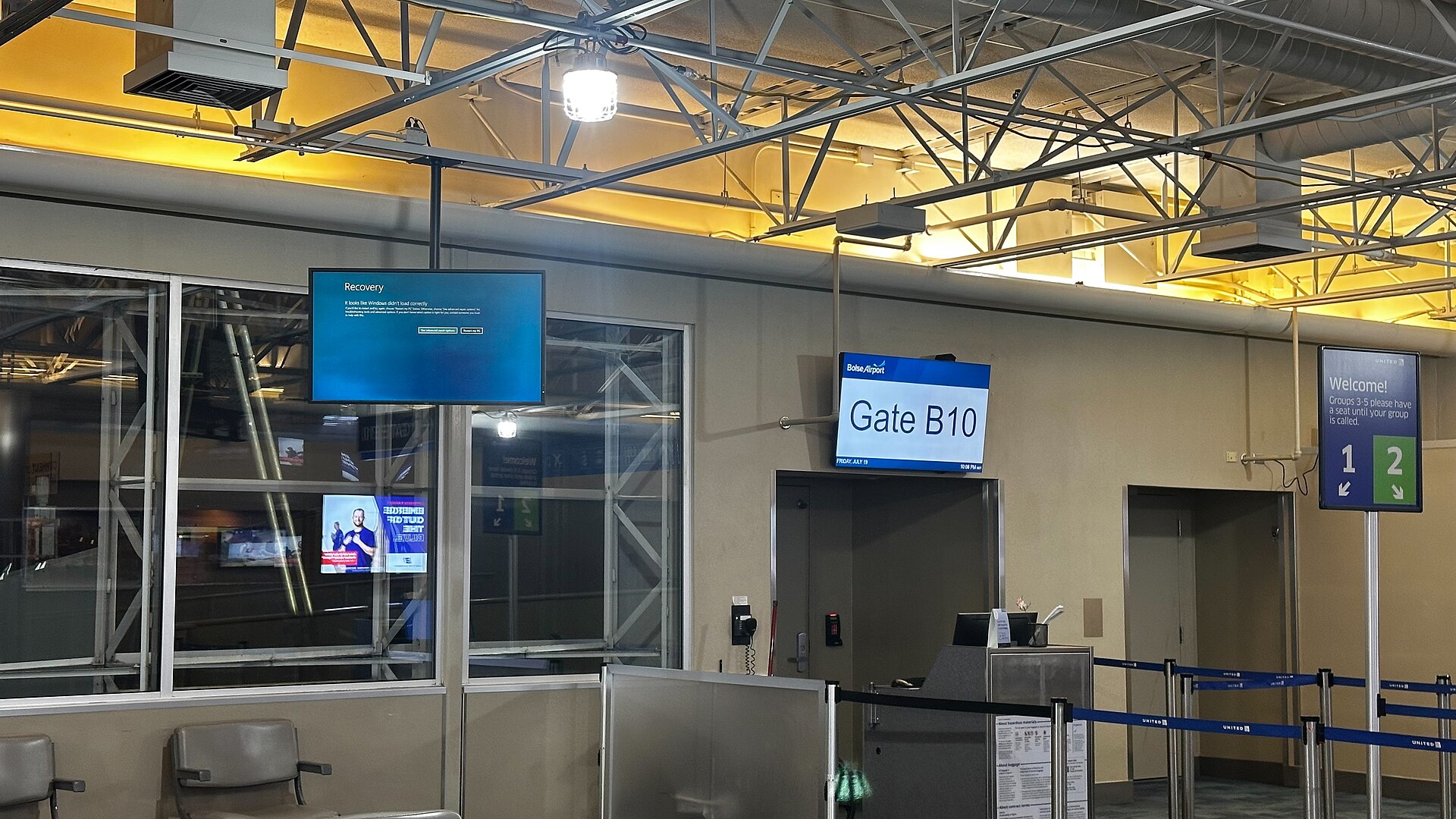
Boise Airport is a municipal airport owned by the City of Boise, not a private or federal facility. It carries the airport code BOI and is sometimes still called by its older name, Boise Air Terminal, or referenced alongside Gowen Field — the airfield it shares with the Idaho Air National Guard. Civilian and military aircraft operate from the same complex of runways, though the passenger terminal, ticketing, and baggage areas are entirely separate from the Guard’s facilities.
The airport is the state’s busiest, serving as the primary commercial gateway for the Boise metro area and much of southern Idaho. It publishes its own flight information, parking rates, and terminal maps on its official site, which is the source to check before travelling rather than any third-party listing.
Where is the airport located relative to downtown Boise?
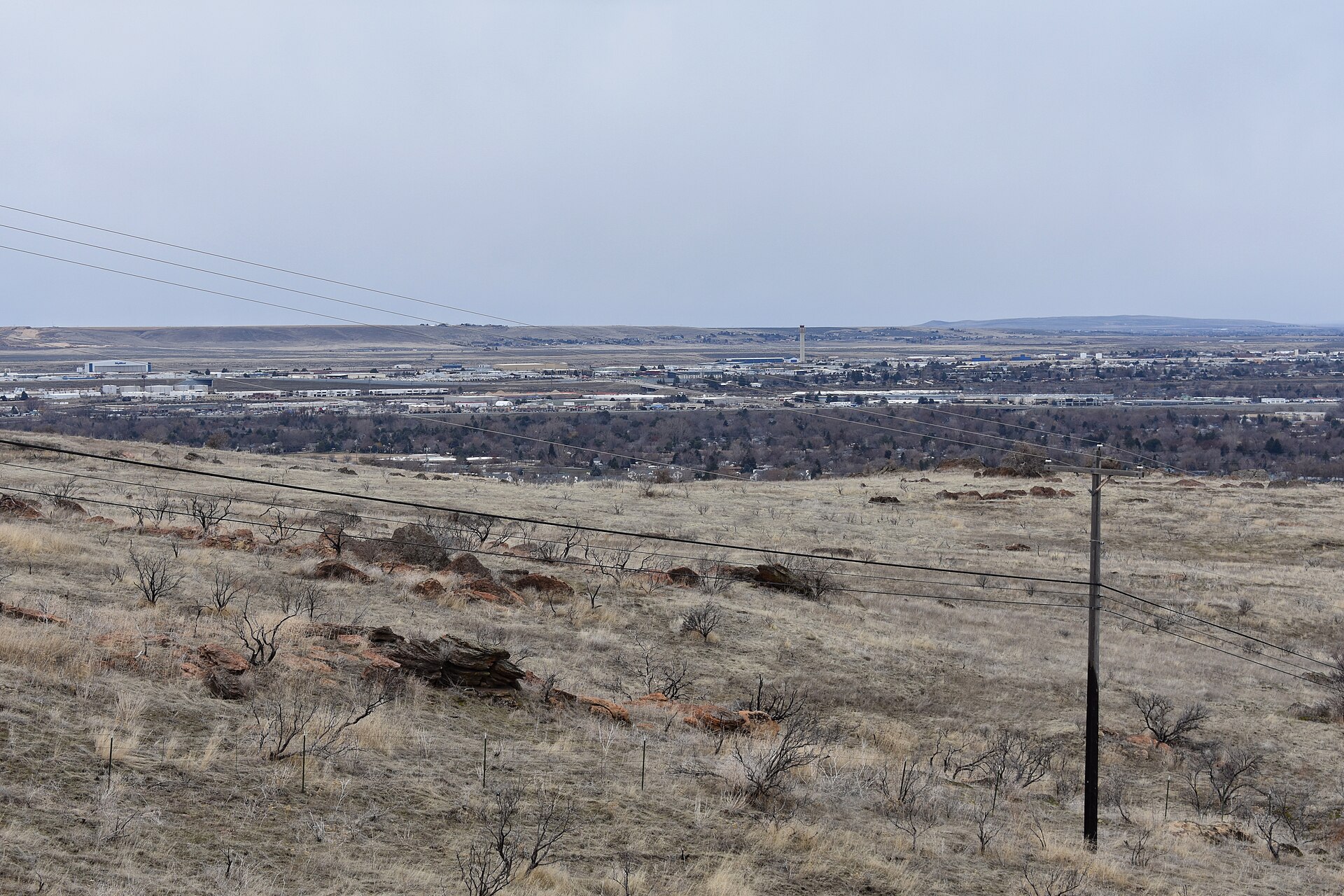
Boise Airport sits south of the Boise River and south of the Boise Bench, the elevated terrace of land that rises above the downtown core. It is accessed from Vista Avenue and Airport Way, a corridor of low industrial and commercial land rather than a residential district. Downtown itself lies roughly three to four miles north.
Understanding that geography helps explain the drive: getting from the airport to downtown means crossing the Bench and descending toward the river valley where the original city grid sits. The city’s own account of how that grid is laid out, and which way its streets run, is covered in a separate guide to Boise’s street grid and direction system. For context on the Bench itself — the landform the airport sits below — see the guide to what the Boise Bench is and why it’s called that.
How do you get from Boise Airport into downtown?
There are four realistic ways to make the trip: rideshare or taxi, a rental car, a hotel or business shuttle where one is arranged in advance, or a Valley Regional Transit bus. There is no light rail, streetcar, or dedicated airport express train serving Boise — none of the standard airport-metro links common to larger cities exist here.
- Rideshare and taxi: Uber and Lyft operate at Boise Airport, with a designated pickup area at the terminal. Taxis are also available curbside. This is the most direct option and typically the fastest into downtown, given the short distance.
- Rental car: All major national rental agencies operate out of the airport’s consolidated rental facility. Given the short drive and the airport’s edge-of-city location, renting at the terminal is straightforward, and the airport’s own site lists current agencies and shuttle arrangements to the rental lot.
- Public transit: Valley Regional Transit, the region’s public bus operator, serves the airport on at least one of its routes connecting to downtown. Because route numbers and schedules change, the operator’s own site is the only reliable source for current service — see the separate guide to how Valley Regional Transit’s bus routes work for how the system as a whole is structured.
- Shuttle or hotel pickup: Some Boise hotels run their own shuttles for guests; this is arranged directly with the property, not through the airport.
Is there a public bus from Boise Airport to downtown?
Valley Regional Transit runs fixed bus routes through the Boise metro area, and the airport is a stop on the network rather than an isolated terminal with no transit access. Frequency on airport-serving routes tends to be lower than on core downtown routes, so travellers with luggage and a fixed flight time should build in margin.
Fares on Valley Regional Transit are paid per ride or through passes; the operator’s own site carries current fare tables, which is the only place those figures should be confirmed, since they are revised periodically. The wider question of whether a car is necessary at all once in the city — a genuinely different question from airport transfer — is addressed directly in the guide on whether you need a car in Boise.

How much does a taxi or rideshare cost from the airport?
Fares for rideshare and taxi trips are set dynamically by the providers themselves and are not published or regulated by the airport. Given the short distance — under four miles to most downtown addresses — the trip is generally a short one by big-city standards, but exact pricing should be checked in the Uber or Lyft app, or with the taxi company directly, at the time of travel rather than assumed from any figure printed elsewhere.
Should visitors rent a car at Boise Airport?
Whether a rental car is worth arranging at the airport depends on where a visitor is staying and what else is planned. Downtown Boise, the North End, and the East End are compact enough to manage on foot, by bike, or with occasional rideshare use, and downtown parking itself works on a metered and permit system explained in the guide to how parking works in downtown Boise.
If the plans reach beyond downtown — the foothills, Bogus Basin, any of the day trips — the rental is worth comparing before you land. Compare rental prices at Boise Airport.
Travellers planning day trips beyond the city — to the foothills, to Nampa, or further into the Treasure Valley — are more likely to find a rental car useful, since Valley Regional Transit’s network thins out considerably outside the urban core. The broader question of car dependence in Boise, including for residents, is treated in full in the site’s dedicated guide on the subject.
What is around the airport itself?
The airport sits in an area of Boise dominated by aviation infrastructure, warehousing, and the Gowen Field military installation rather than tourist-facing venues. It is not within walking distance of any of the city’s museums, landmarks, or dining districts, and nothing in the immediate vicinity is described here as worth a special stop — the area functions as transit infrastructure, not a destination.
The nearest points of interest to a newly arrived visitor are downtown Boise itself and the neighborhoods that ring it. The guide to where downtown Boise begins and ends is a useful next stop for orienting a first visit, and the broader planning hub at Access Boise’s practical guide to getting around, planning and itineraries covers onward movement once in the city center.
Does Boise Airport connect to other Idaho or regional destinations?
Boise Airport is the primary commercial airport for the Treasure Valley, the metro region that also includes Meridian, Nampa, Eagle, and Garden City. Travellers unfamiliar with how those surrounding cities relate to Boise — several of which are separate municipalities with their own governance rather than Boise suburbs in a loose sense — can consult the explainer on the difference between Boise, Meridian, and Eagle or the one on why Garden City is legally a separate city.
For anyone arriving with a rental car and planning to range beyond Boise proper — toward the foothills, the Owyhee front, or other parts of southern Idaho — the site’s broader guide to the region, Access Boise’s guide to museums, landmarks and neighborhoods, is the place to start plotting a route.
What should residents know about the airport beyond arrivals?
For people living in Boise, the airport functions less as an entry point and more as a fixed piece of the city’s southern geography — a landmark for orientation, a source of low overhead flight noise in nearby neighborhoods, and, twice a year for many households, a departure point rather than an arrival one. Its location off Vista Avenue also places it adjacent to some of the Bench’s older residential and commercial streets, which the guide to what it is actually like to live in Boise covers in the context of the wider city rather than as an airport footnote.
Anyone confirming current flight schedules, parking rates, TSA wait times, or terminal changes should use the airport’s own published information at iflyboise.com, and anyone checking a specific bus route or fare should do the same at Valley Regional Transit’s own site — both are revised more often than any secondary guide can track.
Access Boise is an independent guide written from published, checkable sources. We have not visited the places described here and we do not publish personal recommendations or invented ‘local favourites’ — where something is singled out as notable, we say who says so. Opening times, fares, closures and prices change at short notice, so treat everything here as a starting point and confirm with the museum, operator or venue directly before building a day around it. We give no advice on visas, insurance, health or safety; use your own government’s official guidance for those.
Featured image: Photo by DJ Cane, source, CC BY-SA 4.0
