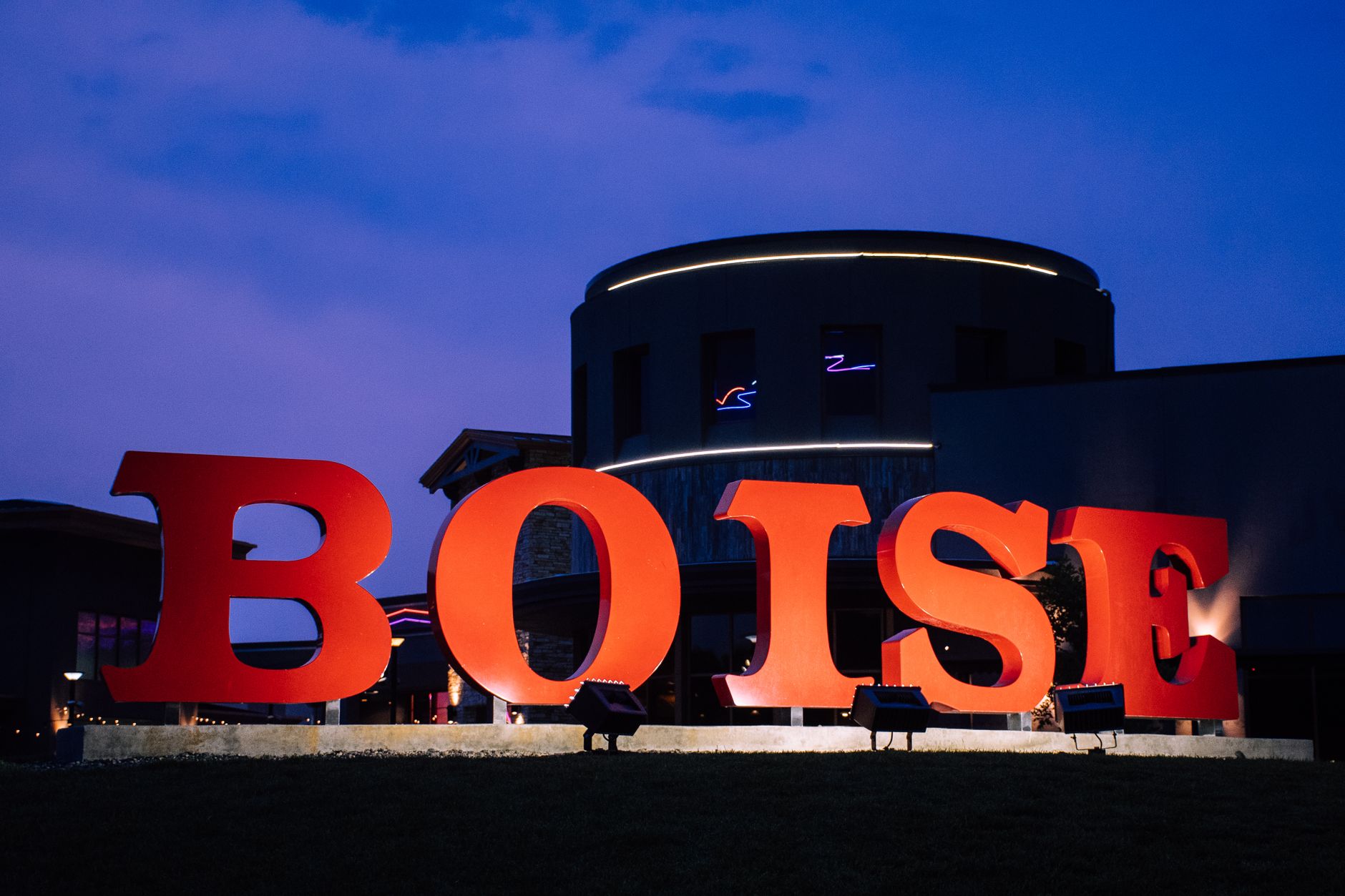
Boise, Meridian and Eagle are three separate, independently incorporated cities that sit next to one another in Ada County, Idaho. Boise is the state capital and the largest of the three, built where the Boise River meets the foothills. Meridian lies west of Boise on flatter valley ground and has grown fastest. Eagle sits northwest of both, along the river, and has kept a lower-density, more agricultural feel. Each has its own mayor, city council, police force and municipal budget.
Are Boise, Meridian and Eagle part of the same city government?
No. Each is a distinct incorporated municipality with its own elected government. They share a county — Ada County — and some countywide services, but a resident of Meridian pays Meridian’s city taxes and votes in Meridian’s elections, not Boise’s, even though the two cities border each other with no visible gap.
Boise is the county seat, meaning Ada County’s courthouse and administrative functions sit in Boise. The Ada County Courthouse and its murals are downtown, but the courthouse serves the whole county, including Meridian and Eagle residents. This is a common arrangement in American metro areas: a historic core city acts as county seat while newer, faster-growing suburbs incorporate as their own municipalities. Garden City, wedged inside Boise’s own boundaries along the river, is a further example of the same pattern; see what makes Garden City a separate city despite being surrounded by Boise on most sides.
How did each city start?
Boise was founded in 1863 as a military and mining-supply town and became Idaho’s territorial, then state, capital. Its street grid, downtown core and older residential neighborhoods reflect over 150 years of continuous growth outward from the river.
Meridian incorporated in 1903 as a small agricultural rail and market town on the flat valley floor west of Boise, built around dairy, seed and produce farming. Eagle incorporated later, in 1949, also as a farming community, sited along a bend of the Boise River northwest of both Boise and Meridian.
For most of the twentieth century, all three were physically separated by open farmland. That land has largely been filled in by subdivisions since the 1980s and 1990s, which is why the cities now read on a map as one continuous urban area even though their governments, histories and founding dates are entirely separate.
Which one is biggest, and which is growing fastest?
Boise remains the largest of the three by population and is Idaho’s largest city overall. Meridian is the fastest-growing of the group and, according to U.S. Census Bureau population estimates released in recent years, has become one of Idaho’s largest cities in its own right — a shift from its origins as a small farm town. Eagle is the smallest of the three but has also grown substantially from its historic base. Exact population figures shift year to year; for current numbers, the Census Bureau’s own data releases are the source to check rather than any fixed figure repeated here.
What does each city actually look like on the ground?
Boise is built around a defined downtown core, a state capitol, a university, and a set of named historic neighborhoods that grew up in rings from the river and the Bench above it. Its downtown has clear, documented boundaries, and older districts like the North End and East End were platted with the tree cover and lot patterns typical of a pre-automobile American city.
Meridian’s built form is different: it is largely a product of subdivision-era planning from the 1990s onward, with newer arterial roads, master-planned residential developments, and commercial corridors built to serve car traffic rather than a historic street grid. Its older downtown core — the original 1903 townsite — is small relative to the city’s current footprint, most of which is recent construction on former farmland.
Eagle keeps more of its agricultural character than either neighbor. Lot sizes tend to be larger, and the city has zoned deliberately for lower density along its stretch of the Boise River, with parks and greenbelt access built around that river frontage rather than a dense commercial core.
Do the three share services like schools, transit and the river greenbelt?
Partially. School district boundaries do not follow city limits exactly: the West Ada School District, one of Idaho’s largest, serves Meridian, Eagle and parts of western Boise, while the Boise School District (Independent School District of Boise City) covers Boise’s core. A family can move a short distance and change school districts without changing much else about daily life.
Public transit across all three is run by a single regional operator, Valley Regional Transit, which provides bus routes connecting Boise, Meridian, Eagle and other Ada and Canyon County communities — a practical acknowledgment that residents commute across city lines constantly. Fares, routes and schedules change; Valley Regional Transit’s own site is the source to confirm current service.
The Boise River corridor and its greenbelt path run through or near all three cities, though maintenance and specific park amenities are managed locally — Boise’s own parks system, Meridian’s, and Eagle’s each operate their stretch. Boise’s foothills system, including the Ridge to Rivers trail network, is specific to Boise and does not extend into Meridian’s flatter terrain or Eagle’s riverside land in the same way.
Why do they feel so close together if they’re separate cities?
Because they are. Ada County’s population growth since the 1990s filled in the farmland that once separated these towns, and their edges now meet directly along shared roads with no rural buffer. This is a common outcome of American suburban growth patterns: adjacent small incorporated towns absorb the same regional growth wave and end up physically continuous while remaining administratively distinct. West Boise itself, the part of the city closest to Meridian, grew largely through this same annexation and subdivision process; see how West Boise developed for the Boise-side half of that story.
For a resident, the practical difference shows up in property taxes, school enrollment, city council decisions on zoning and development, and which police or fire department responds to a call. For a visitor, it shows up more simply: Boise has the walkable downtown, the museums, the capitol and most of the historic architecture; Meridian and Eagle are largely residential and commercial, with far fewer landmark buildings or institutions of the kind covered on this site.
Does the difference matter for someone visiting rather than living here?
For most visitors, yes, in one practical sense: nearly everything typically associated with “Boise” as a destination — its museums, its historic downtown, its state capitol, its foothills trail system — is physically located inside Boise’s own city limits, not in Meridian or Eagle. A trip planned around downtown sights, the capitol, or the university area does not require crossing into either neighboring city.
Where the distinction matters practically is lodging and driving distance. Staying in Meridian or Eagle means a car trip into Boise for most sightseeing, since transit frequency between the cities is lower than transit within Boise itself. Anyone planning a visit around Boise’s landmarks, museums or neighborhoods is better served starting from the resources built around Boise specifically — see the guide to Boise’s museums, landmarks and neighborhoods and the neighbourhoods archive for how the city’s own districts are organized — rather than treating the three cities as interchangeable.
Anyone actually relocating to the area, rather than visiting, faces a genuinely different set of questions — school district, commute, property tax rate, city services — covered in more depth in the guide to what it is actually like to live in Boise, and in the practical planning resources at Boise Practical for getting around the wider valley.
Access Boise is an independent guide written from published, checkable sources. We have not visited the places described here and we do not publish personal recommendations or invented ‘local favourites’ — where something is singled out as notable, we say who says so. Opening times, fares, closures and prices change at short notice, so treat everything here as a starting point and confirm with the museum, operator or venue directly before building a day around it. We give no advice on visas, insurance, health or safety; use your own government’s official guidance for those.