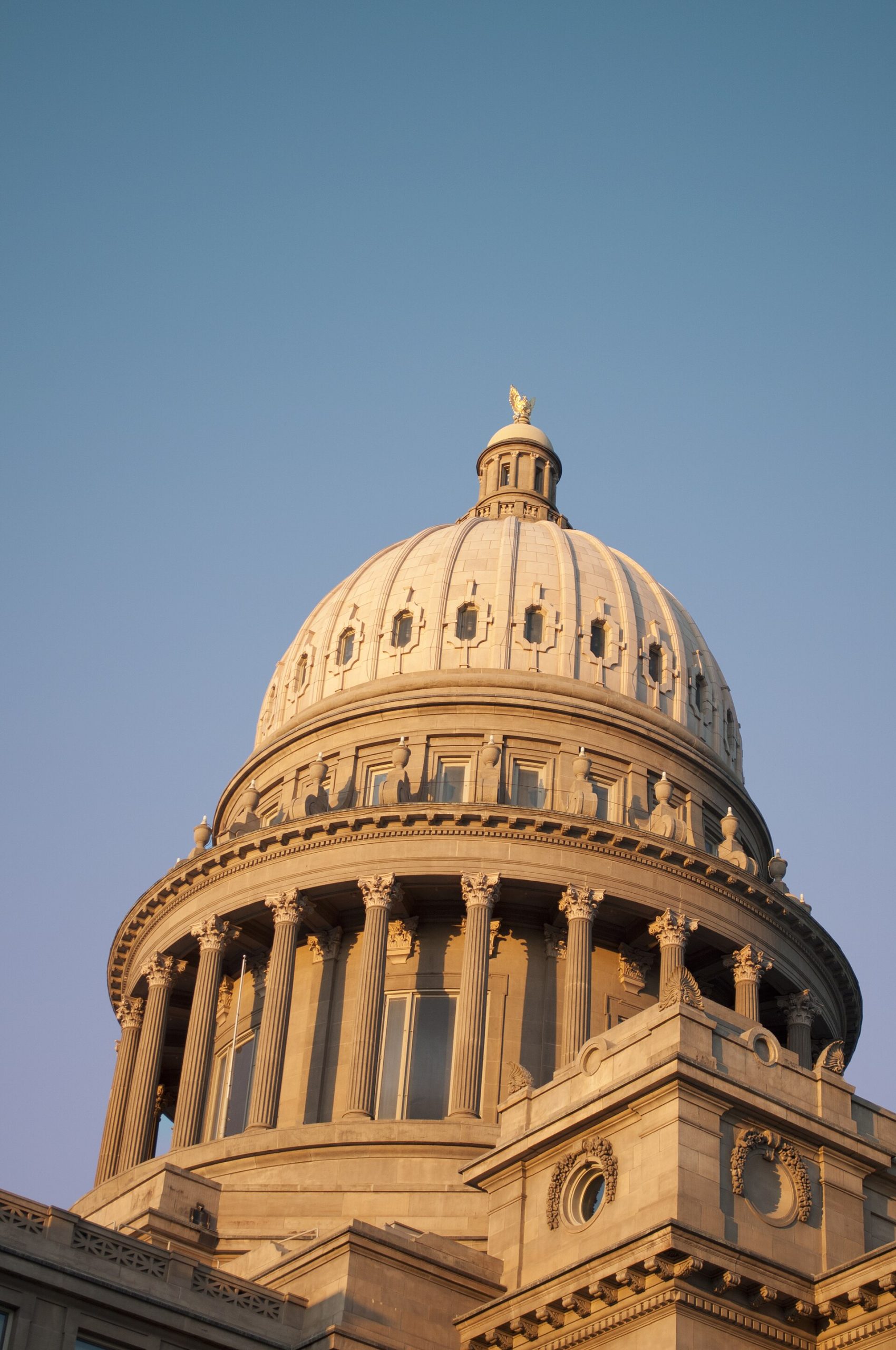
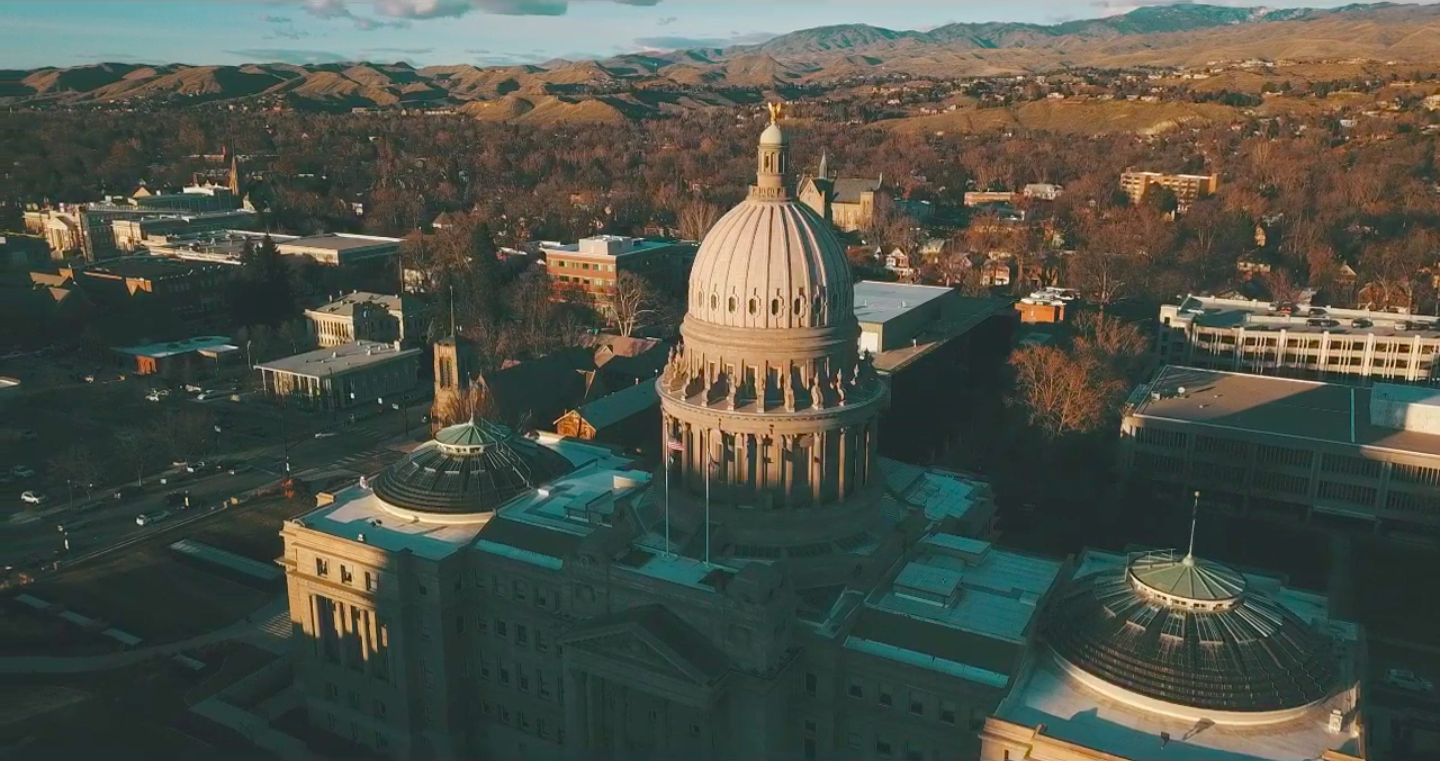
St. John’s Cathedral — formally the Cathedral of St. John the Evangelist — is the mother church of the Roman Catholic Diocese of Boise, which covers the entire state of Idaho. It sits near Julia Davis Park on the western edge of downtown, built in a Romanesque Revival style with twin brick towers, and it remains an active parish and the seat of the diocesan bishop.
What does “cathedral” actually mean here?
A cathedral is not simply a large or old church. It is the church that contains a bishop’s cathedra, or official chair, and functions as the administrative and liturgical center of a diocese. St. John’s holds that role for the Diocese of Boise, which was established in the late 19th century and is unusual among American dioceses in that its territory is the entire state, rather than a single metro region or a portion of one state.
That distinction matters for how Boise’s landmark buildings get labeled. The city has another downtown church popularly called a cathedral — the Cathedral of the Rockies, which is the informal name for First United Methodist Church and its illuminated spire. Methodist church governance has no bishop’s cathedra in the Catholic sense, so that name is a nickname tied to the building’s visual presence on the skyline, not a technical designation. St. John’s, by contrast, is a cathedral in the strict ecclesiastical sense: it is where the Diocese of Boise’s bishop presides over major liturgies, ordinations, and diocesan-wide services.
Where is the cathedral located?
St. John’s stands near Julia Davis Park, close to the Boise River and within walking distance of several of the city’s museums, including the Boise Art Museum and the Idaho State Museum. That places it just outside the densest core of downtown Boise, in the cluster of civic and cultural buildings that grew up along the river corridor through the 20th century.
The setting means the cathedral is often encountered as part of a broader walk through that museum district rather than as an isolated stop. Its towers are visible from several points along the park and river greenbelt, which is part of why it functions as a recognizable orientation point even for people who never go inside.
What does the building look like, architecturally?
The cathedral is built in a Romanesque Revival style, sometimes described more specifically as Lombard Romanesque, characterized by round arches, a symmetrical brick facade, and twin bell towers flanking the main entrance. That style was a common choice for large Catholic churches built in the United States in the early 20th century, favored for its solidity and its visual distinction from the Gothic Revival forms used by many Protestant congregations of the same era.
The exterior brickwork and the paired towers give the building a heavier, more fortress-like presence than the more slender, steeple-forward profile of the Cathedral of the Rockies across downtown. Read side by side, the two buildings offer a useful lesson in how church architecture in Boise split along denominational lines during the city’s early growth.
How long did construction take?
Like many church-building projects undertaken by a young, thinly resourced diocese, construction of St. John’s stretched over an extended period rather than proceeding in one continuous push. Diocesan histories describe a building campaign that began in the early 1900s and was completed and dedicated more than a decade later, with fundraising and material shortages slowing the work in between.
That kind of delayed, phased construction was common for major religious buildings across the Mountain West at the time, where congregations were raising money from a comparatively small and geographically scattered Catholic population rather than an established urban parish base. Readers interested in how Idaho’s public buildings from the same period were financed and built can find a useful comparison in coverage of the Idaho State Capitol, completed in a similar window using a mix of state funding and phased construction.
What is inside the cathedral?
The interior contains stained glass windows and painted murals, consistent with the decorative program typical of a Catholic cathedral of its era and scale. The murals depict religious scenes and were added to the building over time rather than completed all at once during the original construction, a common pattern in cathedrals where interior decoration was funded and installed gradually as parish resources allowed.
The cathedral’s own liturgical furnishings — the altar, the bishop’s cathedra, and the sanctuary arrangement — reflect its function as the diocesan seat rather than an ordinary parish church. Visitors interested in the specifics of the artwork, its dating, and the artists involved should consult the Diocese of Boise’s own materials directly, since that kind of detail is the parish’s to state and can change as restoration work is completed.

Is St. John’s Cathedral still an active parish?
Yes. It functions as both a working parish, with regular Mass and sacraments, and as the diocesan cathedral, meaning it hosts ordinations, the installation of bishops, and other events that draw clergy and congregants from across the state rather than from the immediate neighborhood alone.
Because it is an active place of worship rather than a museum or historic site with fixed visiting hours, anyone planning to see the interior should check the cathedral’s or diocese’s own current schedule before going, since access around services, private events, and restoration work will vary. This is a case where a durable description of the building holds steady, but the practical detail of when doors are open does not, and should always be confirmed on the source rather than assumed from a guidebook.
Can visitors go inside without attending Mass?
Many Catholic cathedrals in the United States allow quiet visits outside of service times, and St. John’s general pattern of use follows that model, but the specific windows for non-liturgical visits are set by the parish and can shift. The safest approach is to treat any visit as contingent on what the cathedral’s own posted schedule says at the time, rather than assuming a fixed public-visiting policy the way one might for a state-run museum.
For travelers weighing which downtown religious and civic buildings are genuinely open to casual visitors versus those requiring more planning, the broader landmark landscape is covered in the Landmarks & Sights archive, which includes buildings ranging from working government offices to fully public museums.
How does St. John’s fit into Boise’s downtown landmarks?
St. John’s Cathedral is one of several large, architecturally distinct religious buildings that define Boise’s skyline alongside civic landmarks like the Idaho State Capitol and the Ada County Courthouse. Unlike those government buildings, it is not publicly funded and not open on the same predictable schedule, which is a distinction worth keeping in mind when planning a walking route through the area.
Its location near Julia Davis Park also puts it within the same corridor as several of the city’s key museums, making it a natural stop for anyone already spending a day in that part of downtown rather than a destination that requires a separate trip. Readers building out a broader sense of the city’s museum and landmark geography can start with the Boise guide hub, and those focused specifically on planning routes and logistics around downtown will find that covered in Boise practical planning.
For a sense of how downtown’s religious architecture reads as a set — Catholic, Methodist, and otherwise — readers can also compare this entry against the Cathedral of the Rockies piece, and for a wider view of how the city’s built environment and daily life fit together, the Living in Boise hub covers how residents actually navigate these downtown districts day to day, distinct from a visitor’s one-time pass through them.
Access Boise is an independent guide written from published, checkable sources. We have not visited the places described here and we do not publish personal recommendations or invented ‘local favourites’ — where something is singled out as notable, we say who says so. Opening times, fares, closures and prices change at short notice, so treat everything here as a starting point and confirm with the museum, operator or venue directly before building a day around it. We give no advice on visas, insurance, health or safety; use your own government’s official guidance for those.
Featured image: Photo by Patrick R., source, CC BY-SA 3.0
