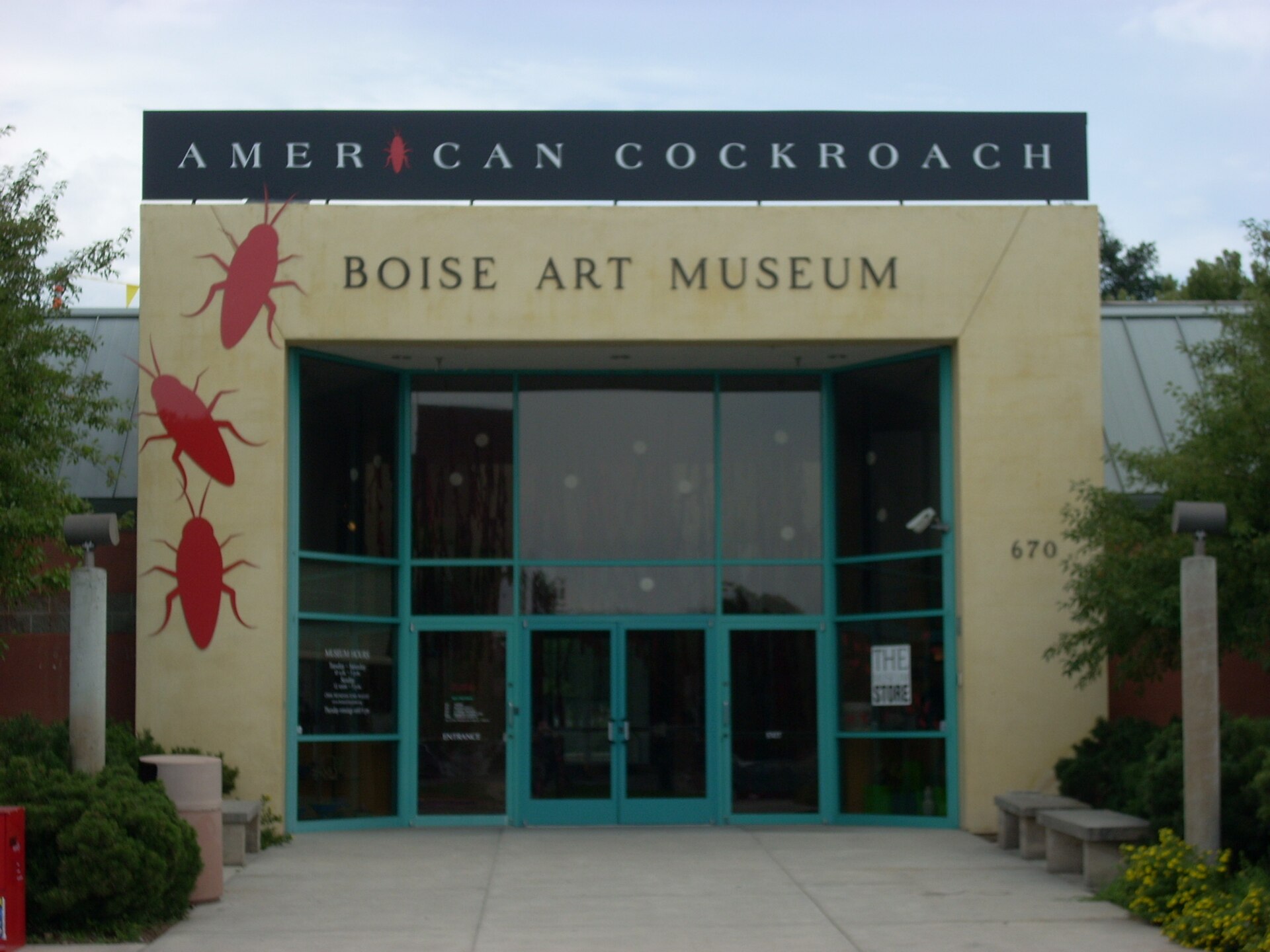
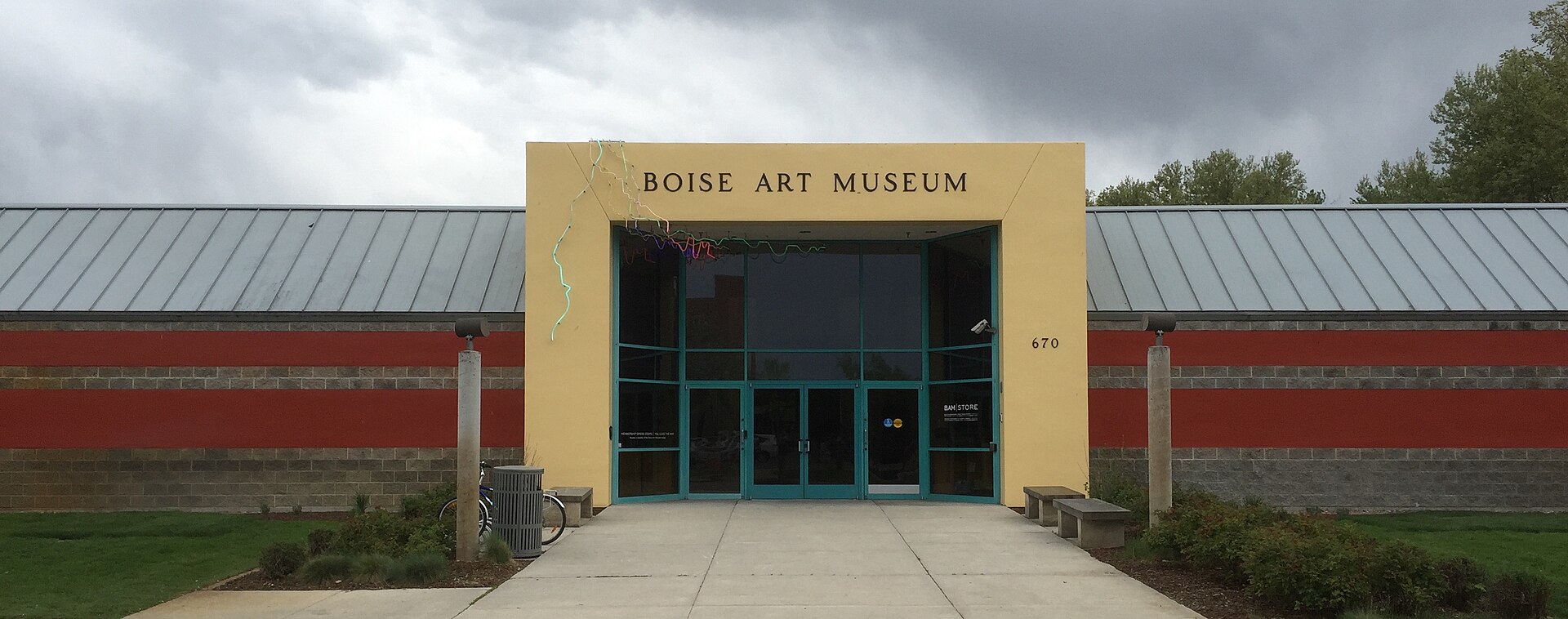
The Boise Art Museum, usually shortened to BAM, is Idaho’s largest museum devoted to visual art. It sits inside Julia Davis Park near downtown Boise and holds a permanent collection built around American realist painting, a nationally recognized studio ceramics collection, and rotating contemporary exhibitions, alongside a changing schedule of loaned shows.
What is the Boise Art Museum?
BAM is a nonprofit art museum that traces its origin to 1937, when it began as the Boise Art Gallery, according to the museum’s own history. It became the Boise Art Museum in 1974 and has operated continuously since, making it one of the older cultural institutions in the state of Idaho. The museum is accredited by the American Alliance of Museums, a status held by only a minority of museums nationally and one that requires ongoing review of collections care, governance, and public service.
Unlike a history museum or a natural history collection, BAM’s stated mission is squarely about visual art: acquiring it, exhibiting it, and running education programs tied to it. That distinguishes it from institutions such as the Idaho State Museum, which covers the state’s broader human and natural history rather than fine art specifically.
Where is the Boise Art Museum located?
The museum sits inside Julia Davis Park, one of Boise’s oldest and most central parks, close to the Boise River Greenbelt and adjacent to Zoo Boise. That puts it within the same cluster of civic institutions as the Idaho State Museum and the Discovery Center of Idaho, all reachable on foot from one another within the park. Anyone planning a visit around the wider downtown Boise area can treat Julia Davis Park as a single stop covering several museums rather than a detour to one building.
What does the permanent collection actually contain?
BAM’s own site describes its permanent holdings as organized loosely around three strands: American realism, contemporary art, and studio ceramics. The collection has grown mainly through gift and purchase over several decades rather than through a single founding donation, which is why its strengths are uneven by design rather than accident.
- Ceramics — The museum states that its ceramics holdings are among the more significant collections of American studio ceramics held by any public museum in the region, spanning functional and sculptural work from 20th- and 21st-century American and international ceramic artists.
- American realism — Paintings and works on paper from 20th-century American realist and regionalist artists form a core historical strand of the collection, reflecting the period in which the museum itself was founded.
- Contemporary art — A continually expanding body of contemporary painting, sculpture, photography, and mixed media, much of it acquired more recently and rotated more often than the historical holdings.
The museum does not display its full permanent collection at any one time. Like most art museums of its size, BAM rotates works from storage into gallery space alongside temporary loan exhibitions, so what is on the wall on a given month is only a slice of what the institution actually owns. Anyone researching a specific artist or work is better served checking the museum’s own collection pages or contacting its curatorial staff directly than assuming a piece is currently on view.
Does the museum have outdoor art or a sculpture garden?
Yes. The museum’s grounds within Julia Davis Park include outdoor sculpture, and BAM’s site references its sculpture garden as part of the public-facing collection, distinct from the ticketed indoor galleries. Outdoor sculpture of this kind is typically viewable without paying gallery admission, though the exact boundary between free and ticketed space is best confirmed on the museum’s own site before a visit, since layouts and access change with construction or special installations.
What temporary exhibitions and events does BAM run?
Alongside the permanent collection, BAM organizes temporary exhibitions that change several times a year, drawing on loans from other institutions, touring shows, and its own storage. These are the exhibitions most likely to be time-limited, so any specific show mentioned elsewhere should be checked against the museum’s current exhibition calendar rather than assumed to still be running.
The museum is also associated with Art in the Park, a long-running outdoor arts festival held in Julia Davis Park and organized by the museum, typically in early September. Because festival dates shift year to year and are set by the museum itself, the specific weekend should always be confirmed on BAM’s own site rather than treated as fixed.
Boise’s cultural calendar more broadly is shaped by its seasons — outdoor festivals cluster in the warmer months, while indoor museum programming, including BAM’s, tends to run more consistently through winter when outdoor options in the city narrow. Readers building a trip around Boise’s annual event calendar should treat any specific festival date as provisional until checked against the organizer.
Is there free or discounted admission?
Many mid-sized American art museums, including BAM, offer some form of reduced or free admission window — a free evening, a discounted day, or free entry for residents of a particular age group or membership tier. BAM’s own site is the only reliable source for which of these currently applies, since admission structures and prices are revised periodically and are not something this guide can responsibly fix in print. The practical approach is to check the museum’s ticketing page directly before a visit rather than rely on a remembered figure.
How does BAM fit with the rest of Julia Davis Park?
Julia Davis Park functions as Boise’s cluster of civic and cultural institutions rather than a single attraction. Along with BAM, it holds Zoo Boise, the Idaho State Museum, the Discovery Center of Idaho, and rose gardens maintained by the city’s parks system. The park sits directly on the Boise River Greenbelt, the paved path that runs along the river through much of the city, which means the museum is reachable by foot or bicycle from much of downtown without needing a car.
For residents, this matters differently than for visitors. A visitor is likely to treat Julia Davis Park as a single half-day stop covering several museums. A resident is more likely to encounter BAM as one stop on a regular Greenbelt walk or a recurring member visit — worth knowing if considering a membership, since most art museum memberships in the US, BAM included, offer reciprocal admission at partner institutions elsewhere, a detail confirmed on the museum’s own membership page rather than assumed.
What should a first-time visitor know before going?
The essentials are straightforward and durable, even where specific numbers are not:
- The museum is one building within Julia Davis Park, not a standalone campus — parking and access are shared with the park’s other attractions.
- The permanent collection rotates; a specific artist or work seen in a photograph or article is not guaranteed to be on display on any given visit.
- Hours, admission prices, and any free-admission windows change over time and should be confirmed on the museum’s own site rather than a secondhand source.
- The museum is closed on at least one day most weeks, as is standard for museums of its size in the US — the specific closed day should be checked directly.
The Boise Art Museum’s own site is the authoritative source for current hours, admission, and exhibition schedules, and is worth checking directly before any visit. Readers assembling a broader itinerary around the city’s museums and cultural sites can use this guide’s Boise museums overview as a starting index, and those focused on the Julia Davis Park area specifically can cross-reference it with coverage of Boise’s major sights and the Boise River Greenbelt that runs alongside the park.
Access Boise is an independent guide written from published, checkable sources. We have not visited the places described here and we do not publish personal recommendations or invented ‘local favourites’ — where something is singled out as notable, we say who says so. Opening times, fares, closures and prices change at short notice, so treat everything here as a starting point and confirm with the museum, operator or venue directly before building a day around it. We give no advice on visas, insurance, health or safety; use your own government’s official guidance for those.
Related reading
Living in Boise, Boise, Practically, What Is the Warhawk Air Museum in Nampa, Idaho?, What Is Freak Alley Gallery, and How Does It Work?, What Is the Boise WaterShed, and What Does It Explain?.