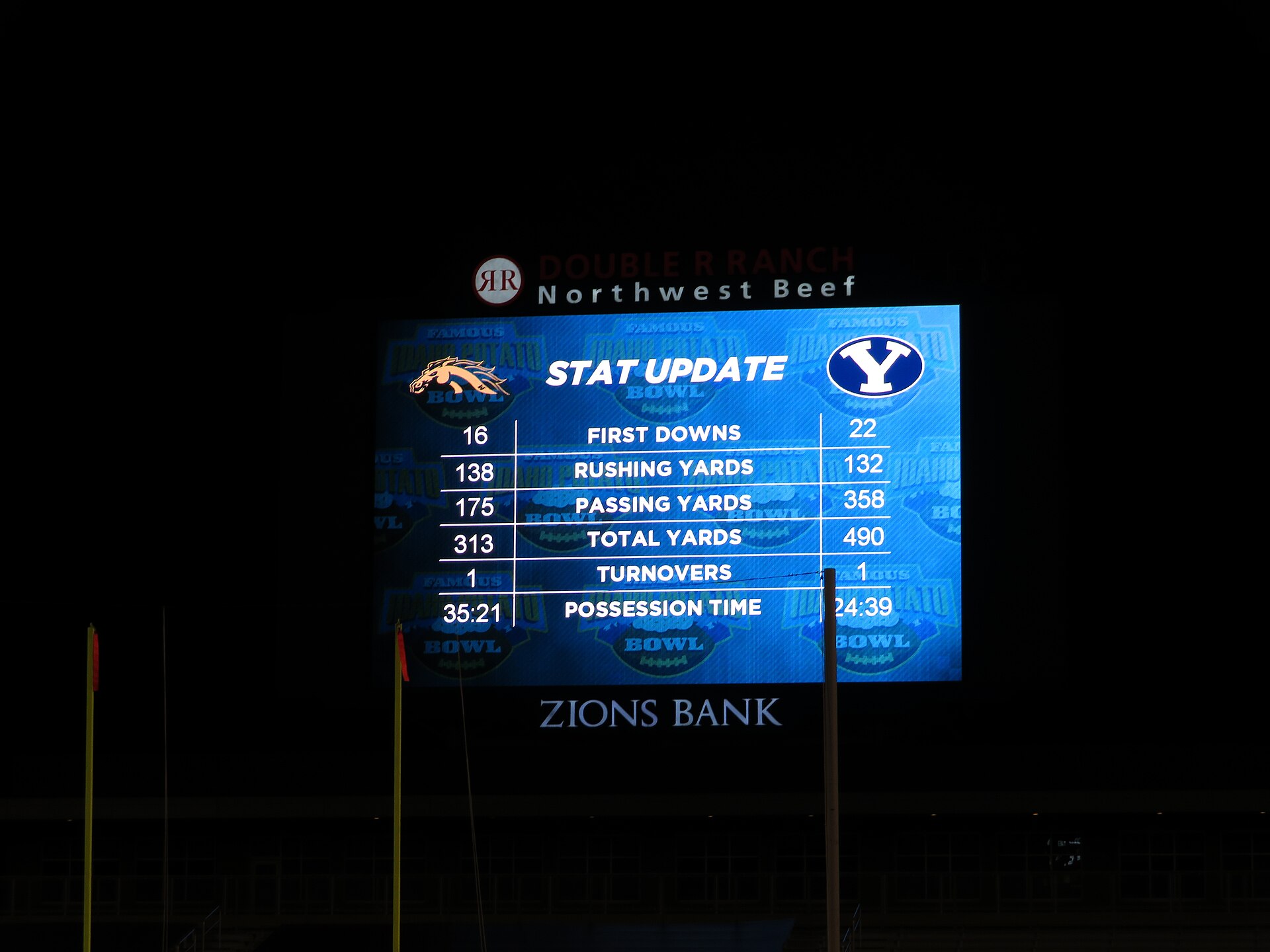
Boise State University is the city’s largest employer of its kind, its biggest public campus, and the institution most likely to appear on a Boise postcard, thanks to a football field with blue turf. It sits directly on the Boise River, a ten-minute walk from the state capitol, and its roughly 25,000 students make it a fixture of the city’s economy, housing market, and identity rather than a campus set apart from it.
Where is the campus in relation to downtown?
Boise State’s main campus is immediately south of the Boise River and a short walk from the eastern edge of downtown, across the water from Julia Davis Park. There is no buffer of suburban sprawl between campus and city center — university and downtown occupy adjoining ground.
The Boise River Greenbelt runs along the campus’s northern edge, connecting it on foot or by bike to Julia Davis Park and the museums clustered there, and onward toward the Basque Block and the rest of downtown. A student or visitor can walk from a campus lecture hall to the state capitol in well under twenty minutes without leaving paved path or sidewalk.
What does the university actually contain?
Boise State is Idaho’s largest university by enrollment, according to the university’s own published figures, and it operates as a full public research institution rather than a satellite campus. Its academic programs span engineering, health sciences, business, education, and the arts, and the university carries the Carnegie Foundation’s classification for high research activity — a designation the university cites on its own site as a marker of its research output.
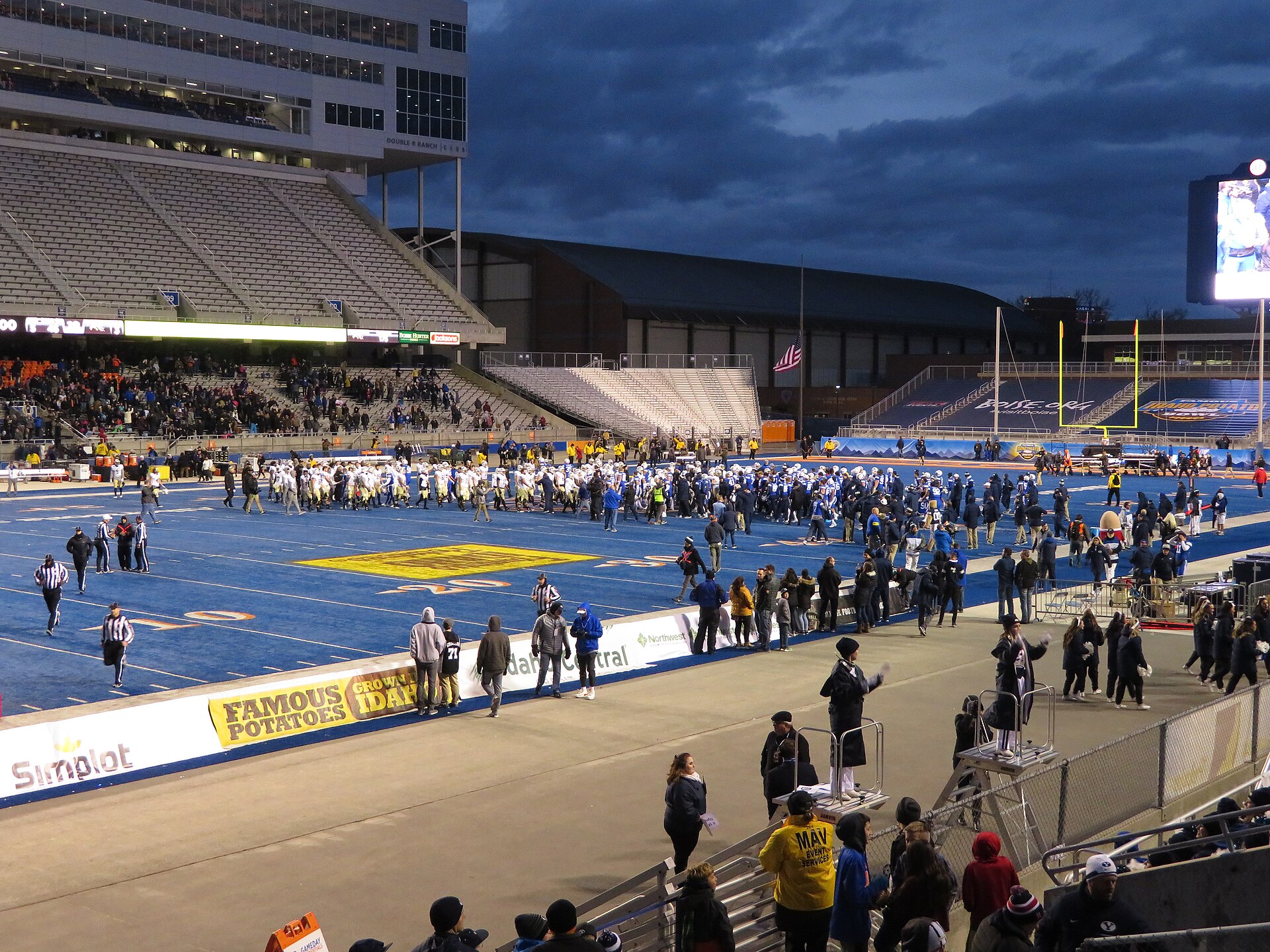
Its most visible structure to non-students is Albertsons Stadium, home of the Boise State Broncos football team and known nationally for its blue artificial turf, a surface the university adopted in the 1980s and which remains one of the few of its kind among major college programs. The stadium sits at the northern edge of campus, close enough to the Greenbelt that its silhouette is visible from the river path.
How big a part of Boise’s economy is the university?
Boise State is one of the largest employers in Ada County, a status confirmed in regional economic development data compiled by state and local agencies, putting it in the same tier as the region’s hospital systems and largest private employers. Its payroll, construction spending, and student population all register directly in the city’s economic figures.
The university’s presence also shapes the city’s job market in specific ways: it trains a steady supply of graduates into local technology, health care, and public-sector employers, and its research programs — particularly in engineering and computer science — feed talent into the same firms driving Boise’s broader tech growth. Anyone researching how the local job market actually works will find the university named repeatedly as both employer and training pipeline.
.jpg)
Does the university affect housing and neighborhoods nearby?
Yes. The neighborhoods immediately surrounding campus — particularly the areas bordering the Boise River south of downtown — carry a mix of long-term rental housing, student housing, and older single-family homes, a pattern typical of university-adjacent districts in mid-sized American cities. Demand from students and staff is one factor, among several, that has pushed on rental prices in the neighborhoods closest to campus.
For a broader view of how this fits into the city’s housing picture, the analysis at what happened to Boise’s housing market covers the pressures shaping prices across the metro, and the neighborhood-by-neighborhood breakdown at Boise’s neighborhoods explained covers what living close to campus is actually like, separate from downtown proper or the North End.
What is the “Bronco Nation” identity, and how far does it reach?
Bronco Nation is the informal but widely used name for Boise State’s fan base, and its reach extends well past students and alumni into the general population of the Treasure Valley. Home football games routinely draw crowds into the tens of thousands, filling Albertsons Stadium and spilling into the surrounding streets on game days — a pattern the university’s own athletics department documents in its attendance figures each season.
This matters for a visitor or new resident because game-day Saturdays in the fall change downtown Boise’s traffic, parking, and hotel occupancy noticeably, an effect confirmed by the city’s own downtown planning materials referencing event-driven congestion. Anyone planning a visit around a fall weekend should check the university’s official athletics schedule before assuming normal city conditions will hold.
Does the university shape the city’s culture beyond sports?
Boise State’s cultural footprint includes public lecture series, a student-run public radio station, and performance and gallery spaces that host events open to the general public, not only enrolled students. The university publishes its public events calendar directly, and it is the authoritative source for current programming, since specific dates and exhibitions change by semester.
The campus also anchors part of the city’s cultural geography for residents exploring museums and galleries more broadly — a subject covered at the Museums & Galleries archive — and for anyone building an itinerary that pairs downtown sights with the riverside campus, the ideas at a walking route through downtown Boise or a sensible order for a first Boise visit both treat the university district as a natural stop rather than a detour.
How does the university connect to the rest of the city physically?
Campus sits along the Boise River Greenbelt and within Valley Regional Transit’s bus network, making it reachable without a car from most of downtown and several surrounding neighborhoods. Bike lanes and the flat river path also make it one of the more approachable parts of the city on foot or by bicycle.
Readers weighing whether they need a vehicle at all in Boise can consult whether you need a car in Boise, and those specifically routing bus travel around the city, including to and from the university area, will find the route structure explained at Valley Regional Transit’s Boise bus routes. The broader transport picture — parking downtown, cycling infrastructure, and one-way streets near campus — is gathered under the Getting Around archive.
Is Boise State part of daily life for people who don’t attend it?
For many residents, yes, in ways that have nothing to do with enrollment. The university’s public lectures, its student radio station, its recreation and aquatic facilities open to the community, and its role as one of the region’s largest employers all touch residents who never take a class there.
Its place in the city is best understood not as a walled campus but as a riverside district that happens to run a football team and a research university — one more piece of how Boise actually functions day to day, alongside the parks, the river, and downtown itself. Readers building a wider picture of that daily texture will find it addressed directly at the Living in Boise hub, and a fuller sense of the city’s overall shape, practicalities, and rhythms at the Boise practical hub and the Boise guide hub.
Access Boise is an independent guide written from published, checkable sources. We have not visited the places described here and we do not publish personal recommendations or invented ‘local favourites’ — where something is singled out as notable, we say who says so. Opening times, fares, closures and prices change at short notice, so treat everything here as a starting point and confirm with the museum, operator or venue directly before building a day around it. We give no advice on visas, insurance, health or safety; use your own government’s official guidance for those.
Featured image: Photo by Ken Lund from Reno, Nevada, USA, source, CC BY-SA 2.0
.jpg)