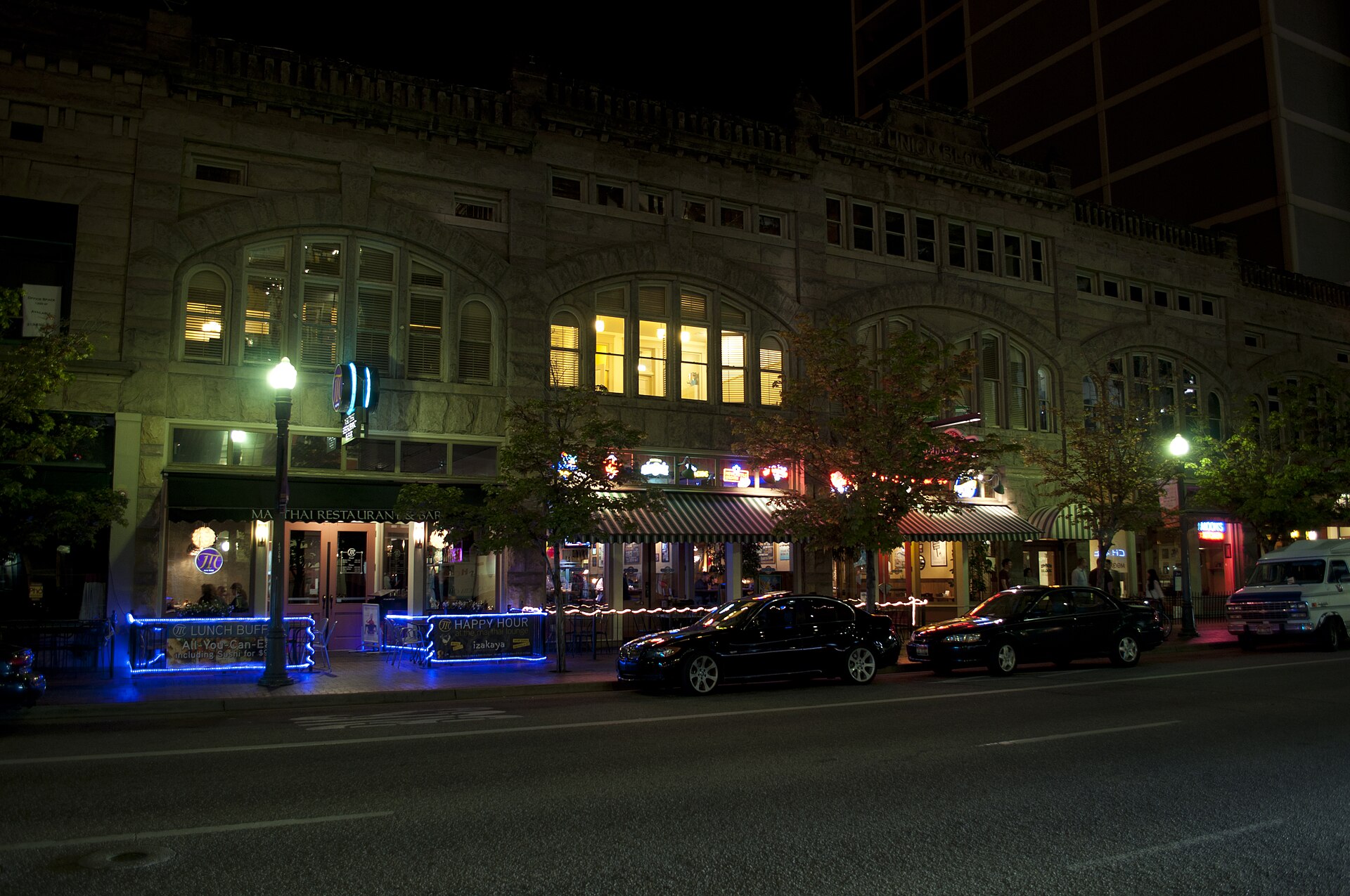
Two days in Boise works best split by geography, not by theme: one day on foot in the compact downtown core, one day covering the foothills and the sites east of downtown that need a car or a longer walk. That split matches how the city is actually laid out, and it avoids doubling back across the same few blocks twice.
How should the two days be divided?
Day one stays inside downtown Boise’s walkable grid — the Idaho State Capitol, the Basque Block, Boise Art Museum or the Idaho State Museum, and Freak Alley. Day two moves outward: the Old Idaho Penitentiary and Idaho Botanical Garden east of downtown, Table Rock above them, and the North End or Boise Greenbelt for the return. Anyone wanting a tighter version of just the first day has a dedicated breakdown at what can be seen in Boise in one day, which this plan builds on rather than repeats.
What does day one downtown actually cover?
Day one covers a walkable core roughly bounded by the Boise River, the Capitol, and the rail corridor south of the city — the same footprint described in detail in the site’s guide to where downtown Boise begins and ends. Most of what matters on a two-day trip sits inside it.
The Idaho State Capitol is the fixed point. It is open to the public, houses the state legislature, and is notable for being heated in part by the city’s own geothermal system — a detail covered by the site’s explainer on the Capitol’s geothermal heating. From there, Capitol Boulevard runs south toward the Boise Depot and connects the government district to the rest of downtown, a route explained further in the piece on what Capitol Boulevard connects.
A downtown museum stop is worth building in deliberately. Boise Art Museum holds a permanent collection alongside changing exhibitions, and the Idaho State Museum, run by the Idaho State Historical Society, covers the state’s political and natural history. Several of the city’s cultural institutions offer free admission on set days or evenings — the pattern is laid out on the page for which Boise museums are free, and when.
What is the Basque Block, and does it fit into one afternoon?
The Basque Block is a single block of Grove Street recognized by the National Park Service as a center of Basque-American heritage, anchored by the Basque Museum and Cultural Center. It fits comfortably into an afternoon alongside a downtown museum stop.
The museum documents Boise’s Basque community, one of the largest outside the Basque Country itself, and the block includes an ostatua — a historic Basque boarding house — among its buildings. The Basque Museum’s own site is the authority on current exhibits and hours; the site’s overview of the Basque Museum and Cultural Center’s collection covers what the museum holds. The block’s largest public expression, Jaialdi, is a recurring festival rather than an annual one — what it is and how often it happens is explained on the page for Jaialdi and how often it happens in Boise.
How do you get around between these places?
Downtown Boise is compact enough to cover on foot, which is the main reason day one works without a car. Idaho Fish and Game aside, the relevant local authority here is the city’s own transport network: Valley Regional Transit runs the area’s bus routes, and the city has expanded bike-share and e-scooter options in recent years.
For a reader deciding whether a rental car is worth it for the whole trip, the honest answer depends on whether day two includes Bogus Basin or outlying neighborhoods — the full reasoning is in do you need a car in Boise, honestly. Downtown’s one-way street pattern, a legacy of an earlier traffic redesign, is worth understanding before driving at all; it’s covered in why downtown Boise has so many one-way streets.

What does day two look like?
Day two moves east and up in elevation, covering ground that doesn’t fit inside a single afternoon walk. The core stops are the Old Idaho Penitentiary, the Idaho Botanical Garden that now occupies part of the same grounds, and Table Rock above both of them.
The Old Idaho Penitentiary operated as the territorial and state prison from 1872 until 1973 and is listed on the National Register of Historic Places; its own site describes the cellblocks and grounds open to visitors today, covered further in the Old Idaho Penitentiary’s history and what a visit covers. The Idaho Botanical Garden occupies adjoining land and is detailed in the Idaho Botanical Garden’s site on the old penitentiary grounds.
Table Rock rises above both sites and is visible from much of the city, marked at night by the hillside letters above Boise — a landmark explained in the site’s piece on what Table Rock is and what sits on top of it.
Is there a lower-effort version of day two?
Yes — a shorter version replaces the foothills climb with the Boise Greenbelt, the paved path system running along both banks of the Boise River through the city’s parks. It links downtown to the North End and the East End without requiring a car, and the site’s guide to using the Greenbelt to get around Boise covers how continuous the path actually is. The North End itself, one of Boise’s older residential districts, is a reasonable stop on this lighter route and is covered separately in the neighborhoods archive.
Either version of day two benefits from checking current opening details directly with the relevant operator — the Old Idaho Penitentiary and Idaho Botanical Garden both publish hours and seasonal closures on their own sites, and neither should be assumed to match a listing found elsewhere.
Does the time of year change this plan?
Significantly. Summer in Boise runs hot and dry, which affects how comfortable the Table Rock climb or a full day outdoors actually is — detailed in what a Boise summer is actually like. Winter introduces inversion conditions in the valley and changes what’s practical to do outdoors, covered in what Boise’s winter inversion is and why it matters. Spring and fall are generally treated as the more comfortable windows for a two-day walking-and-hiking plan, a point expanded on in the best time of year to visit Boise.
Two other seasonal patterns are worth checking before booking: Treefort Music Fest reshapes downtown for several days each spring, and wildfire smoke season can affect visibility and outdoor plans in late summer. Both are covered in the site’s category for planning and practicalities.
Where does eating and drinking fit into two days?
This plan deliberately doesn’t name restaurants, because a two-day guide can’t responsibly claim to know which are worth a visit — that judgment belongs to reviewers who actually eat there, not to a research desk. What’s useful here instead is the structural detail: Idaho’s alcohol laws affect service hours and where alcohol can be bought, covered in Idaho’s alcohol laws in practice, and tipping conventions in Boise follow the wider U.S. pattern rather than a distinct local one, explained in how tipping works in Boise.
What’s the honest summary?
Two days is enough to cover downtown Boise properly and add one substantial foothills or river-corridor stop — not enough to also reach Meridian, Eagle, or Bogus Basin without cutting something else. Readers building a longer stay, or comparing this plan against a single tightly packed day, will find the broader framework in the site’s practical planning hub and its guide to Boise’s museums, landmarks and neighborhoods.
The structure holds regardless of season: walkable downtown first, foothills or river corridor second, with the exact hours and current conditions confirmed directly against each institution’s own site before setting out.
Access Boise is an independent guide written from published, checkable sources. We have not visited the places described here and we do not publish personal recommendations or invented ‘local favourites’ — where something is singled out as notable, we say who says so. Opening times, fares, closures and prices change at short notice, so treat everything here as a starting point and confirm with the museum, operator or venue directly before building a day around it. We give no advice on visas, insurance, health or safety; use your own government’s official guidance for those.
Featured image: Photo by Patrick R., source, CC BY-SA 3.0
