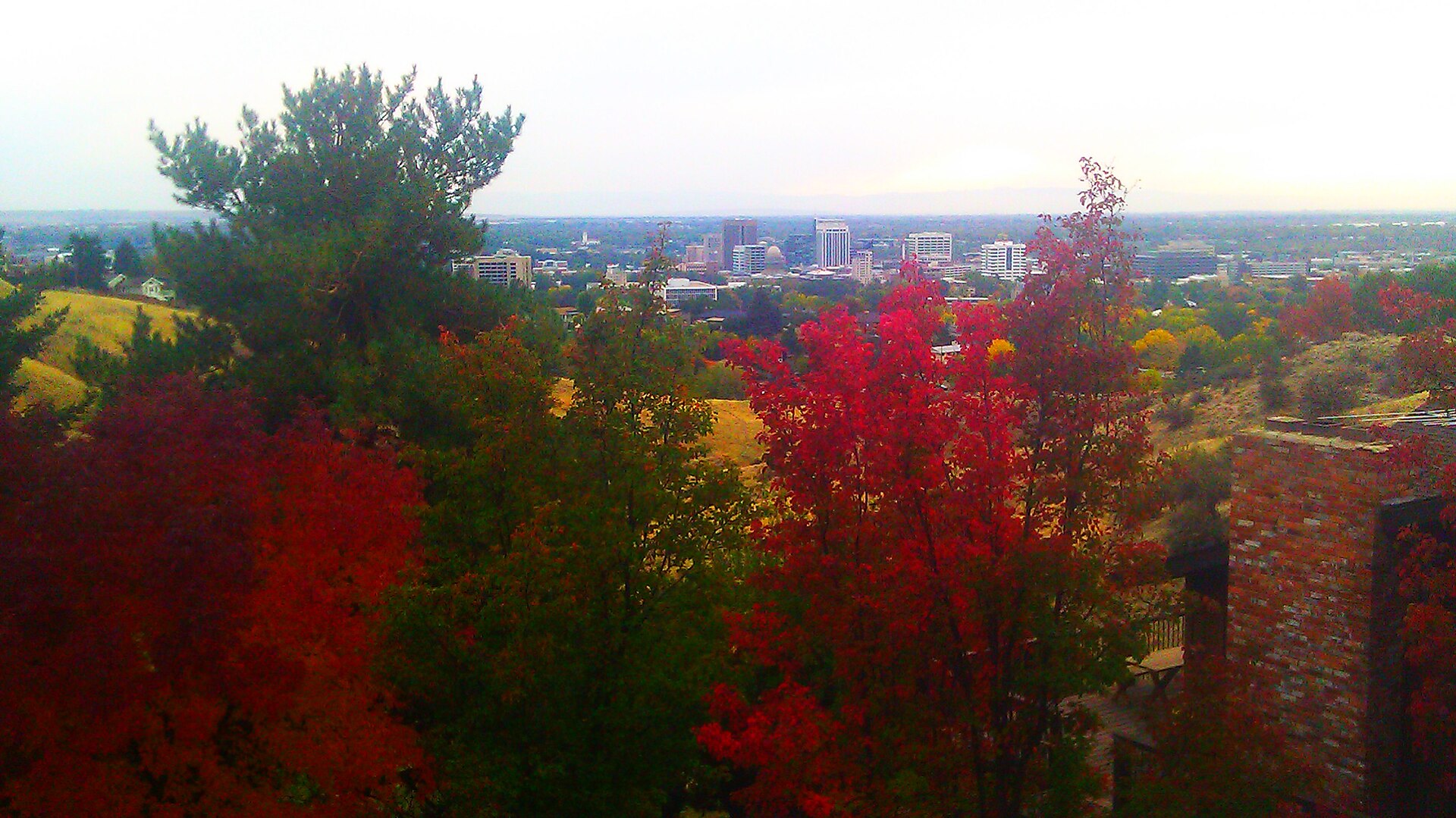
Late spring (roughly May into June) and early fall (September into October) are the two windows most visitors and residents point to, because temperatures sit in a comfortable range, the Greenbelt and foothills trails are fully open, and the city hasn’t tipped into either summer heat or winter ice. Which of the two suits a given trip depends on whether the priority is outdoor time or downtown and museum time.
What is Boise’s climate actually like across the year?
Boise sits in a high-desert basin at the base of the Boise Front, which gives it a climate with real seasonal swings rather than a mild, flat average. The National Weather Service’s Boise office, which issues the city’s climate normals and forecasts, records hot, dry summers, cold winters with occasional temperature inversions that trap cold air and haze in the valley, and shorter, more changeable spring and fall periods in between. Specific averages and record extremes are best checked on the National Weather Service’s own site rather than repeated here, since normals are periodically revised.
That basic shape — dry heat, cold winters, brief transitional seasons — explains most of the scheduling advice that follows. It also explains why the city’s outdoor infrastructure, described in more detail in the practical planning hub, is built around a short, intense window of use each year rather than a mild climate year-round.
What happens in Boise in spring?
March through May is when the foothills come back to life after winter closures. Ridge to Rivers, the city’s own foothills trail programme, typically issues seasonal closures on certain trails to protect them while they’re muddy, then reopens them as conditions allow — a pattern the programme documents on its own site each year rather than on a fixed calendar date. Spring is also when the Idaho Botanical Garden, on the grounds of the old Idaho State Penitentiary, runs its bulb and early-bloom displays, as described on the garden’s own site.
Spring weather in Boise is genuinely variable — a warm week can be followed by snow at higher elevations — which is worth factoring in for anyone planning foothills time around Table Rock or the trail network covered in the Parks & Foothills archive.
What happens in Boise in summer?
June through August is Boise’s most reliably dry and hot stretch, and also its busiest for outdoor recreation. The Boise River becomes a floating and tubing corridor in town, the Greenbelt sees its heaviest foot and bike traffic, and Bogus Basin’s mountain-biking and lift-served trails, which the resort operates as a summer activity as well as a winter one, come into full use. Wildfire smoke from fires elsewhere in the Northwest can also affect the valley’s air quality in late summer in some years, a pattern tracked by Idaho’s Department of Environmental Quality rather than something fixed to a specific month.
Anyone planning to rely on the Greenbelt for daily movement rather than recreation should read the dedicated guide to using the Greenbelt to commute, since summer crowding changes how usable it is for that purpose.

What happens in Boise in fall?
September through November brings cooler, more stable weather and, on the Boise State University campus, the start of football season at Albertsons Stadium, which draws large weekend crowds to the university’s edge of downtown on game days. Fall is also when the Boise Art Museum has, for decades, run its long-standing Art in the Park event, a juried outdoor art fair the museum describes on its own site; exact dates shift year to year and should be confirmed there. Foliage along the Greenbelt and through the North End‘s older street trees is one of the more reliable seasonal draws for anyone walking rather than driving.
Because fall temperatures and light are close to spring’s, many of the same foothills and downtown itineraries apply, with the advantage of typically less smoke and more predictable weather than late summer.
What happens in Boise in winter?
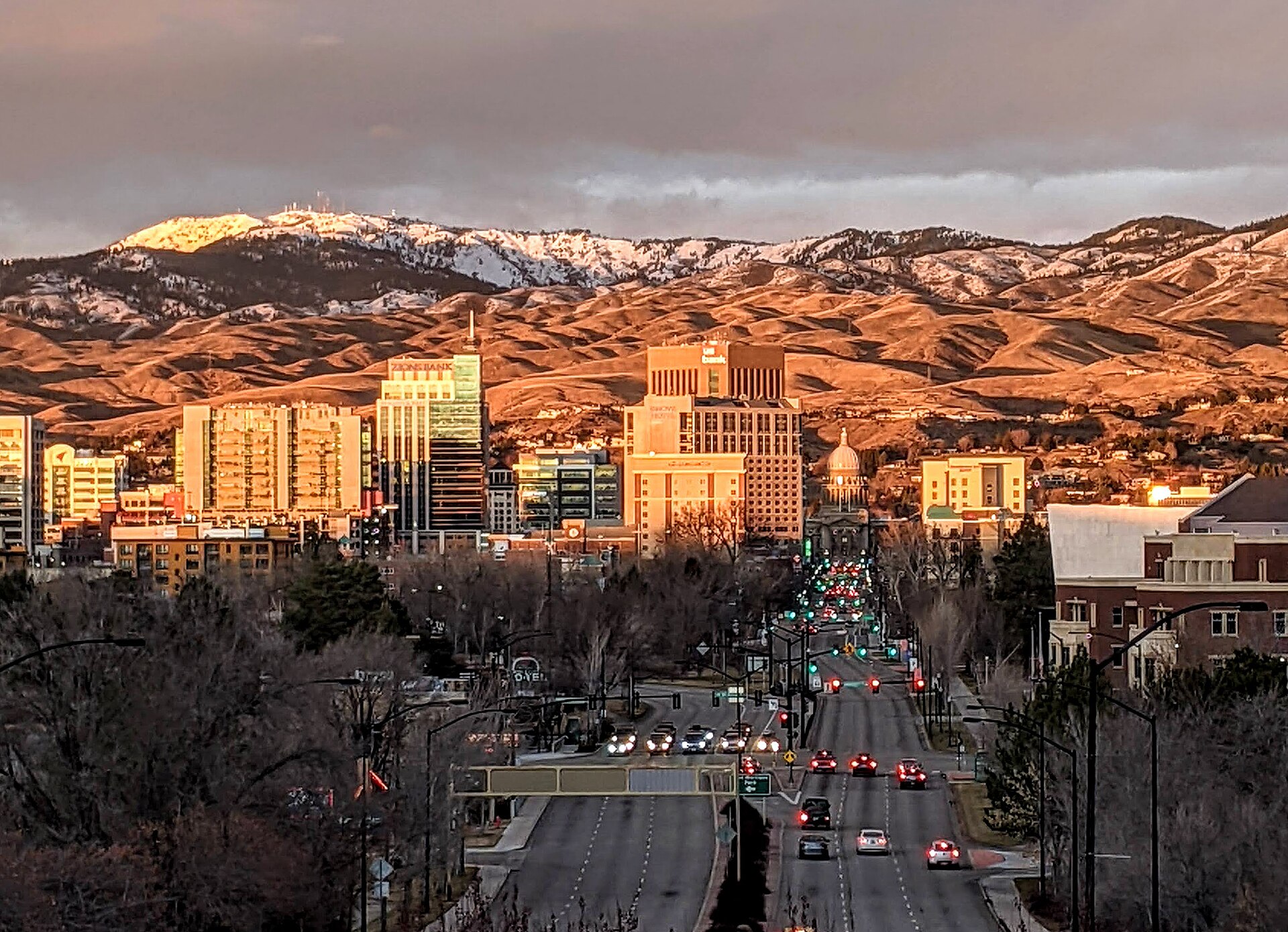
December through February brings the cold end of the valley’s climate, including the temperature inversions the National Weather Service documents, where cold air and haze settle over the city for days at a time even as nearby mountain elevations stay clear and sunny. Snow at the valley floor is usually lighter and less consistent than at higher elevations, which matters for driving: the guide to how winter affects driving in Boise covers the practical differences between valley streets and the mountain road up to Bogus Basin.
Winter is also when downtown’s indoor institutions carry more weight in a visit — the museums and galleries covered across the Museums & Galleries archive, several of which the site of Boise’s free-admission museums covers in more detail.
How does Bogus Basin’s ski season change the calendar?
Bogus Basin, the nonprofit ski area roughly a half-hour drive up the Boise Front, typically operates a winter lift season and publishes its own opening and closing dates each year on its own site, since snowpack varies. That season is the main reason winter draws a different kind of visitor than summer — one focused on the mountain rather than the valley floor. The routes up, including what the access road is actually like and how to reach it without a car, are worth checking before a winter trip, since the road’s character changes with conditions in a way flatland driving in Boise does not.
Does the festival calendar affect when to visit?
Some of Boise’s most distinctive events are infrequent rather than annual, and that changes how they should factor into planning. Jaialdi, the Basque cultural festival centered on the Basque Block, is held roughly every five years rather than yearly, historically in late July, according to the Basque Museum and Cultural Center’s own site — a visitor timing a trip around it needs to check the current schedule directly rather than assume an annual date. Most of the city’s other recurring events, from summer music series to fall art fairs, follow an annual pattern but shift specific dates each year, which is why this site treats them as patterns rather than fixed listings: check the organizing institution’s own site for the current year’s dates before building a trip around any single event.
Is the best time different for residents than for visitors?
Largely yes. A visitor optimizing for comfortable weather and open trails will gravitate to May–June or September–October. A resident’s year looks different, because living here means dealing with all four seasons rather than choosing among them — winter driving conditions, summer heat and air quality, and the shoulder seasons’ mud on foothills trails are all things covered in more depth on the living in Boise hub, which treats the city as a place people manage year-round rather than a destination with an ideal week.
For a first visit with flexible dates, though, the shoulder seasons remain the least complicated choice: outdoor infrastructure is open, downtown is walkable in comfortable temperatures, and neither summer heat nor winter inversion is in play. Anyone building an itinerary around that timing should also look at the broader Boise guide hub for how the city’s neighborhoods, landmarks and museums fit together outside of any single season.
Access Boise is an independent guide written from published, checkable sources. We have not visited the places described here and we do not publish personal recommendations or invented ‘local favourites’ — where something is singled out as notable, we say who says so. Opening times, fares, closures and prices change at short notice, so treat everything here as a starting point and confirm with the museum, operator or venue directly before building a day around it. We give no advice on visas, insurance, health or safety; use your own government’s official guidance for those.
Featured image: Photo by Lordchadwick79, source, CC BY-SA 3.0
