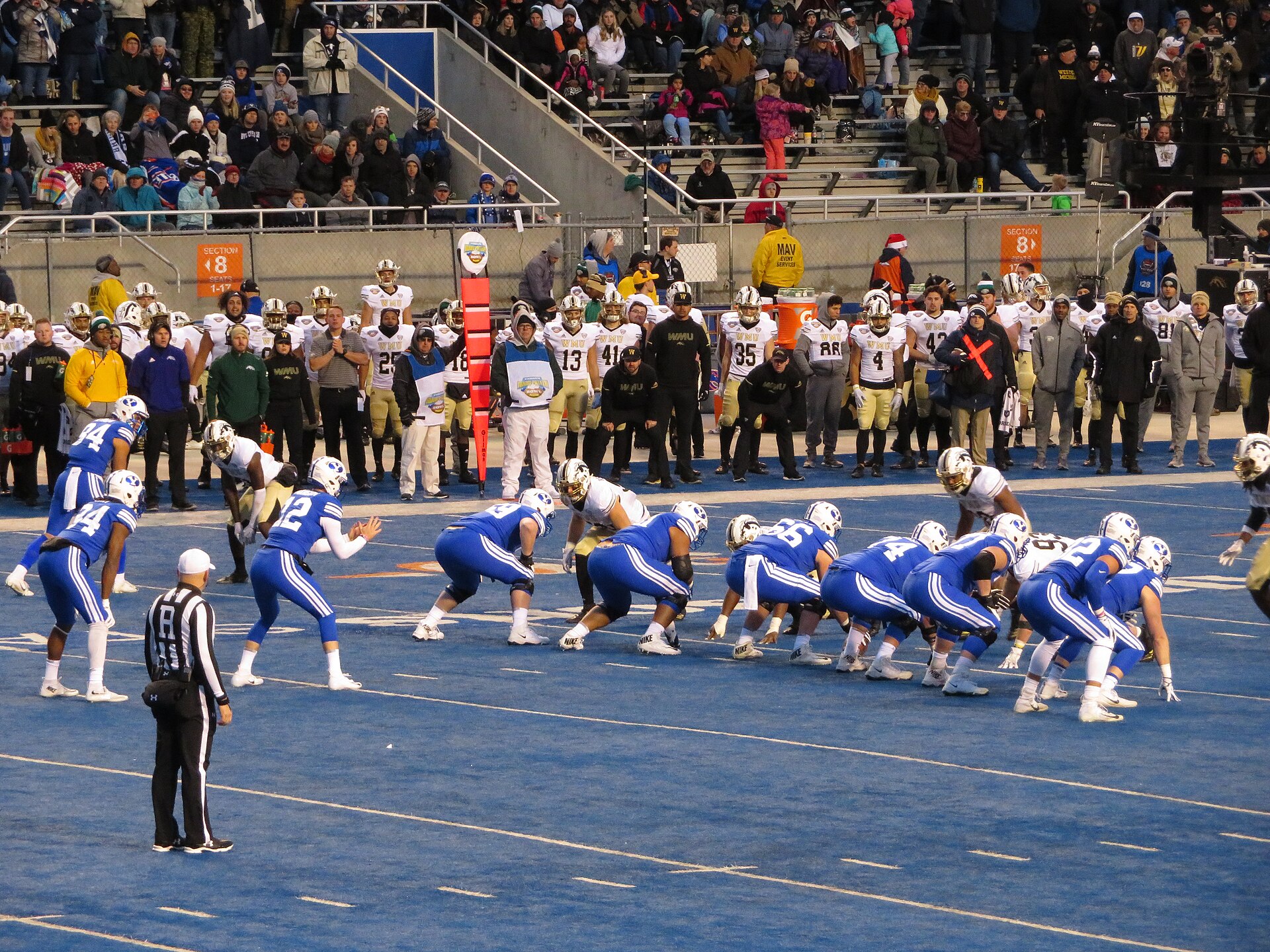
Albertsons Stadium is the football stadium of Boise State University, sitting on the university’s campus just south of downtown Boise along the Boise River. Its playing surface is blue rather than green because the university chose to make the color part of its identity when it installed synthetic turf in 1986 — a decision that has since become the stadium’s defining feature.
What is Albertsons Stadium?
Albertsons Stadium is the on-campus football stadium for the Boise State Broncos, part of Boise State University’s athletics department. It has served as the team’s home ground since 1970, when it opened under a different name, and has been expanded and renovated multiple times as the program’s profile grew.
The stadium sits within the university’s main campus, close to the Boise River and the Boise River Greenbelt, and it functions as both an athletic venue and a fixture of the surrounding campus landscape. Boise State’s own athletics department, through its official site, is the authoritative source for current seating configuration, capacity figures, and stadium history, since these details have changed with successive renovations.
Why is the field blue?
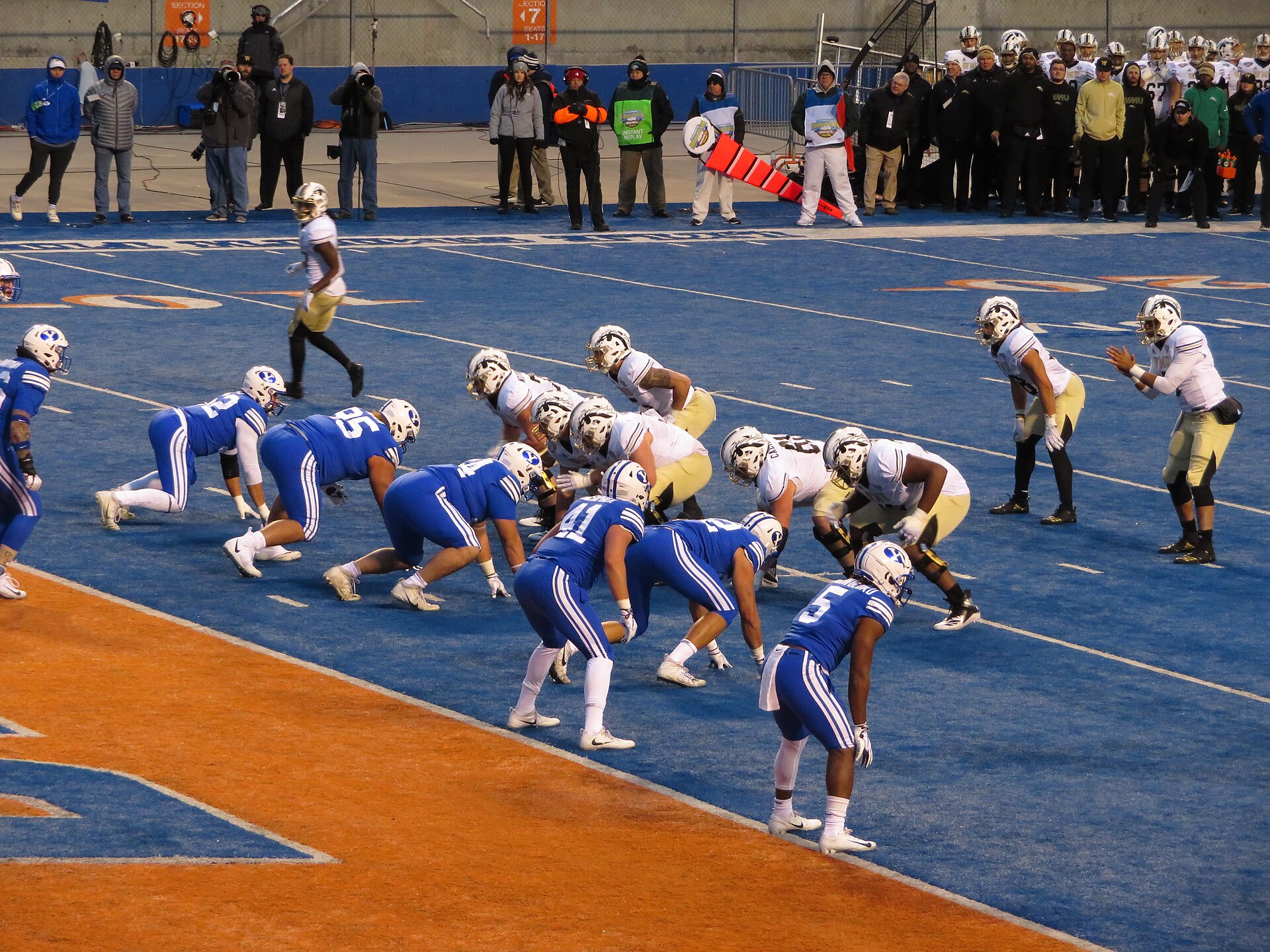
The field is blue because Boise State’s athletic administration selected the color deliberately when replacing the natural grass surface with artificial turf in 1986, making it the first non-green playing field in major college football. According to accounts published by Boise State University, the choice was partly practical — grass struggled to establish and recover in the stadium’s high-use, high-shade conditions — and partly a branding decision meant to distinguish the program on television.
The color has since become inseparable from the university’s identity. Fans and sports media commonly call it the “Smurf Turf,” a nickname that has circulated in national sports coverage for decades, though it is not the field’s official name. Boise State’s own materials refer to it simply as the blue turf.
Is the blue color trademarked?
Boise State University has pursued trademark protection connected to the blue playing surface, treating the color as part of its brand alongside its name and logos. The university’s trademark and licensing office is the authoritative source on the scope of that protection and how it applies to merchandise and other uses.
Separately, the National Collegiate Athletic Association has, at various points, restricted other Football Bowl Subdivision programs from adopting colored turf that could be confused with Boise State’s, according to reporting on NCAA rules changes. A small number of other college programs — at other competition levels — have installed non-green turf in colors such as red or maroon, but Boise State’s blue field remains the one most associated with the practice in national coverage.
.jpg)
Why is it called Albertsons Stadium?
The stadium carries the Albertsons name because of a naming-rights agreement with Albertsons Companies, the grocery chain headquartered in Boise, announced in 2014. Before that, the venue was known as Bronco Stadium for decades. Naming-rights deals of this kind are standard practice for college athletics facilities, and the terms and duration of Boise State’s specific agreement are matters for the university’s athletics department to confirm on its own site.
The Albertsons connection reflects the company’s long-standing ties to Boise generally — it is one of the city’s most recognizable corporate names — rather than any change to how the stadium or team is administered, which remains entirely under Boise State University.
Where is the stadium, and how does it fit into the campus?
Albertsons Stadium sits on Boise State University’s campus on the south side of the Boise River, within walking distance of downtown Boise. The Boise River Greenbelt, the city’s paved multi-use path system, runs along the river adjacent to the campus, connecting the stadium area to other riverside parks and to downtown. Readers researching the wider network of river-adjacent parks and trails can find background in the site’s Parks & Foothills coverage.
The stadium is also close to the Boise Depot area and the cluster of landmarks along the river corridor; for context on that district’s history, see the article on the Boise Train Depot and Platt Gardens. Because the stadium is embedded in an active university campus rather than a standalone visitor site, its immediate surroundings are shaped by academic-year patterns — parking, foot traffic, and access change substantially between game weekends and the rest of the calendar.
How big is the stadium, and what else happens there?
Albertsons Stadium is Idaho’s largest stadium and one of the largest venues of any kind in the state, though exact seating capacity has shifted with renovation phases and should be checked against Boise State Athletics’ own published figures rather than older reporting. It is used primarily for Boise State football games in the fall, but it has also hosted commencement ceremonies, other university events, and occasional concerts, consistent with how large college stadiums are typically used outside their primary sport.
The stadium is part of a broader Boise State campus that includes performance and cultural venues as well as athletic ones. Readers interested in the university’s non-athletic public-facing spaces can see the companion article on the Morrison Center, Boise State’s performing arts venue, which functions on the same campus but serves a different audience entirely.
Can visitors see the stadium outside game days?
Access to the stadium interior outside of scheduled events is governed entirely by Boise State University and its athletics department, and policies on tours, field access, or general viewing change over time. Anyone planning a visit — whether to attend a game or simply to see the blue turf — should confirm current access rules, ticketing, and any tour options directly through Boise State Athletics’ official site rather than relying on secondhand descriptions.
During the football season, game-day operations — parking, gates, and surrounding street closures — are managed by the university and coordinated with the city of Boise. These arrangements are published closer to each event by the athletics department itself, and this site does not maintain or publish dated schedules for that reason.
How does the stadium fit into Boise’s landmark landscape?
Albertsons Stadium is unusual among Boise’s notable landmarks in that it is a working piece of university infrastructure rather than a historic building or a museum collection. It sits alongside the city’s other major fixtures — the Idaho State Capitol, the Boise Depot, the Old Idaho Penitentiary — as one of the structures that outsiders most readily associate with the city, largely because of national sports media coverage of the blue turf rather than architectural or historical distinction in the way those other sites carry it.
For readers building a broader picture of what counts as a landmark in Boise and why, the site’s Landmarks & Sights archive covers the Capitol, the Depot, and other fixed points in the city in the same fact-first way. Those interested in how the city’s museums and collecting institutions operate, separately from its athletic and civic landmarks, can start with the Museums & Galleries archive.
What should a resident or a repeat visitor actually know?
For people living in Boise, the practical reality of Albertsons Stadium is mostly about traffic and calendar rhythm: home football weekends in the fall bring a predictable surge of visitors to the campus area and the riverside corridor near it, affecting parking and greenbelt foot traffic well beyond the stadium gates. Outside the football season, the stadium and its surrounding campus function as ordinary university space.
For visitors, the blue turf is genuinely one of the more distinctive things to see in the city if a game happens to align with a trip, but seeing it depends entirely on Boise State’s own event calendar and ticketing, which the university controls and publishes directly. There is no substitute for checking Boise State Athletics’ official site for current dates, prices, and access before planning around it.
Access Boise is an independent guide written from published, checkable sources. We have not visited the places described here and we do not publish personal recommendations or invented ‘local favourites’ — where something is singled out as notable, we say who says so. Opening times, fares, closures and prices change at short notice, so treat everything here as a starting point and confirm with the museum, operator or venue directly before building a day around it. We give no advice on visas, insurance, health or safety; use your own government’s official guidance for those.
Featured image: Photo by Ken Lund from Reno, Nevada, USA, source, CC BY-SA 2.0
.jpg)
Related reading
Living in Boise, Boise, Practically, What Is St. John’s Cathedral in Boise, Idaho?.