
A huckleberry is a wild fruit in the genus Vaccinium, a relative of the blueberry, that grows only in mountain forest and cannot be commercially farmed. It ripens from roughly July through September at elevations above about 4,500 feet. In Boise, it shows up in ice cream, beer, pie and syrup — some of it genuinely wild-picked, much of it extract-based.
What exactly is a huckleberry?
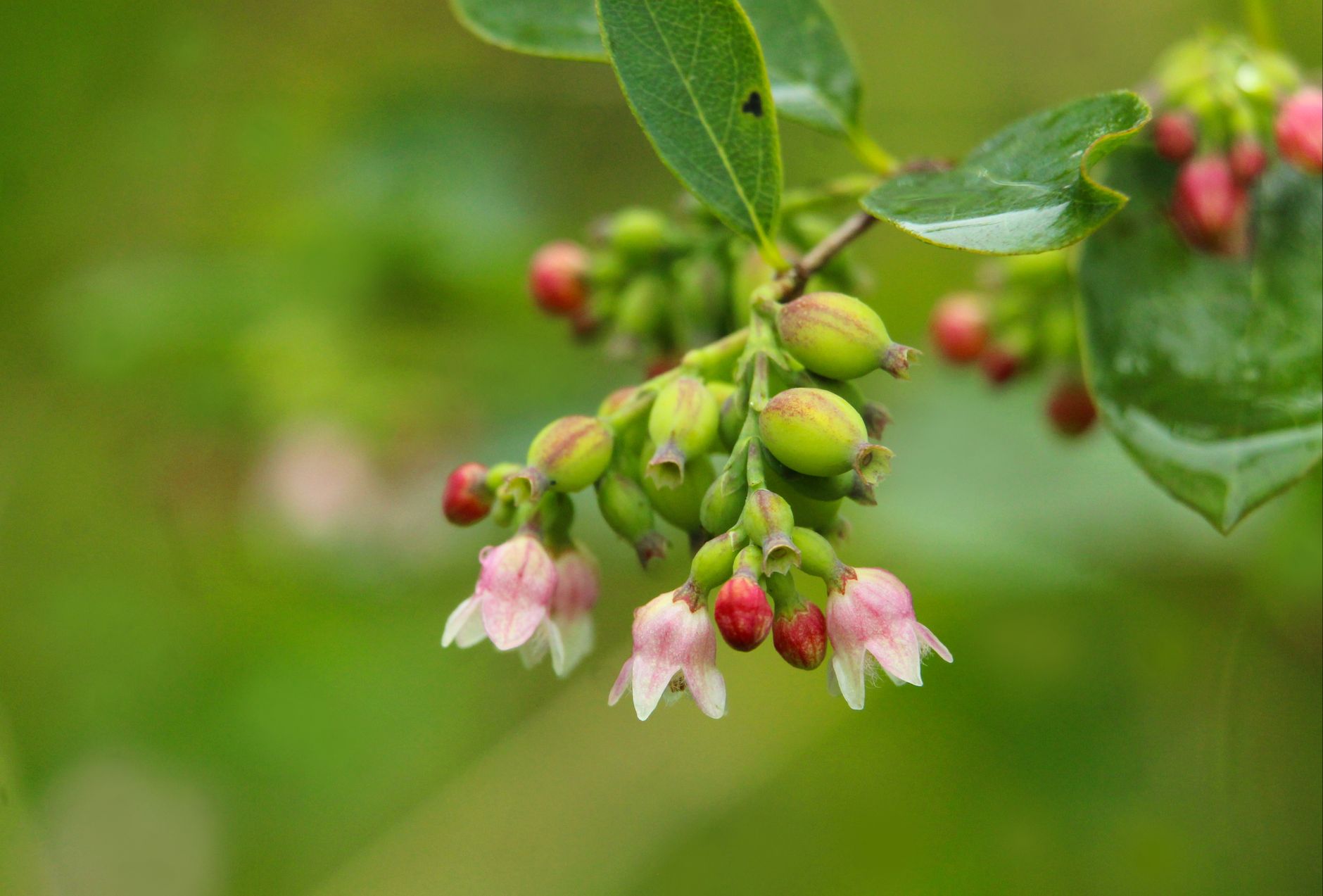
Huckleberry is the common name for several wild Vaccinium species native to the mountain West. The U.S. Forest Service’s own plant fact sheet describes the fruit as closely related to blueberries and cranberries, but smaller, darker, and tarter. It grows as a low shrub in coniferous forest understory, not in rows, not in orchards, and not under cultivation anywhere at commercial scale.
That last point matters. Attempts to domesticate huckleberries have failed repeatedly. The plant relies on specific soil fungi and slow root development that resist transplanting. Commercial growers in the Pacific Northwest have tried for decades. None have produced a field-grown huckleberry that reaches grocery shelves the way a cultivated blueberry does.
Where do Idaho’s huckleberries actually grow, and when?
Idaho’s wild huckleberries grow in national forest land across the central and northern part of the state, including the Boise and Sawtooth National Forests. They favor open or recently burned conifer slopes, generally above 4,500 feet, sometimes well above 6,000 feet in a dry year.
The harvest window is short and elevation-dependent. Lower slopes ripen first, in July. Higher basins can still be producing into September. Snowpack, wildfire history and a given summer’s heat all shift the window year to year — which is exactly why no restaurant can promise huckleberries on a fixed calendar date.
Why can’t huckleberries be farmed commercially?
Two biological facts explain it. First, huckleberry roots depend on mycorrhizal fungi found in specific forest soils, a relationship that doesn’t transplant well into cultivated ground. Second, the shrubs are slow-growing and often regenerate best after wildfire clears competing vegetation — a disturbance cycle that doesn’t fit a farm rotation.
The practical result: every huckleberry sold in Idaho, frozen or fresh, was picked by hand from wild plants on public or private forest land. There is no huckleberry farm supplying Boise kitchens. There is only the forest, a short season, and whoever is willing to hike for it.
How do you tell real wild huckleberry from flavoring in Boise?
This is the question that actually matters at the counter. Because the fruit can’t be farmed, supply is limited and seasonal, and genuine wild-picked huckleberry costs noticeably more than a standard fruit ingredient. Three signals separate the real thing from syrup-based “huckleberry flavor,” and they work together, not alone.
- Season. Fresh wild huckleberries exist only from roughly July through September. Frozen stock, picked in that window and held through winter, can extend a genuine supply — so off-season availability alone doesn’t disqualify a product. But a shop advertising “fresh huckleberry” in February is describing something else.
- Price. Because pickers hand-harvest on steep forest terrain with no mechanization, wild huckleberries carry a real cost. Extension and non-timber forest product reports have long put wholesale and retail prices for wild-picked huckleberries well above cultivated berries — commonly cited in the range of $30 to $60 a pound for frozen fruit, higher for fresh. A menu item priced the same as a standard blueberry pie or a generic fruit syrup shake is very unlikely to contain real huckleberry in any quantity.
- Texture and color. Real huckleberries have visible seeds and bits of skin, and their juice runs deep purple-to-black, almost ink-like. Syrup-based flavoring is uniform, seedless, and often a brighter, flatter magenta. A huckleberry shake with gritty seed texture at the bottom of the cup is telling you something; a perfectly smooth one is telling you something else.
| Signal | Wild-picked huckleberry | Extract or syrup-based |
|---|---|---|
| Season sold | July–Sept fresh; frozen stock may extend into winter | Available identically year-round |
| Price vs. standard berry item | Noticeable premium over blueberry/strawberry pricing | Priced the same as any standard fruit flavor |
| Appearance | Visible seeds, skin flecks, deep purple-black | Smooth, uniform, often brighter pink-purple |
| Menu wording | “Wild-picked,” “foraged,” a named Idaho forest or region | Generic “huckleberry flavor” or “huckleberry syrup” |
None of these signals is decisive alone. A fair-priced product sold in September with visible seeds is the strongest case for wild fruit. A smooth, cheap, year-round pour is almost certainly extract. Apply all three and the answer gets clear fast.
Where does huckleberry actually show up in Boise’s food and drink?
Huckleberry appears across several categories of business in Boise, each with a different relationship to the real fruit.
- Creameries and ice cream shops. Huckleberry ice cream is one of the most common seasonal flavors in the region. Whether a given scoop uses wild-picked fruit or a prepared mix depends entirely on the shop; the texture test above is the fastest way to check.
- Breweries. Huckleberry wheat beers and seasonal sours appear regularly in Boise’s brewing scene, often timed to the late-summer harvest window. The region’s brewing culture, broadly, is covered in Access Boise’s piece on what Boise’s brewery scene is built on.
- Bakeries. Huckleberry pie and scones show up seasonally, generally priced above a standard berry pastry when the fruit is genuinely wild.
- Coffee shops. Huckleberry syrup in lattes is almost always a bottled syrup product, not fresh fruit — worth knowing before assuming otherwise. Boise’s coffee culture more broadly is covered in the site’s piece on what Boise’s coffee scene is built on.
- Farmers markets and co-ops. This is where the fruit is most likely to be sold as itself — frozen or fresh, by the people who picked it. The Boise Co-op, the Capital City Public Market, and the Boise Farmers Market all operate on a model where regional producers sell direct, which is structurally the clearest route to real wild-picked fruit rather than a syrup supply chain.
Does the price premium actually show up at the register?
It should, if the fruit is real. A huckleberry jam jar or pint of frozen berries sold by a forager or small producer at a farmers market will generally carry a visibly higher price tag than a comparable jar of strawberry jam on the same table. That gap is the cost of hand-harvesting on steep, remote forest terrain passed straight through.
Prepared foods complicate this. A $7 huckleberry milkshake isn’t necessarily proof of anything, because labor and overhead dominate the price of a finished drink far more than the cost of the fruit inside it. The price test works best on raw or lightly processed product — jam, frozen berries, pie filling sold by weight — where the berry cost is a larger share of what’s being charged.
Is huckleberry connected to Boise’s Basque food traditions?
Not directly. Huckleberry is a regional mountain-West ingredient, not a Basque one, and it predates European settlement in Idaho by thousands of years as a food source for Indigenous communities across the Northern Rockies. Boise’s Basque food and drink traditions are a separate, well-documented thread in the city’s history, covered in Access Boise’s pieces on which Basque dishes recur in Boise and on Related reading
what the city is like to actually live in, getting around, planning, itineraries, food and the foothills, museums, landmarks, neighbourhoods and day trips, What Is Picon Punch, and Why Is It Boise’s Basque Drink?, What Is Fry Sauce, and Where Did It Come From?. Access Boise is an independent guide written from published, checkable sources. We have not visited the places described here and we do not publish personal recommendations or invented ‘local favourites’ — where something is singled out as notable, we say who says so. Opening times, fares, closures and prices change at short notice, so treat everything here as a starting point and confirm with the museum, operator or venue directly before building a day around it. We give no advice on visas, insurance, health or safety; use your own government’s official guidance for those. Any prices mentioned are indicative only. Tool prices move constantly and vary by market, by retailer, and by whether a kit includes batteries or a charger — check the current price yourself before deciding. Featured image: Photo by SniperProgrammer, source, CC BY-SA 3.0
