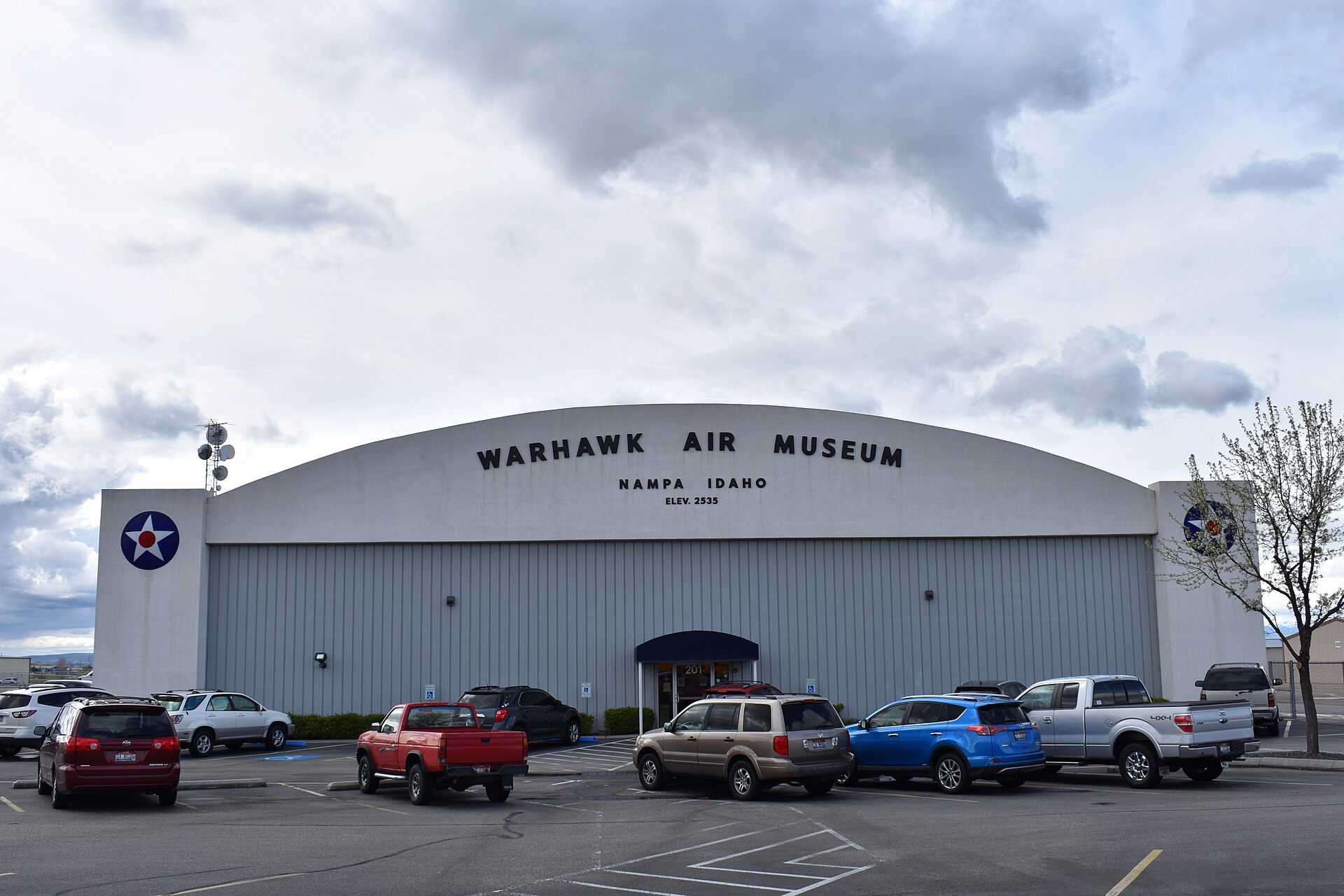
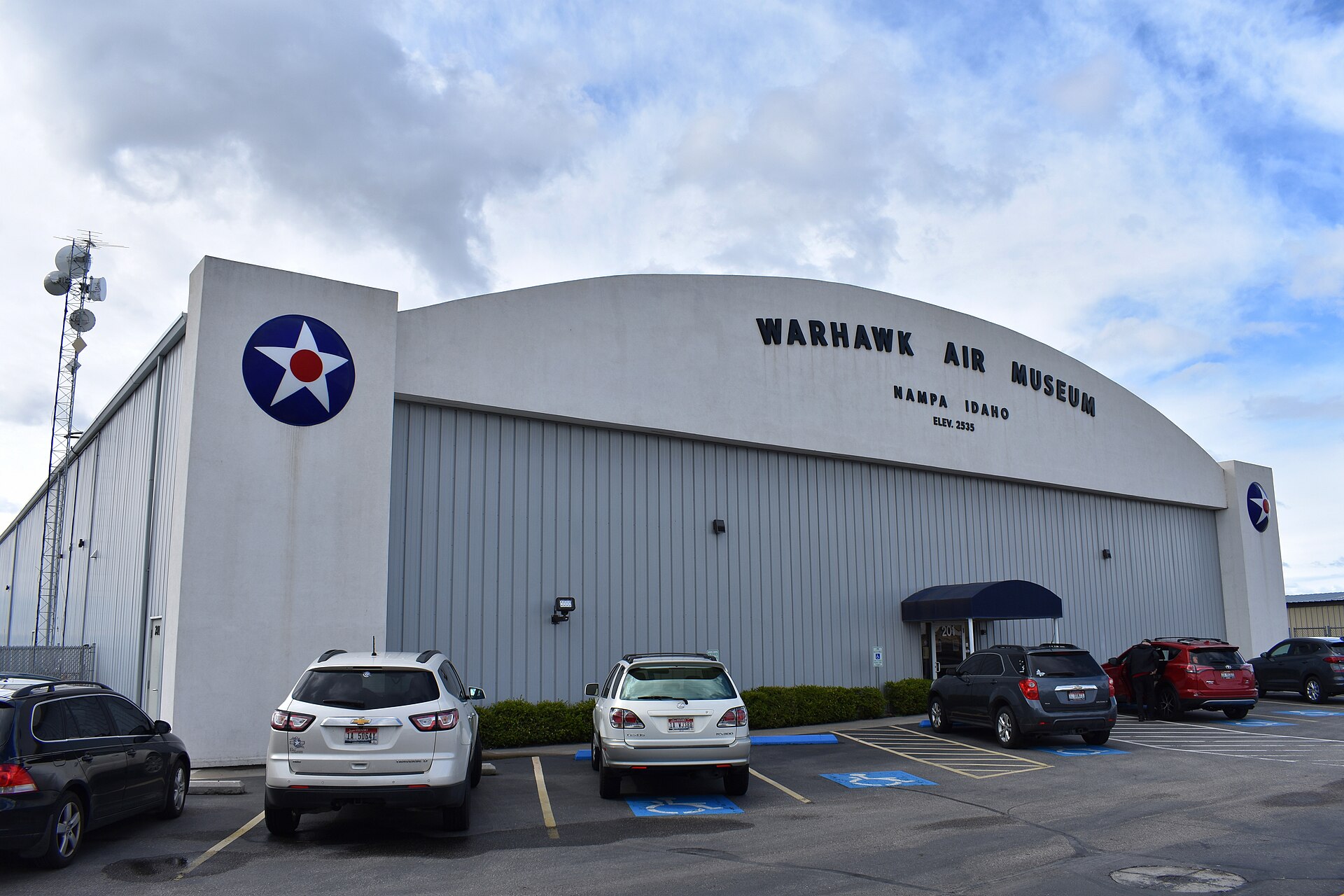
The Warhawk Air Museum is a nonprofit aviation history museum at Nampa Municipal Airport, west of downtown Boise, built around a collection of restored World War II-era aircraft and a broader archive of American military history from the 1940s onward. It is named for the Curtiss P-40 Warhawk, the fighter type most associated with the museum’s founding collection.
Where exactly is it, and why an airport?
The museum sits on the grounds of Nampa Municipal Airport in Nampa, Idaho’s third-largest city and part of the Treasure Valley, roughly a twenty-minute drive west of downtown Boise on Interstate 84. An airport site is a practical choice for a museum built around flyable and static aircraft: hangar space, taxiway access, and runway proximity are functional requirements for a collection of this kind, not incidental scenery.
What does the collection actually hold?
The core of the museum’s holdings is a group of World War II fighter and trainer aircraft, several of them restored to flying condition rather than kept as static shells. Curtiss P-40 Warhawks anchor the collection, reflecting the aircraft the museum takes its name from, alongside other American fighters of the same era. The museum’s own site is the authority on which specific airframes are currently on display, since aircraft in an active collection can move between the museum, restoration shops, and airshow circuits.
Beyond the aircraft themselves, exhibits extend into the material culture of the war: uniforms, personal effects, insignia, and equipment tied to specific units and campaigns. This is a museum built as much around individual service records as around hardware.
Why is the museum named after the P-40 Warhawk specifically?
The Curtiss P-40 Warhawk was one of the principal American fighter aircraft in service at the start of World War II, flown in the Pacific, North Africa, and by the volunteer squadrons that became known as the Flying Tigers in China. The museum’s founding collection centered on this aircraft type, and the name has stayed even as the institution’s scope broadened into a wider record of wartime aviation and homefront history.
What history does the museum cover beyond the aircraft?
The Warhawk Air Museum frames its subject as the full arc of the American World War II experience, not just the machines. Its exhibits and published programming, according to the museum’s own site, address:
- The attack on Pearl Harbor and the United States’ entry into the war
- The Doolittle Raid and Pacific air campaigns
- The experience of American prisoners of war
- The homefront, including the industrial mobilization associated with figures like Rosie the Riveter
- Idaho’s own role in wartime pilot training, tied to the history of nearby Gowen Field
That last point matters locally: Gowen Field, adjoining what is now the Boise Airport, trained heavy bomber crews during the war, and the Warhawk Air Museum’s coverage of that history connects a Nampa institution directly to Boise’s own wartime record. Readers researching that connection further may also find context in coverage of the Boise Depot’s history and architecture, since the depot handled wartime rail traffic through the same period.
.jpg)
Does the museum function as a research archive as well?
Yes. The Warhawk Air Museum maintains a research library and archive of oral histories, documents, and personal accounts collected from veterans and their families, a function it describes on its own site as central to its mission rather than a side project to the aircraft displays. This positions it closer to a documentary archive with a hangar attached than a pure static-display museum, and it is one of the reasons historians and family researchers use the institution beyond a single visit.
How does a visit actually work?
Specifics here are the kind of detail that changes without notice, so this section describes the shape of a visit rather than fixed figures. The museum operates as a self-guided facility with gallery and hangar space open to visitors during posted hours, and it typically charges an admission fee with the usual reduced rates for children, seniors, students, and veterans or active military — the exact structure and current prices should be confirmed on the Warhawk Air Museum’s own site before planning a trip, since aviation museums of this size often adjust pricing and hours seasonally.
Because the collection includes flyable aircraft, the museum also participates in airshow events and flight demonstrations at points in the year; these are calendar-dependent and should be checked directly with the museum rather than assumed from a general visit.
Is it aimed at visitors, residents, or both?
Both, in practical terms, though the audiences use it differently. For a visitor building an itinerary around Boise-area history and museums, the Warhawk Air Museum is a specialized stop — worth planning for specifically if military aviation or World War II history is the interest, rather than a general add-on. For Treasure Valley residents, particularly those with family ties to Gowen Field’s training programs or to veterans of the Pacific and European theaters, the archive and oral history collection give the museum a research function that a single visit doesn’t exhaust.
Families researching a relative’s wartime service record sometimes use the museum’s archive as a starting point precisely because it collects that kind of material actively rather than only displaying artifacts.
How does it fit alongside Boise’s other museums?
The Warhawk Air Museum is one entry in a broader set of Boise-area institutions that each hold a distinct slice of regional or national history. The Idaho State Museum covers the state’s history more broadly, while the Idaho Black History Museum and the Old Idaho Penitentiary each hold specific institutional or community histories of their own. Readers assembling a fuller picture of the region’s museum landscape can find the wider set catalogued on the site’s Museums & Galleries archive.
For visitors weighing a Nampa side trip against downtown Boise options, it’s worth noting the Warhawk Air Museum sits apart from the cluster of institutions in downtown Boise — the Boise Art Museum, the Discovery Center of Idaho, and others are grouped near Julia Davis Park, while Nampa is a separate drive. Comparisons with the Discovery Center of Idaho or the Boise Art Museum’s collection are useful mainly for planning how many museum stops fit into a single day, given the distance between Nampa and downtown Boise.
What should a reader check before going?
Three things are worth confirming directly with the museum rather than assuming from general knowledge of the collection:
- Current admission pricing and any discounted categories, which the museum’s own site maintains
- Which specific aircraft are on display versus in restoration or away at an airshow
- Any scheduled events, flight demonstrations, or closures tied to holidays or maintenance
None of these are fixed enough to publish as a permanent figure here, which is precisely why the museum’s own published information is the right final source before a visit.
Access Boise is an independent guide written from published, checkable sources. We have not visited the places described here and we do not publish personal recommendations or invented ‘local favourites’ — where something is singled out as notable, we say who says so. Opening times, fares, closures and prices change at short notice, so treat everything here as a starting point and confirm with the museum, operator or venue directly before building a day around it. We give no advice on visas, insurance, health or safety; use your own government’s official guidance for those.
Featured image: Photo by Tamanoeconomico, source, CC BY-SA 4.0
.jpg)