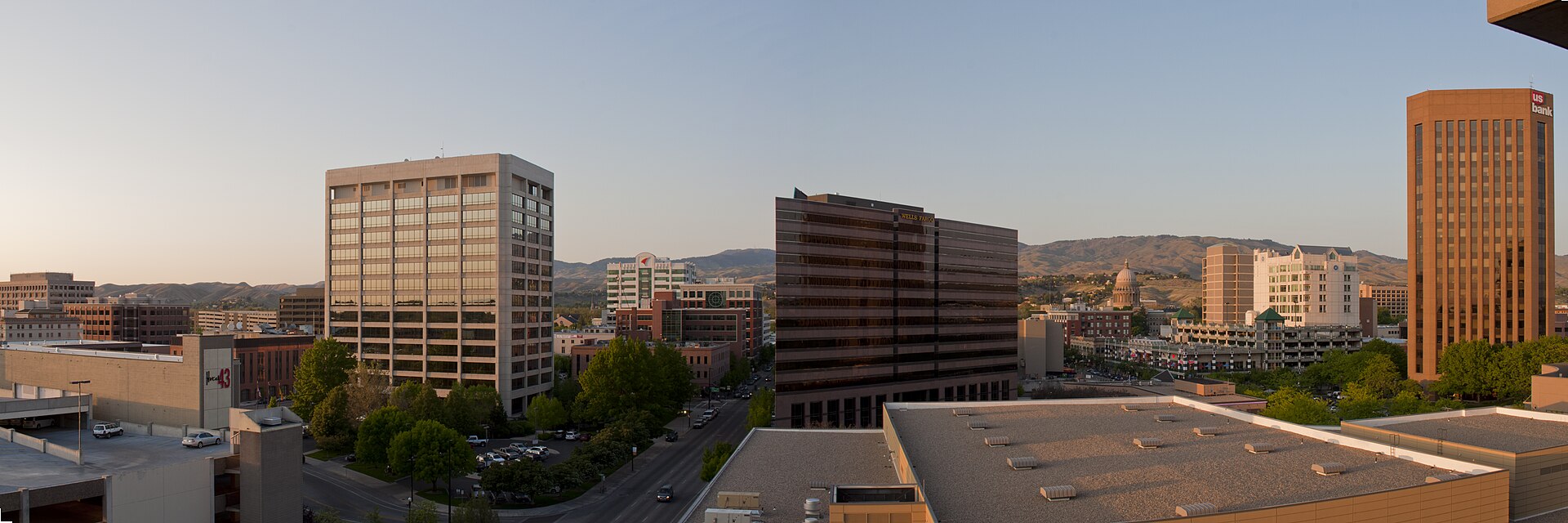
A third day in Boise makes room for what a tight two-day plan has to leave out: the residential districts outside downtown, one more museum done at a proper pace instead of a rushed one, and — depending on the season — either the foothills above the city or a day trip beyond its limits. It is the day a schedule stops competing with itself.
What does a two-day itinerary already cover?
Most two-day plans, including Access Boise’s own two-day itinerary, front-load downtown: the Basque Block, the Idaho State Capitol, the Boise Art Museum or the Idaho State Museum, a walk along the Greenbelt. That leaves a compressed set of choices — one museum, one district, one meal. A third day is the first day with no obligation to cover the center of the city at all.
That matters because Boise’s downtown core is genuinely small and walkable, which is part of why it gets covered so quickly. A third day is where the itinerary stops being about downtown and starts being about the rest of the city — the neighborhoods, the bench above the river valley, and the foothills that begin a few miles north of the grid.
Which neighborhoods get skipped in a shorter visit?
A two-day plan rarely reaches Boise’s residential historic districts, which sit just outside the compact downtown core and read as distinct places rather than an extension of Main Street.
The North End, immediately north of downtown, includes the Hyde Park Historic District, which the National Register of Historic Places lists as a residential district built up mainly between the 1890s and 1930s. The East End sits along the river toward the foothills. The Central Bench, on the terrace of land that gives several Boise neighborhoods the word “Bench” in their name, is a separate residential geography again — Access Boise’s guide to the Central Bench covers how that terrace formed and where its boundaries actually run. None of these districts are staged for visitors; they are functioning neighborhoods, which is exactly what makes them worth a slower day rather than a photo stop.
What museum or landmark makes sense with a full extra day?
A third day is long enough to do one paired site properly instead of skimming several.
The clearest example in Boise is the Old Idaho Penitentiary and the Idaho Botanical Garden, which occupy adjoining ground on the city’s east side. The penitentiary operated as Idaho’s territorial and state prison from 1872 until 1973 and is now a historic site interpreted by the Idaho State Historical Society; Access Boise’s guide to the Old Idaho Penitentiary sets out what the complex holds and how it’s organized. The Idaho Botanical Garden was established on part of the former penitentiary grounds, and a separate guide covers how the garden uses that land. Visiting both in one day, rather than one rushed into the margins of a downtown itinerary, is the kind of thing a third day is actually for.
Further out, the World Center for Birds of Prey — operated by the conservation and research organization The Peregrine Fund on Boise’s southern edge — is the kind of institution a compressed itinerary tends to drop entirely, since it sits away from downtown and requires its own trip. Access Boise’s guide to the center covers what the site holds and why the organization is based in the Boise area specifically.

Does a third day mean going up to the foothills?
For a lot of visitors and residents alike, yes. Bogus Basin sits roughly 16 miles north of downtown Boise, up a two-lane mountain road, and functions as the city’s ski area in winter and a hiking and mountain-biking destination the rest of the year, according to Bogus Basin’s own site.
The distance and elevation gain are real considerations, not scenery. Access Boise’s guide to Bogus Basin Road covers what the drive actually involves, including the switchbacks and winter conditions that a two-day visitor rarely has time to plan around. A third day, by contrast, has room to build in the drive up, time on the mountain, and the drive back without displacing anything else on the schedule.
This is also where the difference between visitor and resident use of Bogus Basin becomes clearest. For someone living in Boise, the mountain is a recurring weekend destination across most of the year. For a visitor with only three days, it is usually a once-per-trip decision, and it’s worth checking current conditions and hours directly with the operator before committing a day to it.
What about day trips beyond the city itself?
A third day is also the first point at which leaving Boise’s city limits entirely starts to make sense, since the region around it is made up of several distinct municipalities rather than one continuous suburb. Garden City, Meridian, and Eagle each function as their own incorporated cities adjoining Boise, with their own governments and, in Garden City’s case, a notably different set of alcohol and business regulations than Boise itself. None of that is relevant on a one- or two-day downtown visit, but it becomes relevant once a third day opens up options beyond the core.
Warhawk Air Museum, in Nampa to the west, is the kind of single-purpose institution — a collection built around World War II and Korean War-era aviation — that a two-day downtown plan has no reasonable way to include, but that a third day with a car can reach without much trouble.
How should transportation change on a third day?
The math changes once destinations move outside downtown’s walkable core. Boise’s compact center works well without a car, but the Old Idaho Penitentiary and Botanical Garden, the World Center for Birds of Prey, and Bogus Basin are all outside easy walking or scooter range. Access Boise’s practical planning hub covers getting around the wider metro area, including when a car — rented or otherwise — starts to be the more sensible option than relying on downtown-oriented transit and bike share.
This is a genuine planning fork, not a formality. A visitor without a car can still reach some of these sites via limited bus service or a taxi/rideshare, but the frequency and route coverage outside the urban core are considerably thinner than downtown, and confirming current options with Valley Regional Transit before committing a day to a site is worth doing.
Does the season change what a third day looks like?
Substantially. A third day built around Bogus Basin means skiing in winter and hiking or biking in the warmer months — the mountain is a different destination depending on when the visit falls. A third day built around the foothills trail network closer to the city runs into a separate seasonal issue: summer heat and, in some years, wildfire smoke drifting into the valley, both of which shape when outdoor time is comfortable.
Anyone building a third day around outdoor destinations should check the season against Access Boise’s coverage of what a Boise summer is actually like and how the city’s smoke season tends to run, since both affect whether an outdoor-heavy third day or an indoor, museum-and-neighborhood third day is the better fit for the dates in question.
What is the honest summary?
A third day in Boise isn’t an extension of the first two — it’s where the itinerary stops orbiting downtown. It makes room for a neighborhood instead of a landmark, a paired historic site instead of a single stop, and either the foothills or a day trip that a compressed schedule simply has no space for. What it holds depends entirely on the season and on whether a car is part of the plan, which is worth settling before the day itself.
Related reading
what the city is like to actually live in.
Access Boise is an independent guide written from published, checkable sources. We have not visited the places described here and we do not publish personal recommendations or invented ‘local favourites’ — where something is singled out as notable, we say who says so. Opening times, fares, closures and prices change at short notice, so treat everything here as a starting point and confirm with the museum, operator or venue directly before building a day around it. We give no advice on visas, insurance, health or safety; use your own government’s official guidance for those.
Featured image: Photo by Patrick R., source, CC BY-SA 3.0
