Boise is in the Mountain Time zone — Mountain Standard Time (MST, UTC-7) in winter and Mountain Daylight Time (MDT, UTC-6) from spring to early autumn, the same shift most of the United States observes. The confusion comes from somewhere else entirely: Idaho itself is split between two different time zones, and Boise sits on the side people least expect.
What Time Zone Is Boise In?
Boise, along with the rest of southern Idaho, observes Mountain Time. That puts it one hour ahead of Los Angeles and Seattle, and one hour behind Denver’s near neighbors in the Central zone. The boundary lines that assign U.S. counties to time zones are set by the U.S. Department of Transportation, which has statutory authority over where each zone begins and ends. Ada County, where Boise sits, falls squarely on the Mountain side of that line.
Clocks in Boise move forward and back with the rest of Mountain Time under the same federal daylight saving schedule used across most of the country — a detail worth checking against the current year’s dates if travel plans hinge on an exact changeover.
Why Does Idaho Have Two Time Zones?
Idaho is one of a handful of U.S. states divided between two time zones, and it’s the geography of the state, not any local decision, that put the line where it is. Northern Idaho — the panhandle, roughly north of the Salmon River — runs on Pacific Time, aligned with Spokane, Washington, which is the region’s main economic and transport hub for that part of the state. Southern Idaho, including Boise, Twin Falls and Idaho Falls, runs on Mountain Time, aligned with the rest of the Mountain West.
The practical effect is that a resident of Coeur d’Alene and a resident of Boise, both in Idaho, are an hour apart for most of the year. Anyone assuming “Idaho time” is one single thing is already wrong before they’ve left the state line.
Why Do Visitors Assume Boise Is on Pacific Time?
The assumption is understandable, even if it’s incorrect. Boise sits close to the Oregon border, and most of Oregon — apart from a small eastern sliver — is on Pacific Time. Travelers arriving from Portland, Seattle or the California coast are often surprised to find Boise clocks are an hour ahead of where they started, particularly if they’ve driven in rather than flown and haven’t crossed a clearly marked zone boundary.
There’s also a broader habit of lumping the Pacific Northwest together in the popular imagination — Boise gets pulled into that mental map even though, by the federal zone boundary, it belongs with Denver and Salt Lake City rather than Portland and Seattle.
For anyone flying in, the guide to Boise Airport and getting into town is worth reading alongside any itinerary math, since flight booking sites list arrival times in local time without always flagging the zone change from a Pacific-time departure city.

How Does Daylight Saving Time Work in Boise?
Boise observes daylight saving time on the standard U.S. schedule, shifting clocks forward in spring and back in autumn along with the rest of Mountain Time. Idaho does not opt out of the practice the way Arizona does with its own time zone. That means the UTC-6/UTC-7 offset used to describe Boise’s time changes twice a year, and any conversion done from a fixed offset — rather than from “Mountain Time” as observed — will eventually drift by an hour if it isn’t updated for the season.
This matters most for scheduling calls, flights or deliveries that cross zones for months at a stretch. A meeting set against Boise’s UTC offset in January will land an hour off if it’s still running in July.
Does the Time Zone Affect Travel Planning?
The most concrete effect is on anything booked or scheduled from outside Mountain Time — flights, video calls, event start times, or a rental car return window quoted by an operator in a different zone. Idaho’s internal split adds a second layer: a itinerary that treats a Boise stop and a Coeur d’Alene stop as being on the same clock will be an hour out by the time it’s actually driven.
For travel timed around a specific date, the guide to when to visit Boise covers the seasonal patterns that matter more than the clock itself — smoke season, snow, festival crowds — but it’s worth setting the correct zone first so any comparison against a home calendar is accurate from the start.
How Does This Affect Life in Boise Day to Day?
For residents, the time zone question rarely comes up except when dealing with someone out of state — a client on the West Coast who assumes Boise runs an hour behind, or a family member calling from the Idaho panhandle who has done the math wrong. Boise’s own business hours, broadcast schedules and public transit timetables are all set against Mountain Time without any local ambiguity; the confusion is almost entirely an outside-in problem.
Where it can matter locally is coordination with neighboring cities that share the metro area but not, in a technical sense, the state’s internal divide — though Meridian and Eagle, both immediately next to Boise, are firmly on the same Mountain Time side of the line. The distinctions worth knowing between those cities are more about governance and growth than the clock; the guide to the difference between Boise, Meridian and Eagle covers that ground directly.
Is There an Official Source for This?
The authoritative record on which U.S. counties sit in which time zone is maintained by the U.S. Department of Transportation, the federal body with legal jurisdiction over time zone boundaries under the Uniform Time Act. For anyone who wants the boundary confirmed rather than taken on trust, the department’s own published zone maps are the reference to check, particularly around the Idaho panhandle line where the split falls.
For the practical side of planning a Boise stay — getting into town, working out distances, and reading the calendar around festivals and seasons — the Boise practical planning hub and the Planning & Practicalities archive collect the details that actually change a trip, as distinct from the fixed fact of which zone the city sits in.
Residents weighing how the wider metro area fits together, including how neighborhoods and nearby cities relate to daily life rather than just to a map, can start with the Living in Boise hub and the Living in Boise archive.
Access Boise is an independent guide written from published, checkable sources. We have not visited the places described here and we do not publish personal recommendations or invented ‘local favourites’ — where something is singled out as notable, we say who says so. Opening times, fares, closures and prices change at short notice, so treat everything here as a starting point and confirm with the museum, operator or venue directly before building a day around it. We give no advice on visas, insurance, health or safety; use your own government’s official guidance for those.
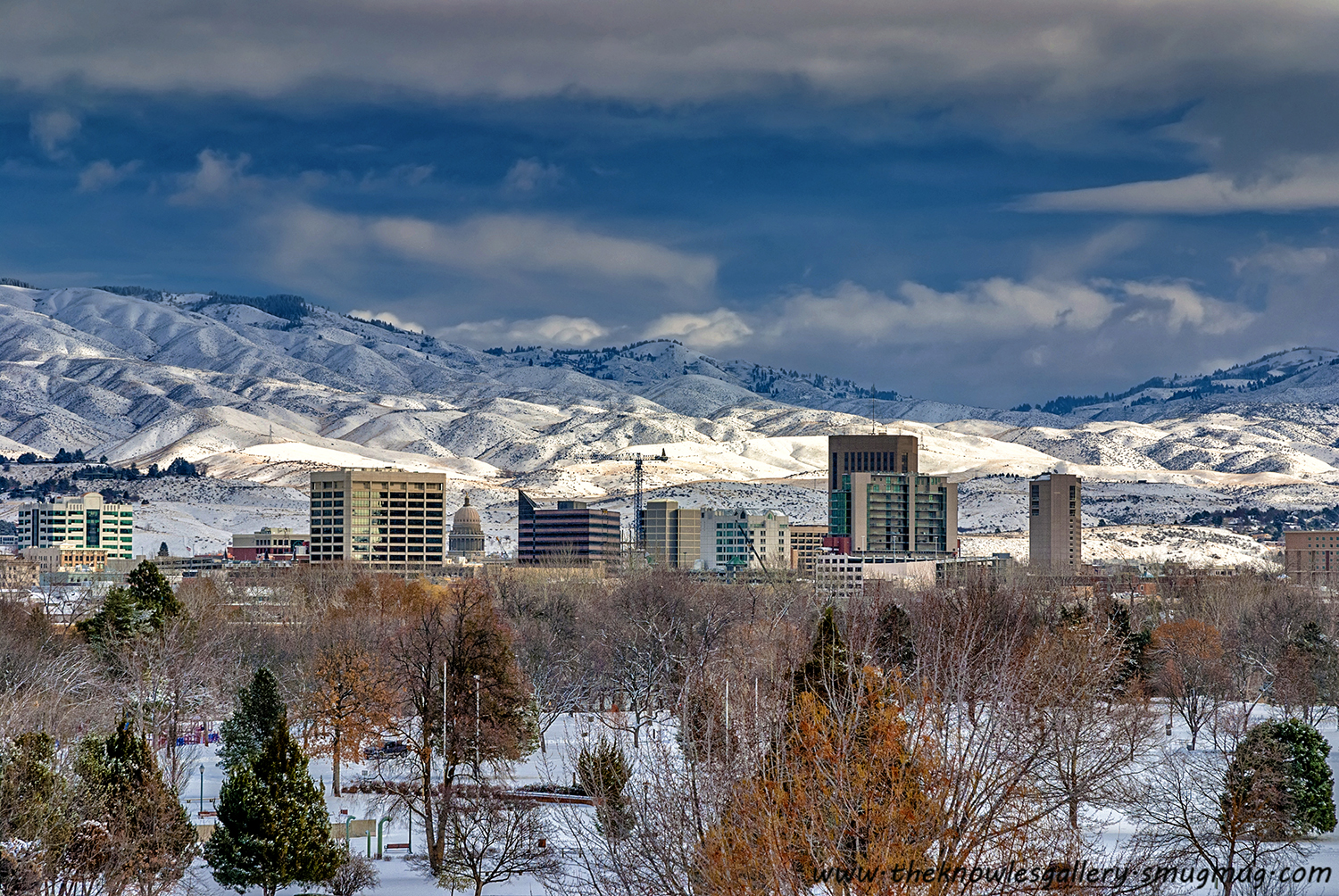
Featured image: Photo by Charles Knowles, source, CC BY 2.0
