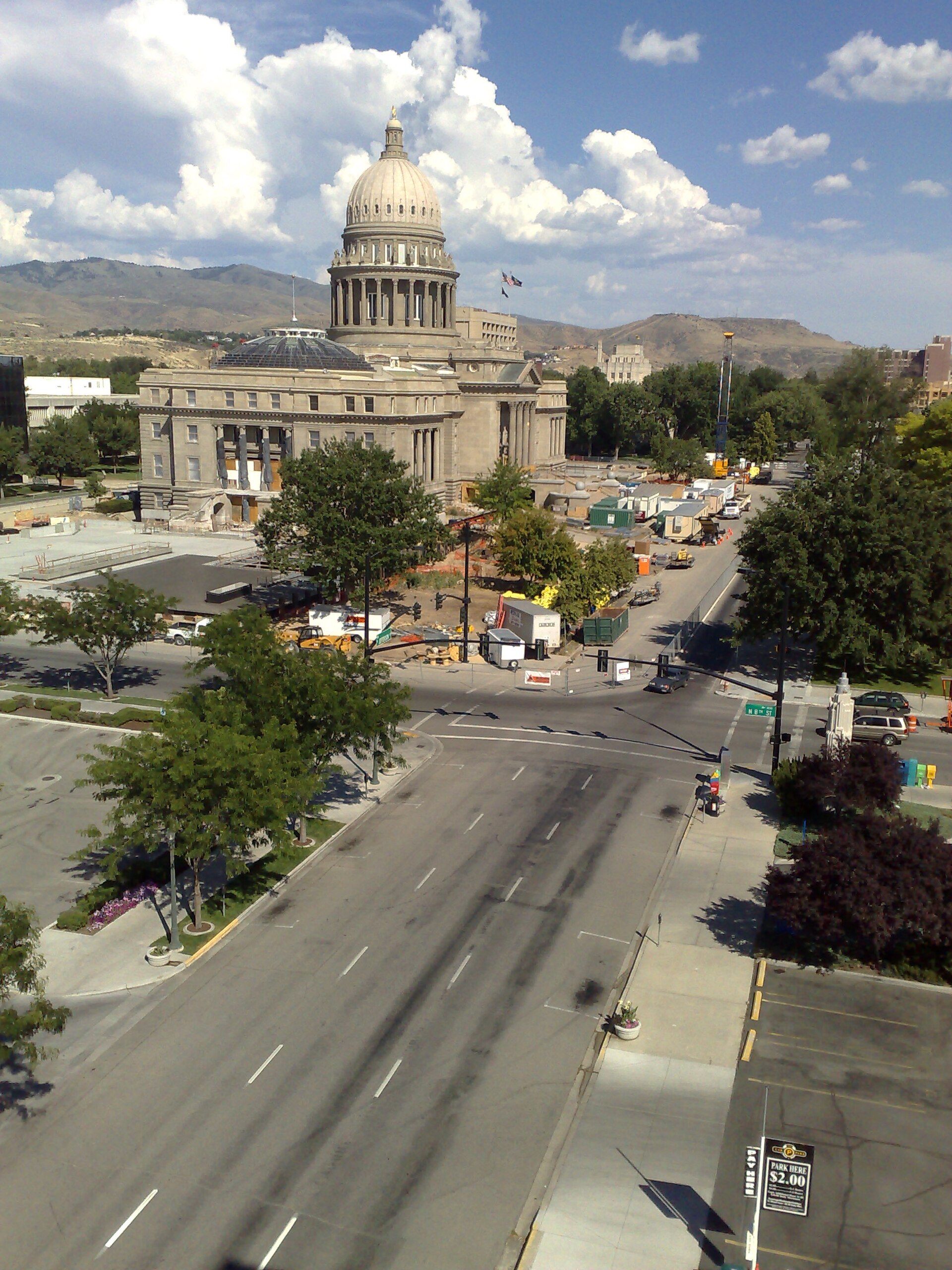
What is Boise City Hall Plaza?
Boise City Hall Plaza is the public open space fronting Boise City Hall, the seat of city government at 150 N. Capitol Boulevard in downtown Boise. It functions as the city’s designated civic gathering space — used for rallies, press conferences, official ceremonies and public assembly — rather than as a recreational park or entertainment plaza.
Where is it, and what is around it?
City Hall sits at the corner of Capitol Boulevard and Idaho Street, in the core of downtown Boise. Capitol Boulevard is the axis that ties much of civic Boise together, running from the Boise Depot in the south up toward the Idaho State Capitol to the north; a fuller account of that route is in Access Boise’s piece on what Capitol Boulevard connects.
Within a few blocks are the Ada County Courthouse, whose exterior carries a set of public murals covered separately, and the Idaho State Capitol itself, a few minutes’ walk north. This concentration of government buildings — city, county and state — is why the plaza in front of City Hall reads as institutional rather than commercial: it is bordered by the machinery of local governance, not by retail.
What does Boise City Hall itself contain?
The building houses the Mayor’s Office, the Boise City Council chambers, and the administrative departments that run day-to-day city business — planning, public works, and the clerk’s office among them. Council meetings held in the chambers are open to the public, and the city’s own site publishes current meeting schedules and agendas, since these change week to week and are not something this guide can hold as fixed fact.
The plaza sits outside this building, at street level, forming the threshold between the sidewalk and the entrance used for public business.
What happens at City Hall Plaza?
As the forecourt of a working seat of government, the plaza is where organized public expression in Boise most often lands. That includes:
- Rallies and demonstrations tied to city or state policy decisions
- Press conferences held by city officials or advocacy groups
- Vigils and memorial gatherings
- Official city ceremonies, such as proclamations or swearing-in events
Because the space sits directly outside a government building, the city of Boise treats it — like the sidewalks and plazas around most American city halls — as a location where public assembly is a recognized civic use, generally requiring coordination with the city for anything involving amplified sound, staging or road closures. Readers planning an organized event or demonstration there should confirm current permitting requirements directly on the City of Boise’s own website rather than relying on a secondhand summary, since permit rules and contacts change.
How is it different from the Grove Plaza?
Boise has a second, better-known downtown plaza a short walk away: the Grove Plaza, a sunken public square used for concerts, farmers’ markets and seasonal events, covered in detail in Access Boise’s guide to what the Grove Plaza is used for. The distinction matters. The Grove functions as Boise’s general-purpose civic living room — a stage for scheduled public programming run in partnership with downtown organizations. City Hall Plaza, by contrast, is defined by its attachment to the seat of government itself; its primary role is as the forecourt to municipal business and the default site for civic and political expression, not as a programmed events venue.
A resident trying to figure out where a given announcement, protest, or ceremony is likely to happen can generally use this distinction as a guide: cultural and commercial gatherings cluster at the Grove; government-facing ones cluster at City Hall.
Why does downtown Boise have this civic cluster at all?
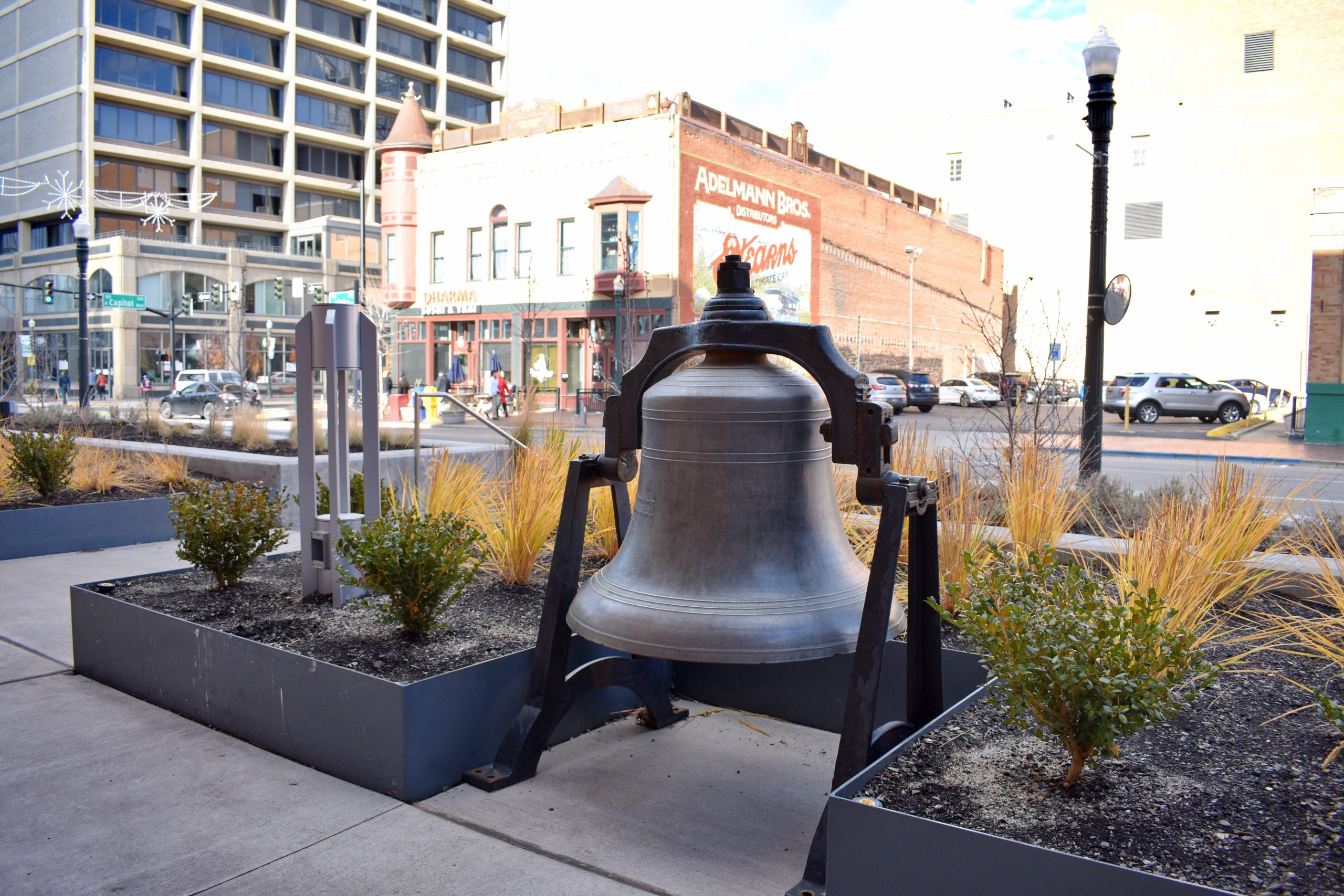
Boise’s downtown grew around Capitol Boulevard as a deliberate civic spine, connecting the Boise Depot’s rail arrival point to the state seat of government at the Capitol. City Hall’s placement on that same boulevard, a few blocks from the Ada County Courthouse, keeps city, county and state functions within easy walking distance of one another — a pattern typical of small state capitals, where the working government core stays compact rather than spread across a metro area. Readers wanting the wider context of that downtown layout can start with Access Boise’s guide to Boise’s landmarks and neighborhoods, which maps how these civic buildings relate to the museum district, the Basque Block and the river.
Is there anything to see there beyond the building?
City Hall Plaza is not treated as a sightseeing destination in the way the Idaho State Capitol or the Old Idaho Penitentiary are — there is no visitor program, museum wing or guided access built around it. Its interest for a visitor is functional: it demonstrates how compact and walkable Boise’s seat of government actually is, and it is a useful landmark for orienting toward Capitol Boulevard, the courthouse, and the Capitol itself. For readers assembling a downtown walking route around actual sights and collections, Access Boise’s archive of landmarks and sights and museums and galleries cover the buildings in this corridor that do have public exhibits, tours or collections — City Hall is not one of them, since it is a working government office rather than a visitor attraction.
What should a resident know about using the plaza?
For Boise residents, the practical value of City Hall Plaza is less about visiting and more about knowing it exists as public space attached to local government. It is where council decisions get protested or celebrated, where local press conferences on city matters are typically staged, and where the city itself marks civic milestones. Anyone organizing a gathering there — from a small vigil to a scheduled rally — should go through the City of Boise’s own channels for permits and coordination rather than assuming informal use is automatically permitted, since rules around amplified sound, signage and road access are set and enforced by the city, not by custom.
For a broader sense of how downtown civic space, transit and daily errands fit together for someone actually living in Boise, Access Boise’s hub on living in Boise and its practical guide to getting around and planning in Boise cover the surrounding logistics — parking downtown, how the Capitol Boulevard corridor is used day to day, and how the city’s public spaces function outside of scheduled events.
Key facts to check before visiting
- City Hall’s address: 150 N. Capitol Boulevard, downtown Boise
- Council meeting schedules and agendas are published on the City of Boise’s own website and change regularly
- Permit requirements for organized use of the plaza should be confirmed directly with the City of Boise, not assumed
- The plaza is not a ticketed or staffed visitor site; there is no admission fee or standard opening hour to confirm, unlike a museum
Access Boise is an independent guide written from published, checkable sources. We have not visited the places described here and we do not publish personal recommendations or invented ‘local favourites’ — where something is singled out as notable, we say who says so. Opening times, fares, closures and prices change at short notice, so treat everything here as a starting point and confirm with the museum, operator or venue directly before building a day around it. We give no advice on visas, insurance, health or safety; use your own government’s official guidance for those.
Featured image: Photo by Mark Kobayashi-Hillary, source, CC BY 2.0
