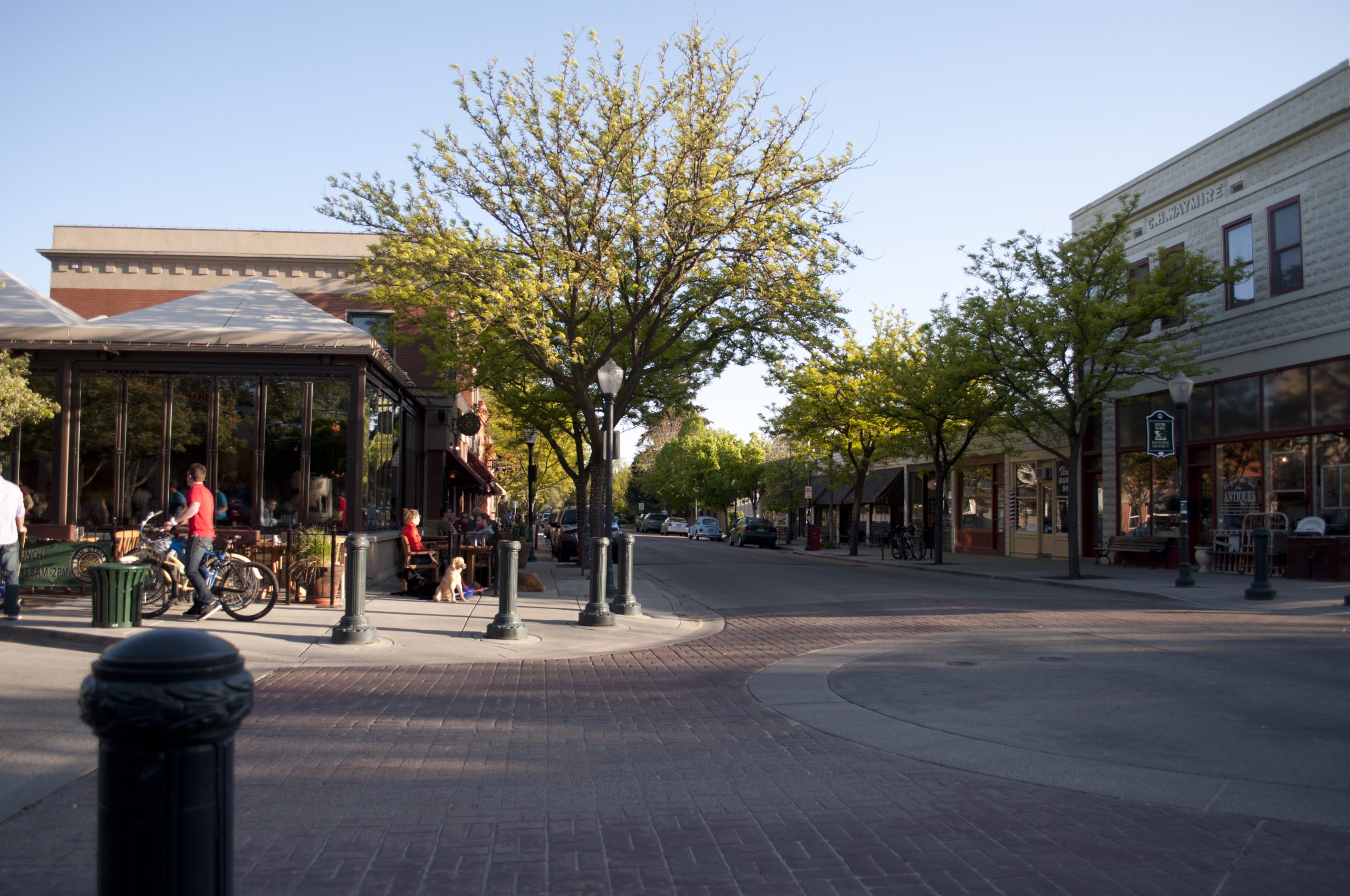
Hyde Park is the small commercial district in Boise’s North End, centered on North 13th Street roughly between Brumback and Eastman streets. It is a compact strip of late 19th- and early 20th-century storefronts — shops, restaurants and services occupying buildings that were originally built to serve a streetcar-line neighborhood, not a car-dependent one. The district is listed on the National Register of Historic Places as the Hyde Park Historic District.
Where exactly is Hyde Park located?
Hyde Park sits inside Boise’s North End, the residential grid of tree-lined streets north of downtown and west of the Boise River foothills. The commercial core runs along North 13th Street, a few blocks from Camel’s Back Park, one of the city’s older public parks. It functions as the North End’s walkable high street — the place North End residents can reach shops and food on foot rather than by driving into downtown Boise.
For the wider residential fabric around it, the site’s own account of the neighborhood is at Boise’s North End neighborhood history, which covers how the streets around Hyde Park were platted and why the area still reads as distinct from the rest of the city.
Why is Hyde Park on the National Register of Historic Places?
Hyde Park is listed on the National Register of Historic Places as a historic commercial district, a designation that recognizes a concentrated group of buildings — rather than a single structure — as historically and architecturally significant together. The National Register’s own criteria for a district require that the buildings retain enough of their original form and relationship to one another to convey a historic sense of place, and Hyde Park’s low-rise, closely spaced storefronts along 13th Street meet that standard.
The listing reflects the district’s origin as a streetcar-era commercial node. Boise operated an electric streetcar system in the late 1800s and early 1900s that extended service up into the North End, and Hyde Park developed at a stop along that line as the neighborhood’s local shopping street. Readers interested in what else survives from that period of Boise’s transit history can see what remains of Boise’s railroad history today, which covers the city’s rail and streetcar-era infrastructure more broadly.
What kind of buildings make up Hyde Park?
The district is made up of one- and two-story commercial buildings, a mix of wood-frame and brick construction, built at a pedestrian scale: storefronts fronting directly onto the sidewalk, upper floors used historically for offices or apartments, and party walls shared between adjacent buildings in the manner typical of small-town American commercial strips of the period. Nothing in Hyde Park is monumental in scale — the district’s significance, per its National Register listing, lies in the survival of the group as a whole rather than in any single landmark building.
This puts Hyde Park in a different category from Boise’s larger civic and institutional landmarks. Readers looking at the city’s more formal historic architecture can compare it with entries in the site’s Landmarks & Sights archive, which covers buildings such as the Idaho State Capitol and the Boise Depot.

What is on Hyde Park today?
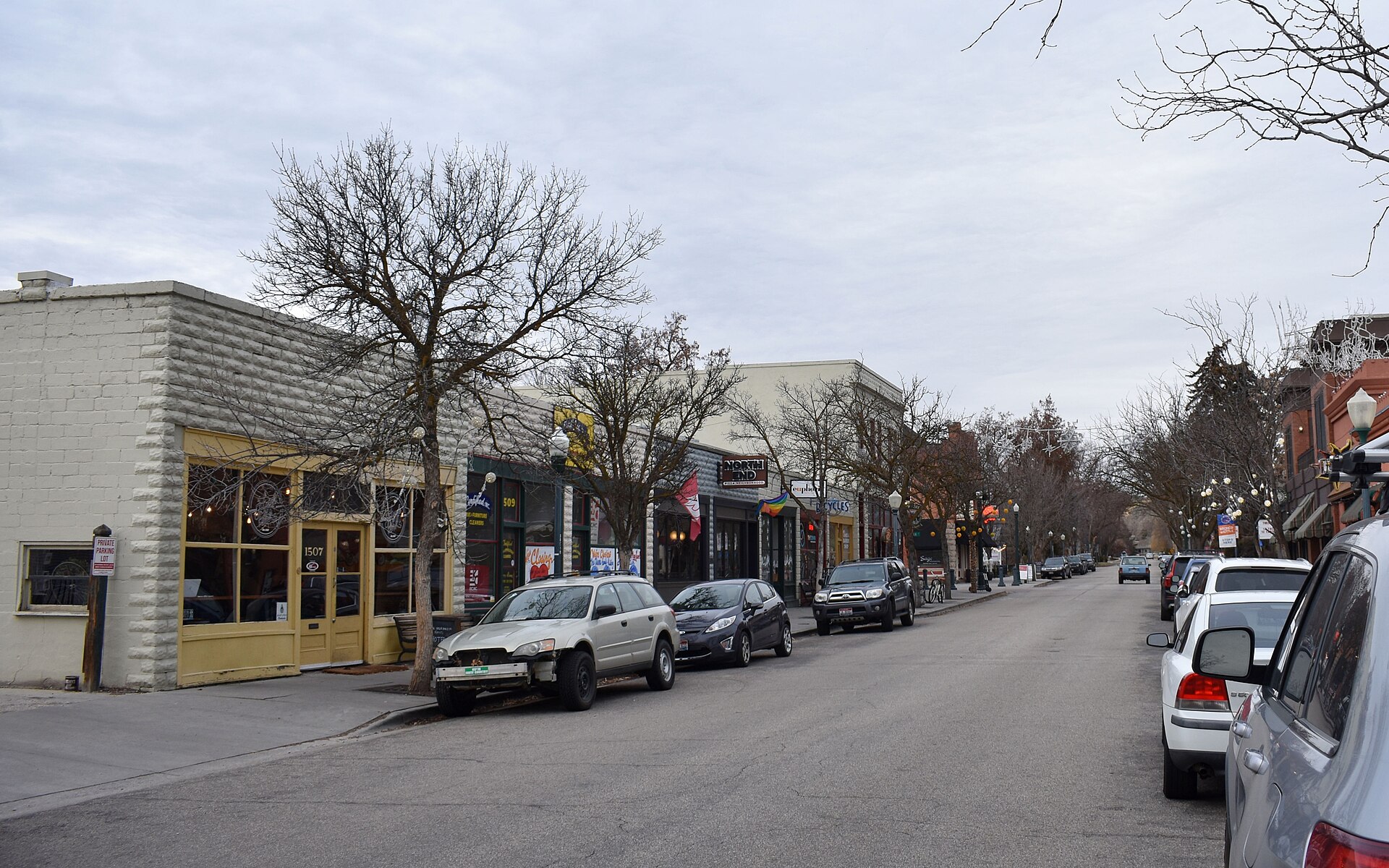
Hyde Park today functions as a small, mixed commercial strip: independent restaurants, cafes, bars, salons and a handful of retail shops occupy the historic storefronts, serving both North End residents and visitors drawn by the district’s walkability and its adjacency to Camel’s Back Park. Because small businesses turn over, this site does not list specific tenants by name — a restaurant or shop open in Hyde Park one year may not be there the next, and any list would be out of date quickly. Readers wanting current listings of what is trading on 13th Street should check the City of Boise’s own business and neighborhood resources, or the North End Neighborhood Association, rather than relying on a static guide.
What is durable is the shape of the district itself: a short, dense run of storefronts built for foot traffic, with residential streets radiating out on either side. That structure is why Hyde Park still reads as a distinct commercial center rather than a strip of individual, disconnected businesses.
What is the Hyde Park Street Fair?
The Hyde Park Street Fair is an annual neighborhood festival held on and around North 13th Street, organized by the North End Neighborhood Association. It typically involves the closure of the street to traffic, vendor booths, food and live music, drawing both North End residents and visitors from elsewhere in the city. The event has historically fallen in September, but exact dates move from year to year and should be confirmed on the North End Neighborhood Association’s own announcements rather than assumed.
Events like this are one of the clearest examples of how Boise’s neighborhood calendar shapes a small district’s year: Hyde Park’s businesses see a concentrated surge of foot traffic on fair weekend that is not representative of an ordinary Tuesday. The site’s broader guidance on planning around Boise’s seasonal calendar is at the Boise Practical hub, which covers how events, seasons and closures affect a visit more generally.
How does Hyde Park fit into the North End?
The North End is Boise’s oldest large residential neighborhood outside the original downtown grid, known for early 20th-century houses, mature trees and a street layout that predates zoning for car-centric development. Hyde Park is its commercial spine — the one stretch within the neighborhood zoned and built for retail and food rather than housing. It is the reason the North End functions as a neighborhood in the fuller sense: residents can walk to a shop or a meal without leaving the grid of streets they live on.
That relationship — a residential historic district organized around a small commercial core — is common in older American cities but is unusually intact in Boise’s North End specifically. For a fuller account of how and why the North End took this shape, see the site’s dedicated piece on the neighborhood’s history. For how Hyde Park compares with Boise’s other distinct districts, the Neighbourhoods archive covers areas such as the Basque Block and downtown’s own commercial core.
What is nearby, and how does it connect to the rest of Boise?
Camel’s Back Park, a city park with a distinctive hill that gives it its name, sits within walking distance of Hyde Park and is part of the same North End fabric. Further out, the North End’s streets connect to the foothills trail network administered by the city’s Ridge to Rivers program, which readers can find covered in the site’s Parks & Foothills archive.
Downtown Boise, including Capitol Boulevard and the Grove Plaza, lies a short distance south of Hyde Park, connected by the same street grid rather than by any dedicated transit line. Readers planning how to move between Hyde Park, downtown and the foothills on a single visit should start with the Boise Practical hub, which lays out how getting around the city actually works, and the Boise Guide hub for how the city’s museums, landmarks and neighborhoods fit together more broadly.
Is Hyde Park worth including on a first visit to Boise?
Whether a specific commercial strip belongs on an itinerary is a judgment call this site leaves to the reader rather than making itself. What can be stated plainly is what Hyde Park is: a National Register-listed historic commercial district, built along a former streetcar line, functioning today as the North End’s local high street and the site of an annual neighborhood street fair. Anyone deciding how to weigh a visit against Boise’s museums, its downtown core or its foothills trail system can use the site’s Living in Boise hub to understand how residents actually use a district like this day to day, rather than relying on a promotional description of it.
Access Boise is an independent guide written from published, checkable sources. We have not visited the places described here and we do not publish personal recommendations or invented ‘local favourites’ — where something is singled out as notable, we say who says so. Opening times, fares, closures and prices change at short notice, so treat everything here as a starting point and confirm with the museum, operator or venue directly before building a day around it. We give no advice on visas, insurance, health or safety; use your own government’s official guidance for those.
Featured image: Photo by Patrick R., source, BY-SA