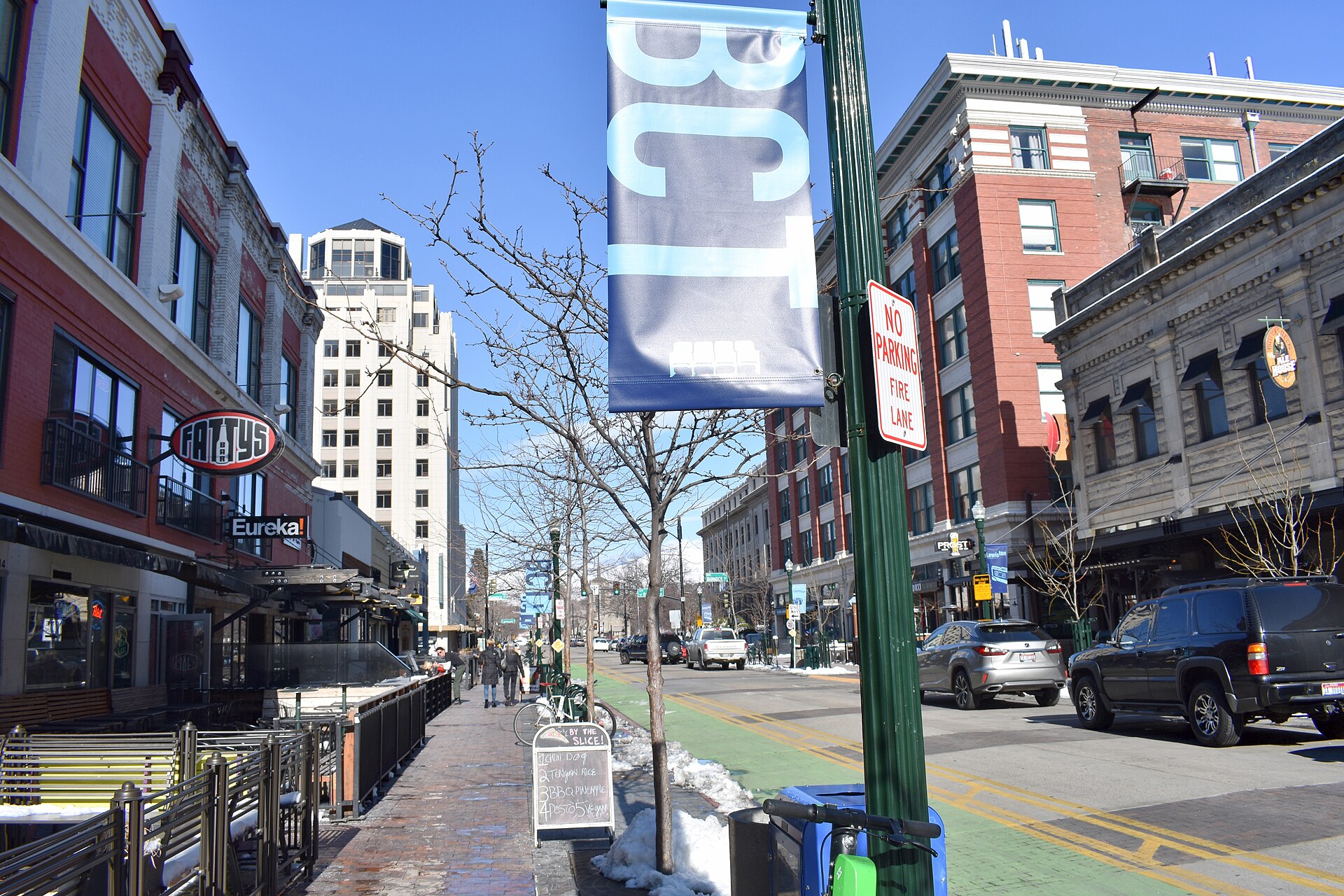
A Boise winter is cold but not extreme — typically low-to-mid 30s Fahrenheit by day, often below freezing at night, with intermittent snow that rarely stays long at valley elevation. The bigger factor is stagnant, gray air from temperature inversions, not brutal cold. Higher elevations nearby get real, deep snow.
How cold does Boise actually get in winter?
By National Weather Service climate normals for the Boise area, December and January average highs sit in the low-to-mid 30s Fahrenheit, with overnight lows commonly in the low-to-mid 20s. Sub-zero readings happen most years but are not the norm; a hard cold snap is more likely to be a week of teens than a sustained deep freeze. Because Boise sits in a valley at roughly 2,700 feet, ringed by higher ground, cold air pools rather than moves through, which is part of why winter days here often feel duller and grayer than the temperature alone suggests.
Does it actually snow in Boise, and does it stick?
Snow falls through the season but seldom accumulates for long at street level. NWS climate data puts average seasonal snowfall for the Boise valley in the range of a foot or two over the whole winter, arriving in scattered storms rather than one deep base. A snowfall of a few inches downtown is common; a snowfall that shuts the city down for days is rare. Where winter gets serious is uphill: the foothills and nearby mountains hold snow far longer and far deeper than the valley floor ever does, which is exactly why the ski hill above town works while the city below stays mostly bare pavement.
What does the inversion do to the city?
The defining weather feature of a Boise winter is not the cold — it is the inversion. Cold, dense air settles in the valley under a layer of warmer air above it, trapping fog, haze and vehicle emissions close to the ground for days at a time. Idaho’s Department of Environmental Quality and the National Weather Service both track these events, since air quality can worsen noticeably during a prolonged inversion. The visible result for residents is a flat gray sky that can persist for a week or more, even when the mountains twenty minutes away are sitting in full sun above the haze layer.
How does winter change getting around the city?
Roads are plowed and treated but a hard freeze-thaw cycle produces ice on untreated side streets and sidewalks, and the city’s grid of one-way streets downtown does not get any simpler in the dark at 5 p.m. A dedicated explainer covers how winter affects driving in Boise in more detail, including what the city and Idaho Transportation Department actually do and don’t clear. For anyone weighing whether they need a car at all this time of year, the honest answer is covered separately at whether you need a car in Boise.

What happens to the foothills and the Greenbelt in winter?
The city’s own Ridge to Rivers trail programme, which manages the foothills trail network above the North End and Boise Bench, asks users to stay off trails when they are muddy — winter thaw turns dirt singletrack to slop that erodes badly under foot and tire traffic, and the programme posts seasonal closures accordingly. The Boise Greenbelt along the river stays open and is used through winter for walking and commuting, though ice on shaded stretches is common enough to matter. Both are covered in more depth in the Parks & Foothills section.
Does Boise’s ski season change what happens in the city?
Bogus Basin, a nonprofit ski area roughly 16 miles from downtown up into the foothills, runs its own season from roughly late November into early spring depending on snowpack, per its own published schedule. It sits close enough that a resident can genuinely ski before or after a workday, and that proximity shapes local life more than most visitors expect — weekend traffic on the access road, gear in car trunks all winter, a steady flow of locals treating a mountain as a commute rather than a trip. The route itself is described in what the Bogus Basin road is actually like, and options for reaching it without driving are covered at getting to Bogus Basin without a car.
Is there anything unusual heating the city through winter?
Yes — Boise runs one of the oldest municipal geothermal heating systems in the United States, drawing naturally hot water from underground wells to heat dozens of downtown buildings, including the Idaho State Capitol. That system, and the geothermal history along Warm Springs Avenue that predates it, is covered at how the Capitol is geothermally heated and what lies beneath Warm Springs Avenue. It is a genuinely unusual piece of civic infrastructure, not a curiosity — it is why steam is visible rising from manhole covers on cold mornings in parts of downtown.
What actually closes, and what changes on the calendar?
Winter is Boise’s lower season for outdoor programming rather than a shutdown. Museums and indoor institutions generally keep normal hours or close only on standard weekly closures — many close Mondays, a pattern covered in general terms across the Museums & Galleries archive — while outdoor attractions and some foothills-adjacent programming scale back or pause. Specific dates for holiday light displays, winter markets or seasonal closures shift year to year and should be checked against the operator’s own current listings rather than assumed from a previous year.
Is winter a good time to visit Boise, or mainly a resident’s season?
It depends on what a visitor wants. Someone coming for skiing, quiet museum visits or lower hotel demand finds winter workable; someone expecting outdoor festivals, foothills hiking or long daylight will find summer or shoulder season more suited to that. A broader seasonal comparison is laid out at when the best time of year to visit Boise actually is. For residents, winter is simply the season the geothermal pipes, the plow routes and the trail closures all quietly exist to manage — background infrastructure that becomes visible only once the temperature drops.
Where to read more about living with a Boise winter
The mechanics of daily life through the colder months — heating, driving, what changes about getting around a city built on a grid with one-way downtown streets — are covered across the site’s two main hubs, Living in Boise for residents and Boise Practical for trip planning, along with the ongoing Planning & Practicalities archive for updates on seasonal specifics as they are confirmed against official sources.
Access Boise is an independent guide written from published, checkable sources. We have not visited the places described here and we do not publish personal recommendations or invented ‘local favourites’ — where something is singled out as notable, we say who says so. Opening times, fares, closures and prices change at short notice, so treat everything here as a starting point and confirm with the museum, operator or venue directly before building a day around it. We give no advice on visas, insurance, health or safety; use your own government’s official guidance for those.
Featured image: Photo by Tamanoeconomico, source, CC BY-SA 4.0
